The home · 6 min read
Getting your flat ready for a puppy
A quiet bed, fresh water and a safe space to play. Set up the basics without buying more than you need.
Published by puppy-guide.shop · Updated 28 September 2026
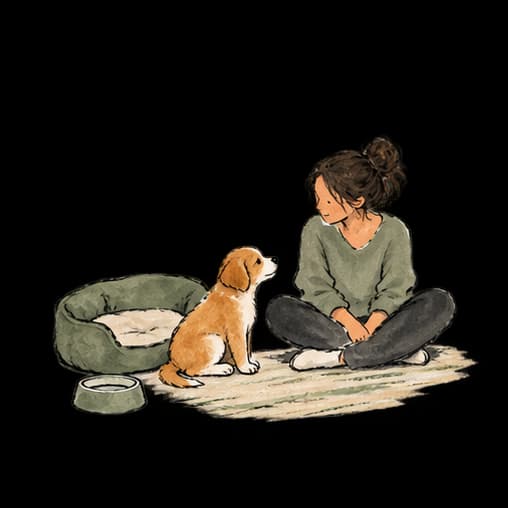
You can make a small flat comfortable for a puppy. Start with a quiet bed near you, fresh water, space for supervised play and a clear path to the door.
Look around your rooms before buying anything new. This guide helps you choose where things go and what needs moving out of reach.
Use the space you have
Look around your main room and choose a quiet place for the bed. Keep water easy to reach and clear a space where you can watch your puppy play. These places can be close together.
You do not need a spare room or a lot of new equipment. Watch how your puppy uses the space during the first few days. Move things if a doorway is too busy or the bed keeps getting disturbed.
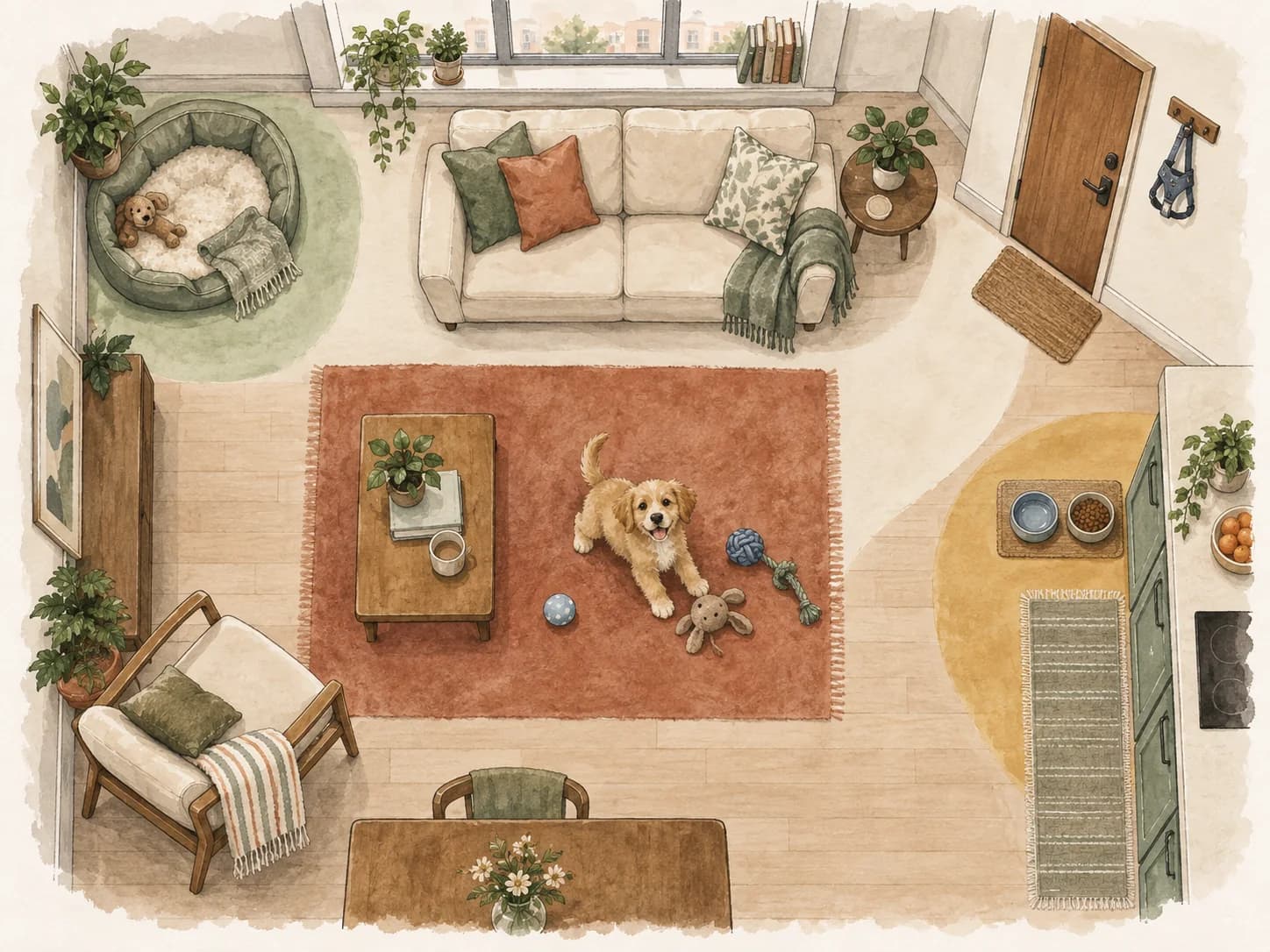
Four useful places at home
Sketch your main room before you shop. Mark these four areas, then check whether the route between them stays clear when the sofa, the laundry rack and your own shoes are in their usual places.
- 01
Rest: quiet, near you, open
A corner that nobody walks through, close enough that the puppy can see you. An open bed or a mat the puppy can leave freely. Not beside the front door, not under the hallway wall where every neighbour's footsteps arrive.
- 02
Activity: supervised space
The part of the room where play happens while someone is watching. A washable rug helps here. A gate or a room divider can shape this space if your layout needs it; it is a tool for supervision, not a place to leave the puppy for the day.
- 03
Food bowls and fresh water
Put bowls on a washable mat, away from any toilet area. Keep fresh water available and follow the feeding instructions for your puppy. Do not restrict water to reduce accidents.
- 04
Exit route: clear and ready
Keep the path to the door clear. Store the harness, lead, keys, rewards and waste bags together by the door, out of your puppy’s reach, so you can prepare promptly for toilet trips.
A comfortable place to call home
Start with the things your puppy uses every day.
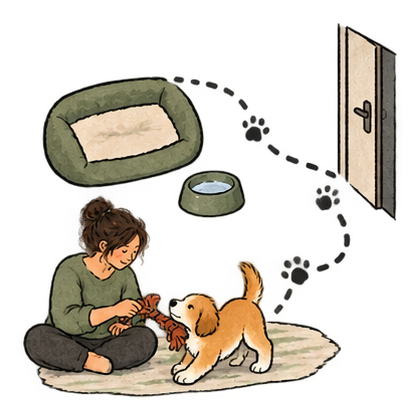
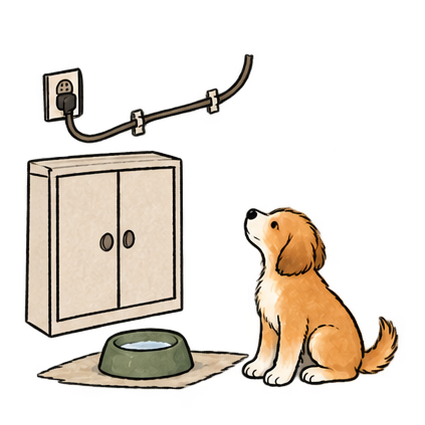
Try this today: walk from the bed to the door and move anything in the way.
Picture the spaces
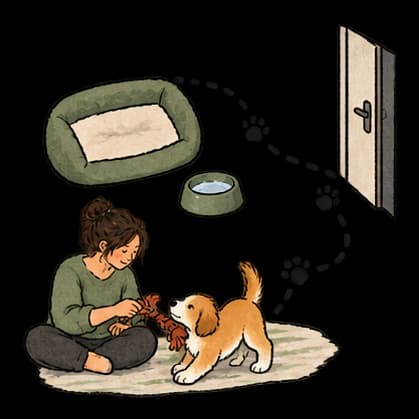
A place for everyday things
Keep the bed quiet, water easy to reach and the path to the door clear. Stay nearby during play.
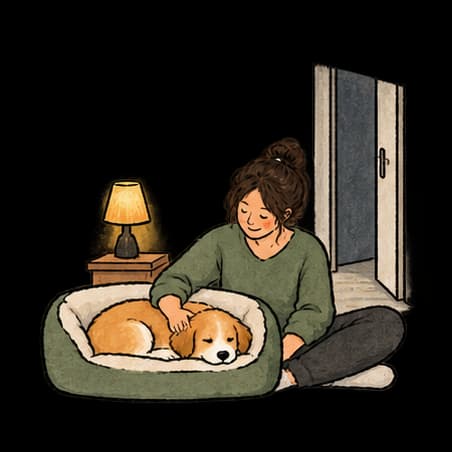
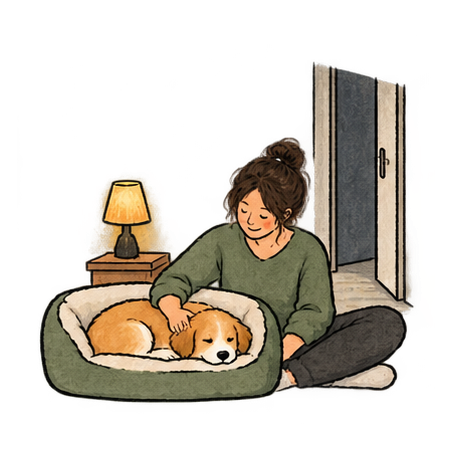
Stay nearby at night
If your puppy wakes, check whether they need to pee or want comfort. Help them settle again.
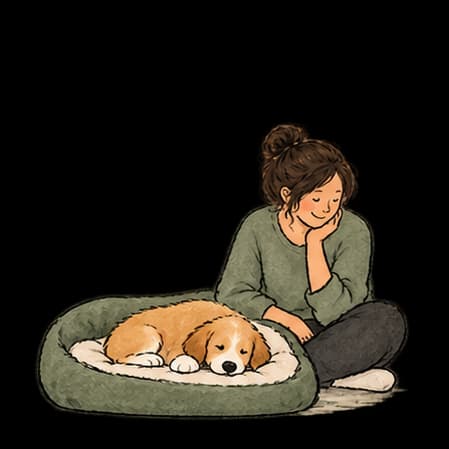
Start while they are relaxed
Look for a loose body and comfortable rest. Begin with a small movement your puppy finds easy.
A quiet place to rest
Choose a bed or mat your puppy can enter and leave freely. A suitable gate can help keep the surrounding space safe while you supervise. Check how your puppy responds before relying on the arrangement. A closed crate cannot replace care during a workday.
Place the bed away from busy doors where possible. Ask visitors and children to let your puppy rest undisturbed, and stay available when they wake.
At puppy height: what to move
Look around at puppy height for things within reach, including behind furniture. Check before arrival and again as your puppy grows or the room changes.
- Electrical cords covered or lifted out of reach
- Cleaning products, medicines and food waste behind a closed door
- Small objects, shoes, bags and cables off the floor
- Houseplants moved up or checked for safety
- Balcony access blocked; supervised visits only
- Gaps behind and under furniture checked for hiding places and stuck puppies
- Windows and low sills secured
- Doors that must stay closed agreed with everyone in the household
What to buy, and what can wait
Start with bowls, familiar food, an open bed or mat, a well-fitting harness, a lead and identification. Add waste bags, a cleaner suitable for pets and washable cloths. Keep a few small rewards ready for toilet trips. You can buy other things later if you need them.
Choose additional equipment once you see what your puppy needs. A gate or a second mat may help, but it should fit your room and leave the exit route clear.
Ask your vet about the food, the harness fit and which outdoor places suit your puppy's vaccination status before the first trips out.
Prepare the everyday essentials
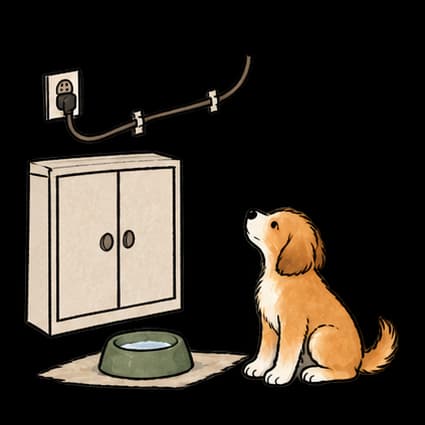
Look from puppy height
Put loose cords, shoes and small things out of reach. Check again when bags or furniture move.
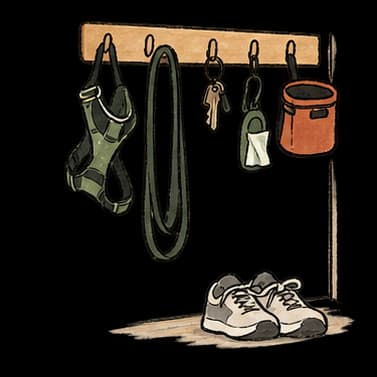
Keep things by the door
Put the harness, lead, keys, bags and rewards together, out of your puppy’s reach.
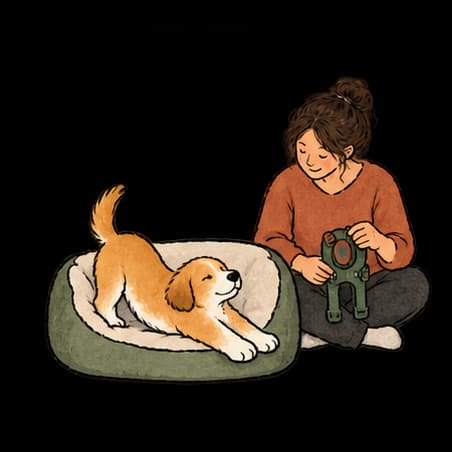
Be ready after a nap
Have your walking things ready so you can offer a toilet trip when your puppy wakes.
See what works for your puppy
Watch where your puppy likes to rest and where they pause on the way to the door. A bed beside the sofa may need moving if everyone walks past it. Change one thing and see whether it helps.
If you made a sketch, update it when you move things. Show anyone helping you where the bed, water and walking supplies are now.
Watch the home in use
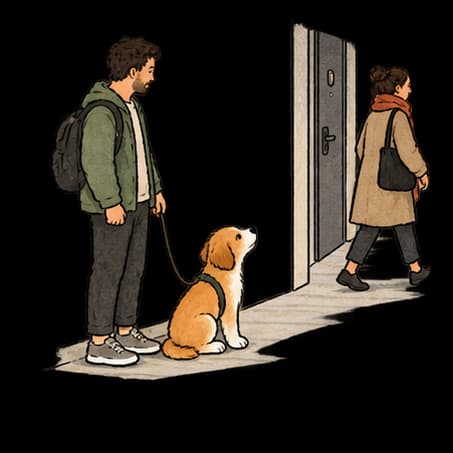
Move away from noisy doors
Try a quieter place for the bed. Give your puppy more space from hallway sounds that worry them.
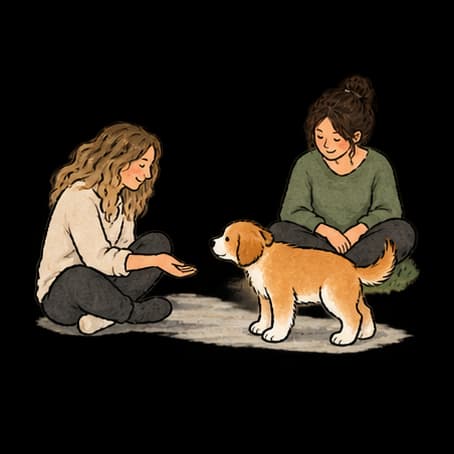
Let your puppy say hello
Ask visitors to stay calm and let your puppy approach. They do not have to be petted.
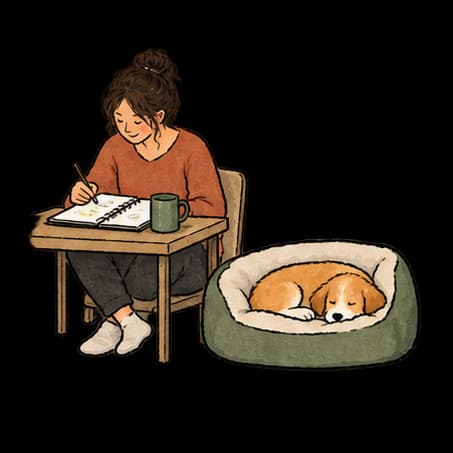
Let sleeping puppies rest
Keep naps quiet. At the end of the day, choose one small thing that could help tomorrow.
What to take with you
- Keep a quiet bed, water and a safe play space within easy reach.
- Clear the way to the door and put hazards out of reach.
- Start with the essentials. You can buy more when you know what helps.
- Watch your puppy in the room and move things if needed.
Common questions
Do I need a playpen or a gate in a small flat?
Sometimes. A gate can keep the puppy in the supervised part of the room while you cook, and a divider can shape a rest corner. Neither is a place to leave a puppy for a working day. Decide after a few days of watching where your puppy actually spends time.
Where should the bed go in a studio?
Choose a quiet place near you, away from busy doorways and foot traffic where possible. Watch whether your puppy can rest there, and move the bed if noise or passing people keep disturbing them.
Should I set up an indoor toilet area?
A temporary indoor toilet area may help when frequent trips outside are difficult. Choose a suitable spot away from bed and bowls, keep it clean and teach its use consistently. Toilet Training a Puppy in a High-Rise covers this option and the transition outdoors.
A free guide for your next step

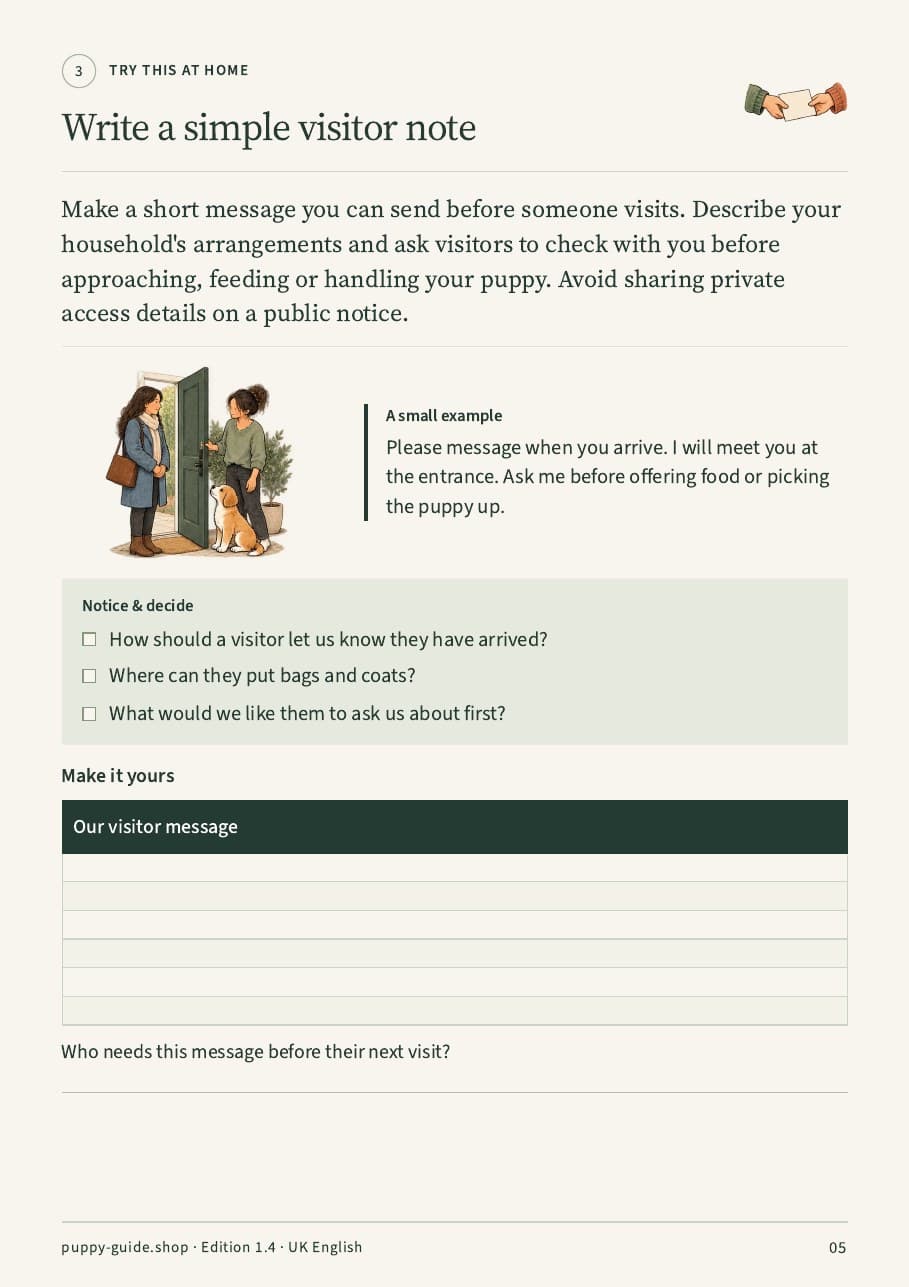

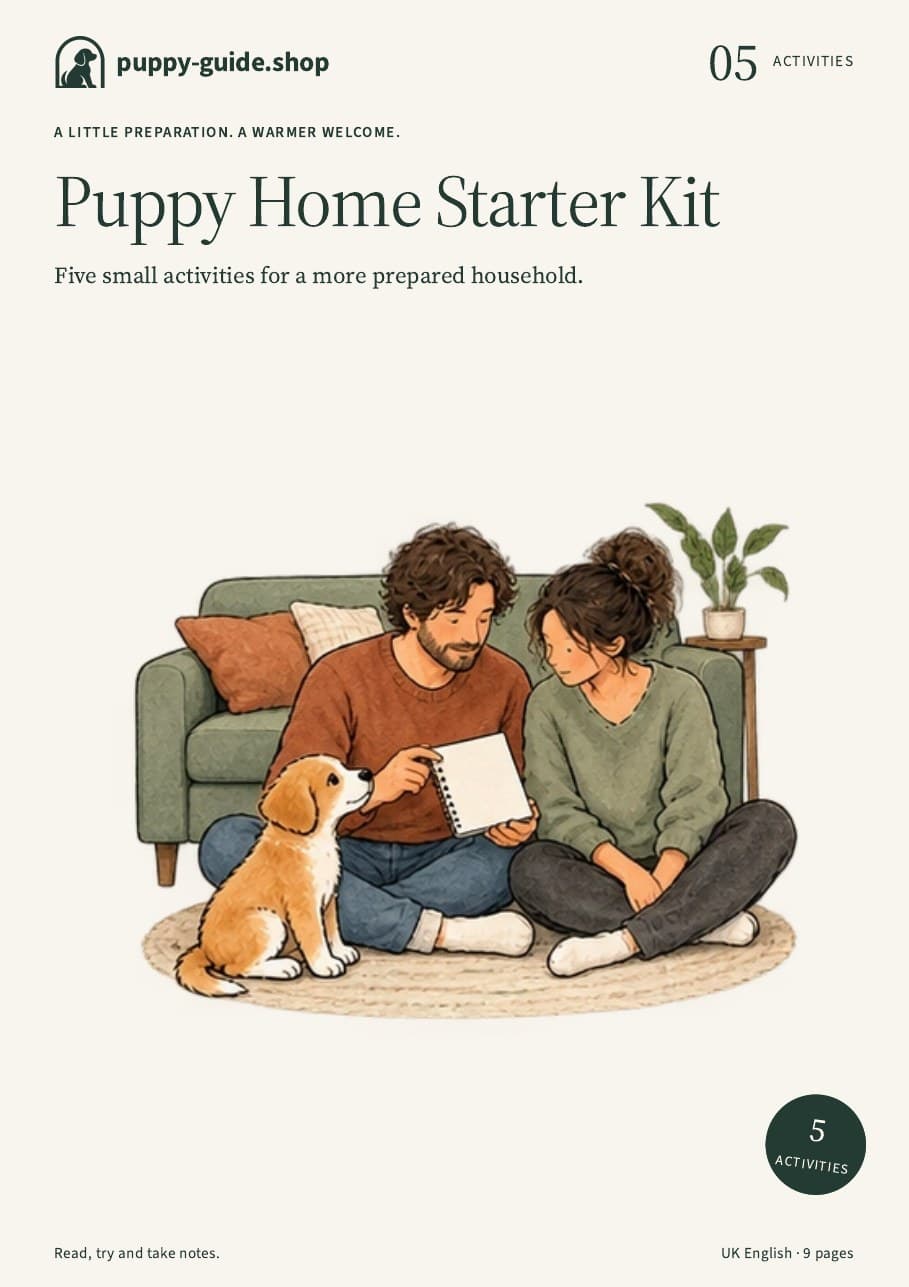
Free guide · 9 pages · PDF, A4
Puppy Home Starter Kit
Five small activities for a more prepared household.
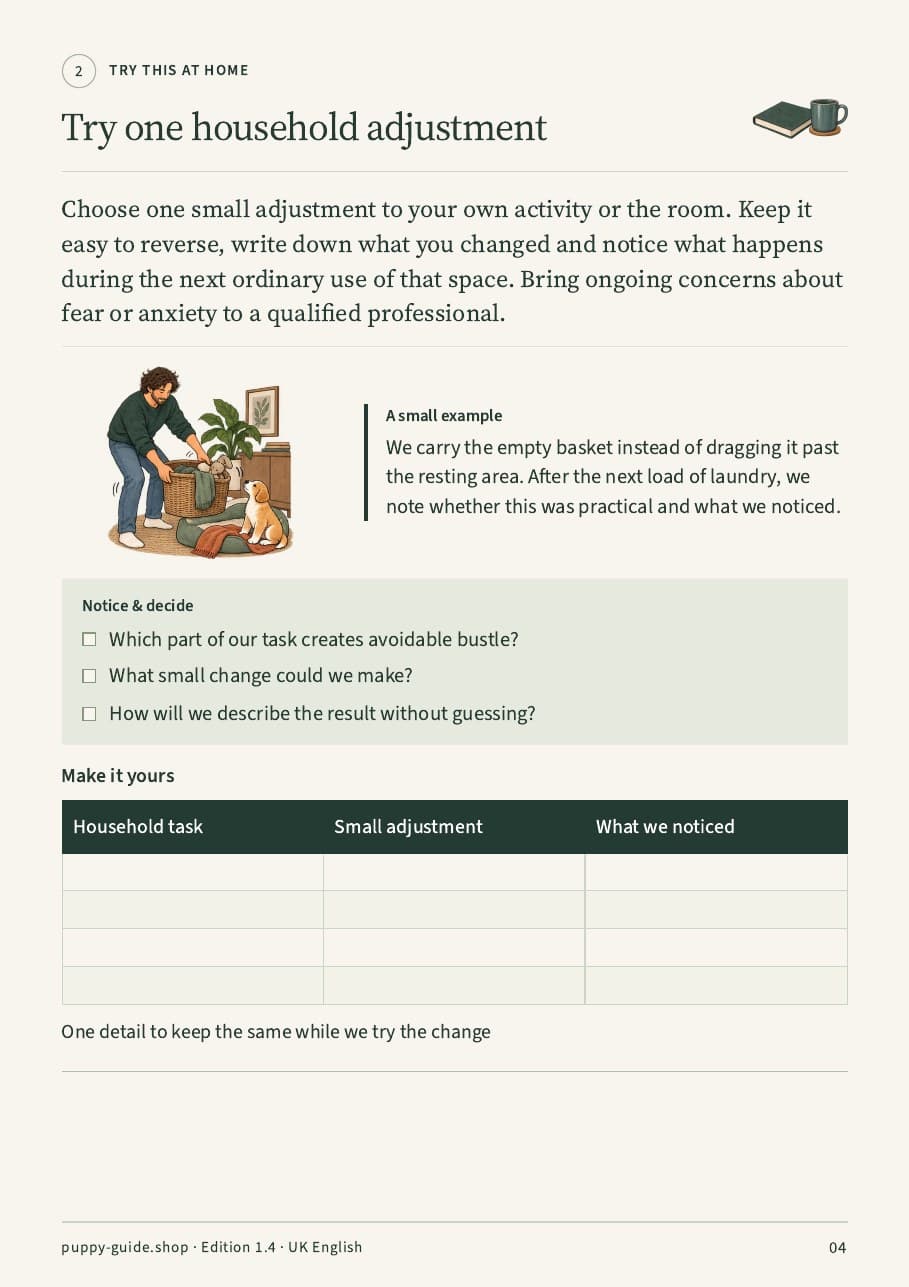

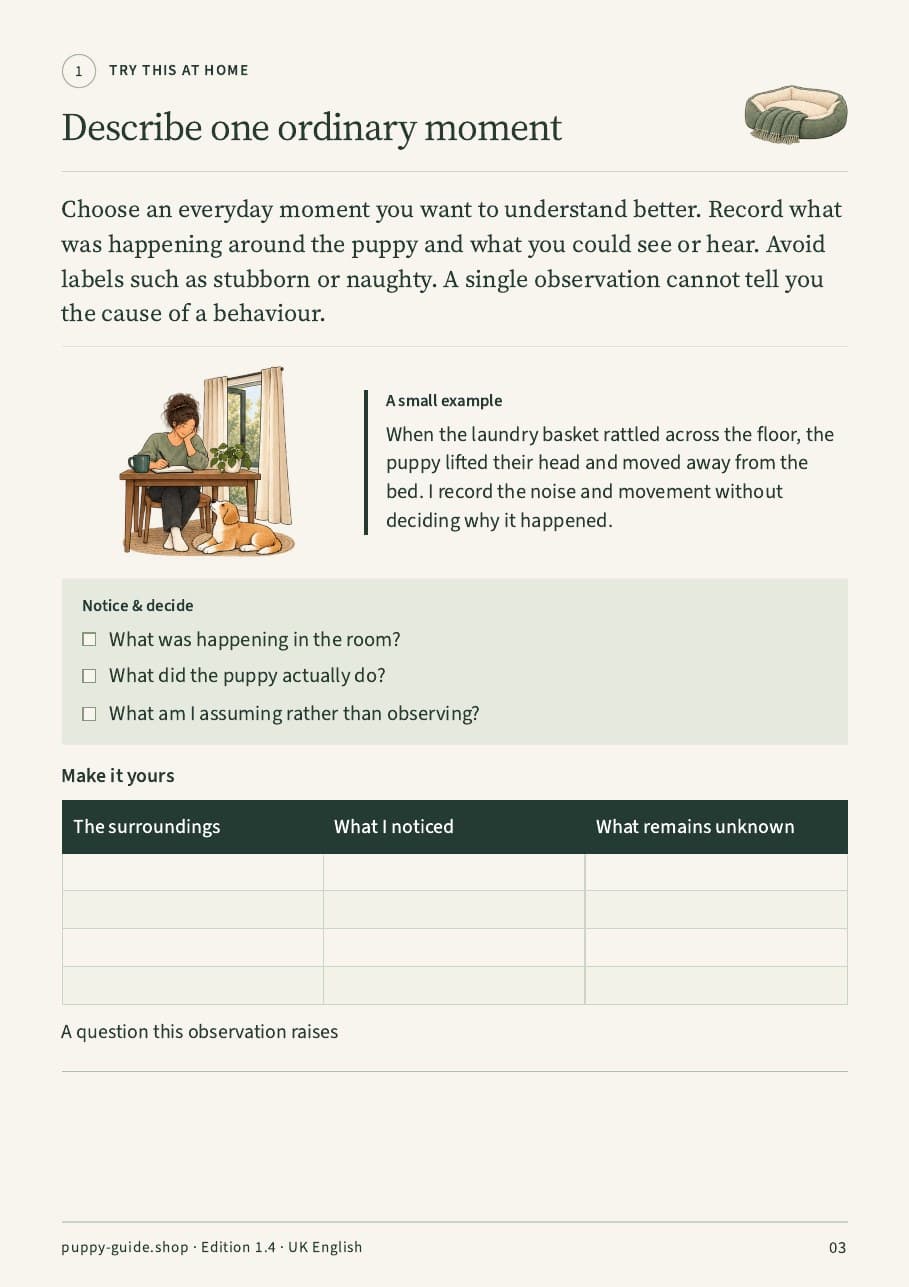

Free guide · 9 pages · PDF, A4
A Calmer Home with Your Puppy
Five observation activities for everyday household moments.
Read next
All guides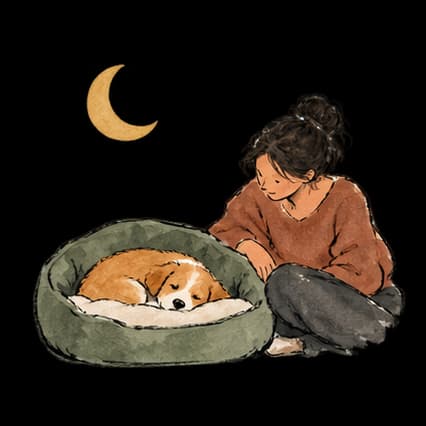
The home · 5 min read
Your puppy’s first night at home
Help your puppy settle, prepare for nighttime toilet trips and share the care so you can rest too.
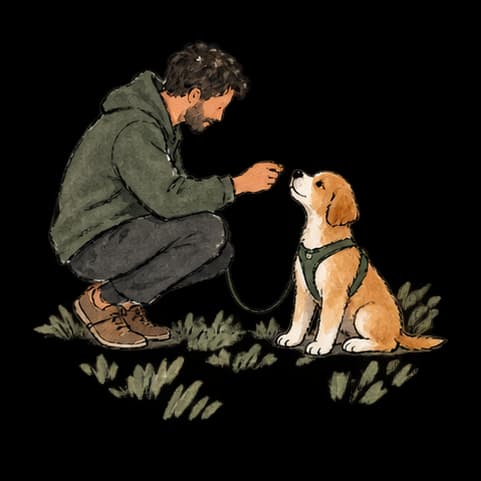
The route outside · 7 min read
Helping your puppy learn where to go to the toilet
Simple help with toilet breaks, rewards and accidents when you live in a flat.
The home · 5 min read
Living with a puppy and your neighbours
Help your puppy rest, make shared spaces easier to use and keep in touch with your neighbours.