Alone time · 6 min read
Helping your puppy feel comfortable when you move away
Try small movements, watch how your puppy feels and learn when to stop or make things easier.
Published by puppy-guide.shop · Updated 28 September 2026
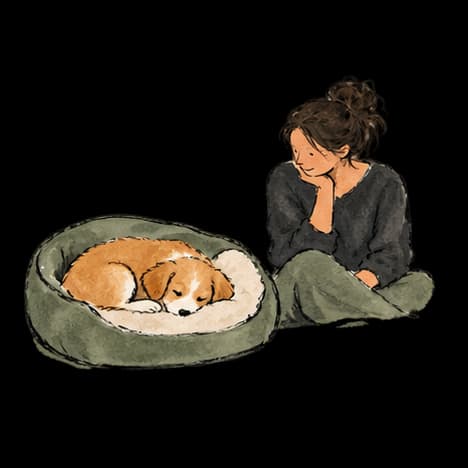
Begin while your puppy is resting comfortably near you. Try a tiny movement, such as shifting in your chair, and watch how they respond.
There is no need to reach a certain number of minutes. Keep it easy, come back if your puppy becomes worried and arrange company when you need to go out.
Begin while your puppy is relaxed
Observe your puppy resting comfortably near you, then choose a small movement they can manage, such as shifting in your chair. Meet their immediate needs for water, food, toileting and rest first. Stay free to respond throughout practice.
This is not a treatment programme for separation anxiety, and completing a practice record does not certify a puppy to stay alone. If your puppy is already distressed by separation, involve your vet and a qualified reward-based behaviour professional before experimenting.
The first steps are tiny
Each of these is a separate step for many puppies. Repeat a step several times over several days before considering the next one, and return while it is still going well.
- 01
Move without leaving
Shift in your chair, stand up, sit down again. The puppy stays settled. You reward calm with calm, not with a party.
- 02
A step away and back
One or two steps toward the door, then back to your seat. Still in the room, still visible.
- 03
Out of sight, door open
Once visible movement is comfortable, a possible next step is briefly moving out of sight through an open doorway and returning. Keep door movement as a separate change.
- 04
Door movement
Touch the door, move it a little, come back. Only later, if everything stays comfortable, briefly close it and reopen it. Duration comes last, not first.
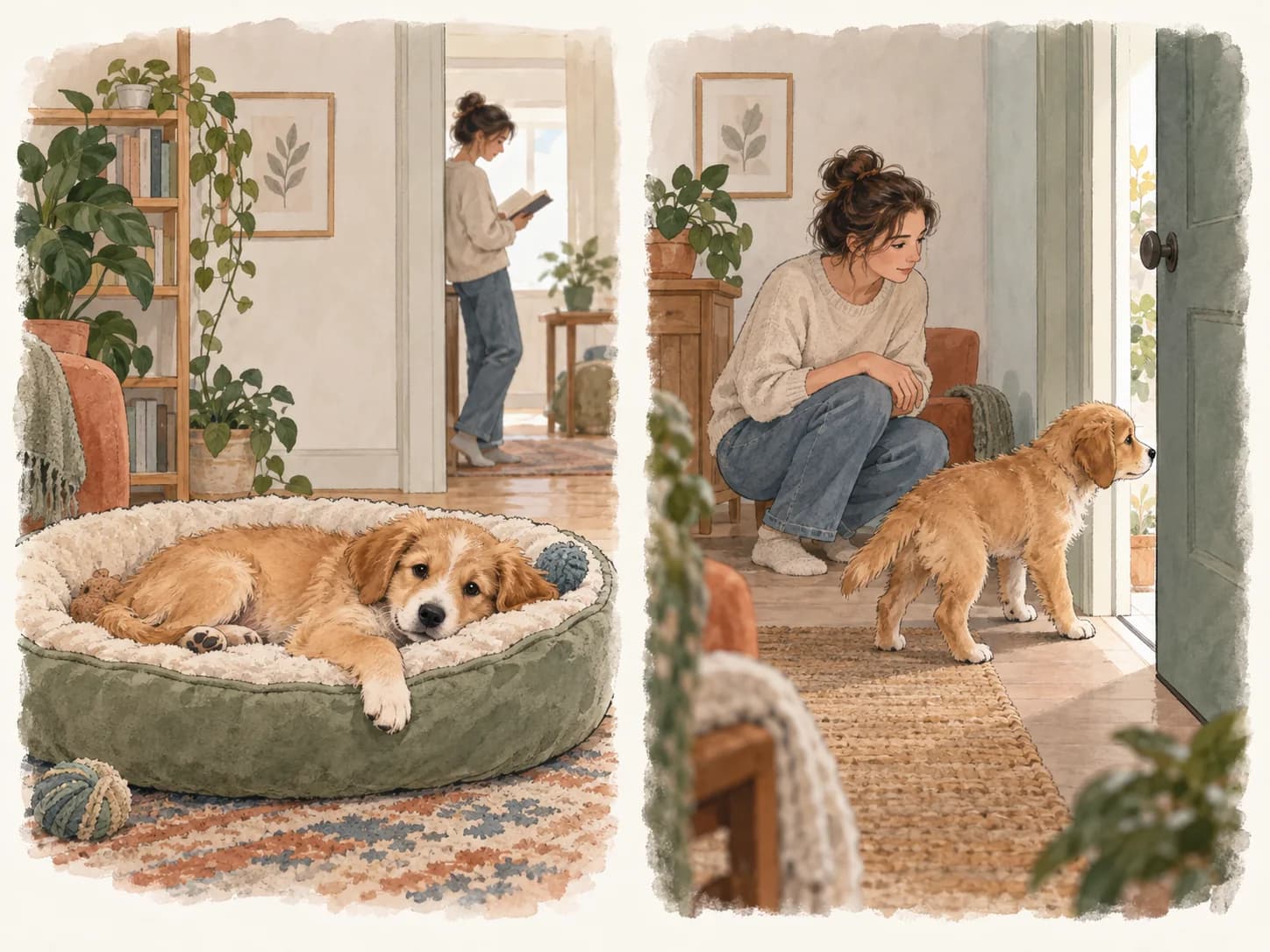
Quiet does not always mean relaxed
Describe what you see instead of writing "good" or "bad". Is the puppy resting loosely, changing position comfortably, exploring normally? Or do you see repeated pacing, a fixed watch on the exit, escalating vocalization, attempts to escape, panting without an obvious physical cause, an inability to settle? No single sign is a diagnosis. Silence alone is not evidence of comfort, and a puppy that eats a treat at the start may still become worried after it is gone.
A camera can help you observe brief practice, as long as you remain able to return promptly. It is not a substitute for a caregiver, and positioning it needs a thought for household privacy.
Look at the whole puppy
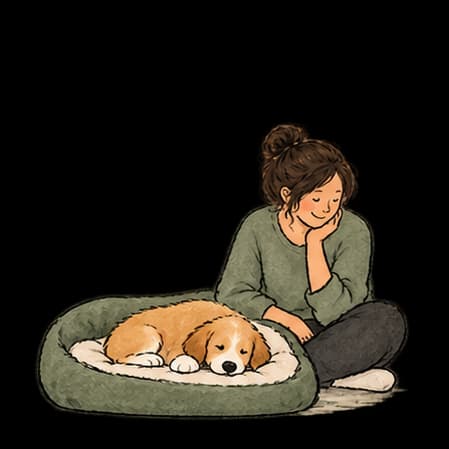
Start while they are relaxed
Look for a loose body and comfortable rest. Begin with a small movement your puppy finds easy.
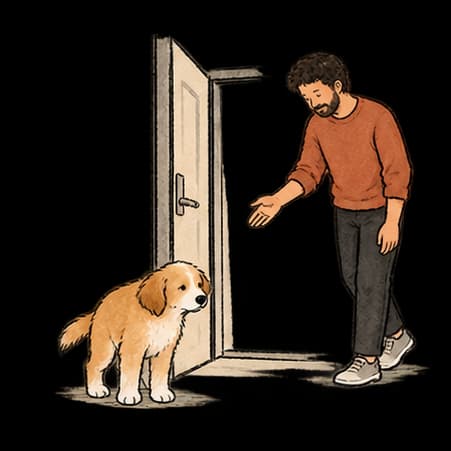
Notice worry
If your puppy becomes tense, searches for you or cannot settle, come back and make things easier.
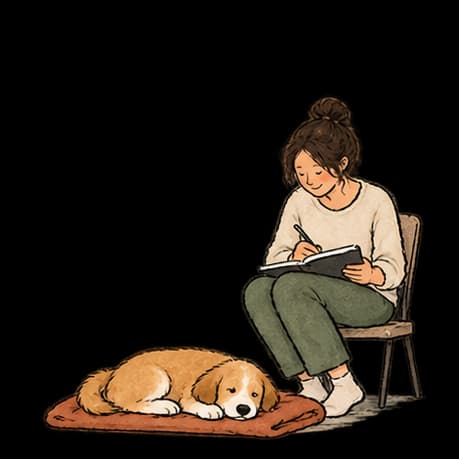
Write what your puppy did
“Stood watching the door” is a useful note. You do not need to call your puppy good or bad.
Try one small movement
Begin with something easy while your puppy is relaxed. You might shift in your chair and then sit still again. Watch whether your puppy stays comfortable.
If they become worried when you stand, stay seated and move less next time. If moving out of sight is too much, stay where they can see you. Come back and stop when they become upset.
You do not have to make each practice harder. Repeating an easy step is fine. Avoid adding more distance, a closed door and more time all at once.
Keep practice easy for your puppy
Watch your puppy when you make one small movement away.
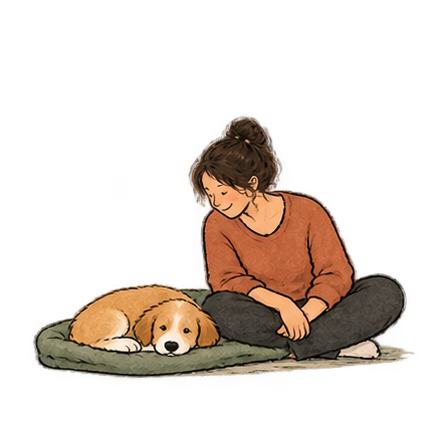
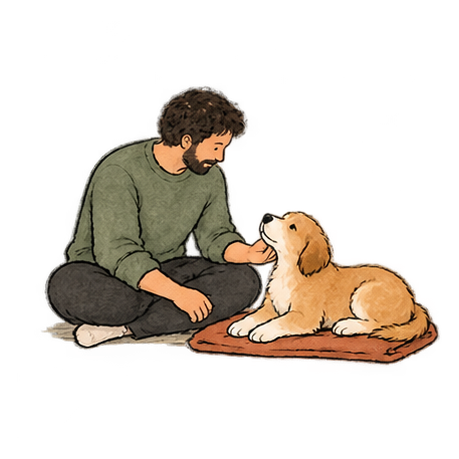
There is no need to rush. Ask for help if even tiny movements keep upsetting your puppy.
Picture one small practice step
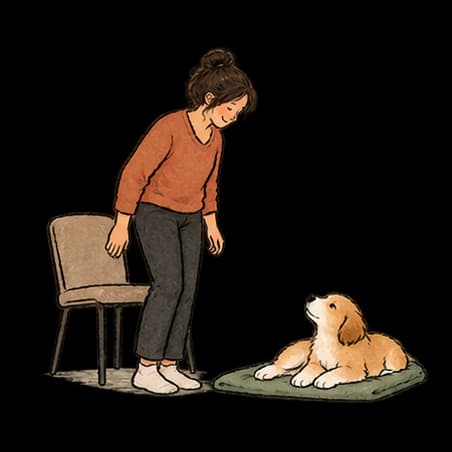
Try one little movement
You might shift in your chair or briefly stand nearby. Watch how your puppy responds.
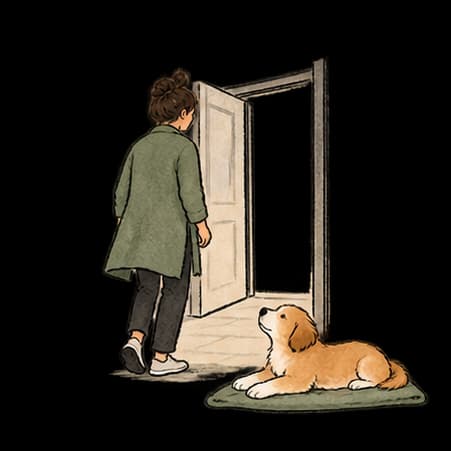
Keep it easy
Repeat a comfortable step. Avoid moving farther away and staying away longer at the same time.
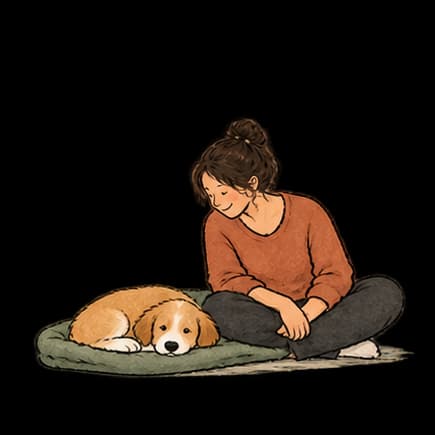
Come back calmly
Finish while your puppy is comfortable. Repeating an easy step is useful too.
Arrange company when you need to go out
A practice you can stop at any moment is different from leaving for work or shopping. Arrange someone to stay with your puppy when an absence is more than they can comfortably manage.
Write down your next outings and ask who can help. A good practice today does not mean your puppy is ready for a much longer absence tomorrow.
When practice feels harder
Illness, noise, a changed routine or a new caregiver may affect practice. Note what changed and return to an easier setting. There is no need to make up a missed day with a longer session.
If you seek professional support, a short summary helps: the easiest comfortable situation, the first signs of concern, what happens during real absences and the care you can provide. Share recordings only where everyone filmed has agreed.
Make the next attempt easier
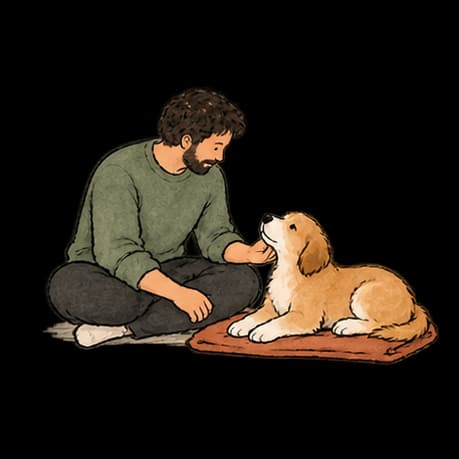
Try less next time
If practice was too hard, stop. Next time, stay closer or choose a smaller movement.
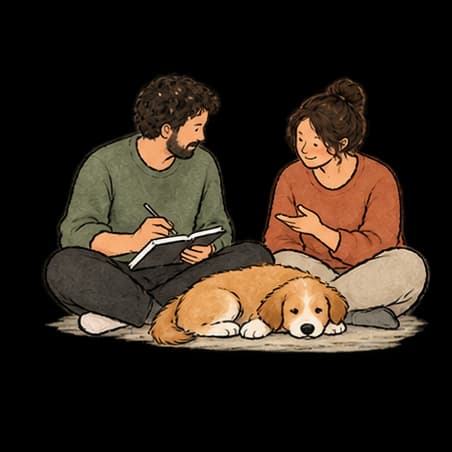
Find company when you go out
Arrange someone to stay with your puppy for absences they cannot comfortably manage yet.
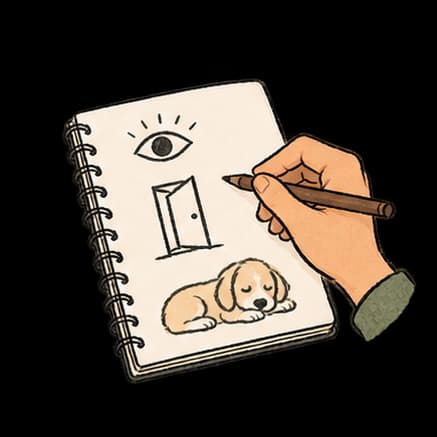
Ask for help when needed
Note what happened and what you will try next. Ask for help if worry keeps returning.
What to take with you
- Begin while your puppy is relaxed and their everyday needs are met.
- Try one tiny movement and watch how your puppy responds.
- Come back and stop if they become upset. Next time, make it easier.
- Ask for help if worry keeps returning, and arrange company when you need to go out.
Common questions
How long should a puppy be able to stay alone at 12 weeks?
Age alone cannot tell you what a puppy can manage. Observe comfort in familiar, brief practice and arrange care for absences beyond that. Toilet, food and company needs still matter even when practice goes well.
Should I ignore the puppy when I come back so it stays calm?
Return calmly and offer ordinary reassurance. There is no need for a party and no reason to withhold contact. What matters is that you came back while it was still easy.
Is it normal for a puppy to cry when left?
Crying can mean your puppy is worried or needs something. Return calmly, check their needs and make any later practice easier. If distress is strong, keeps recurring or includes escape attempts, seek advice from your vet and a qualified behaviour professional.
A free guide for your next step
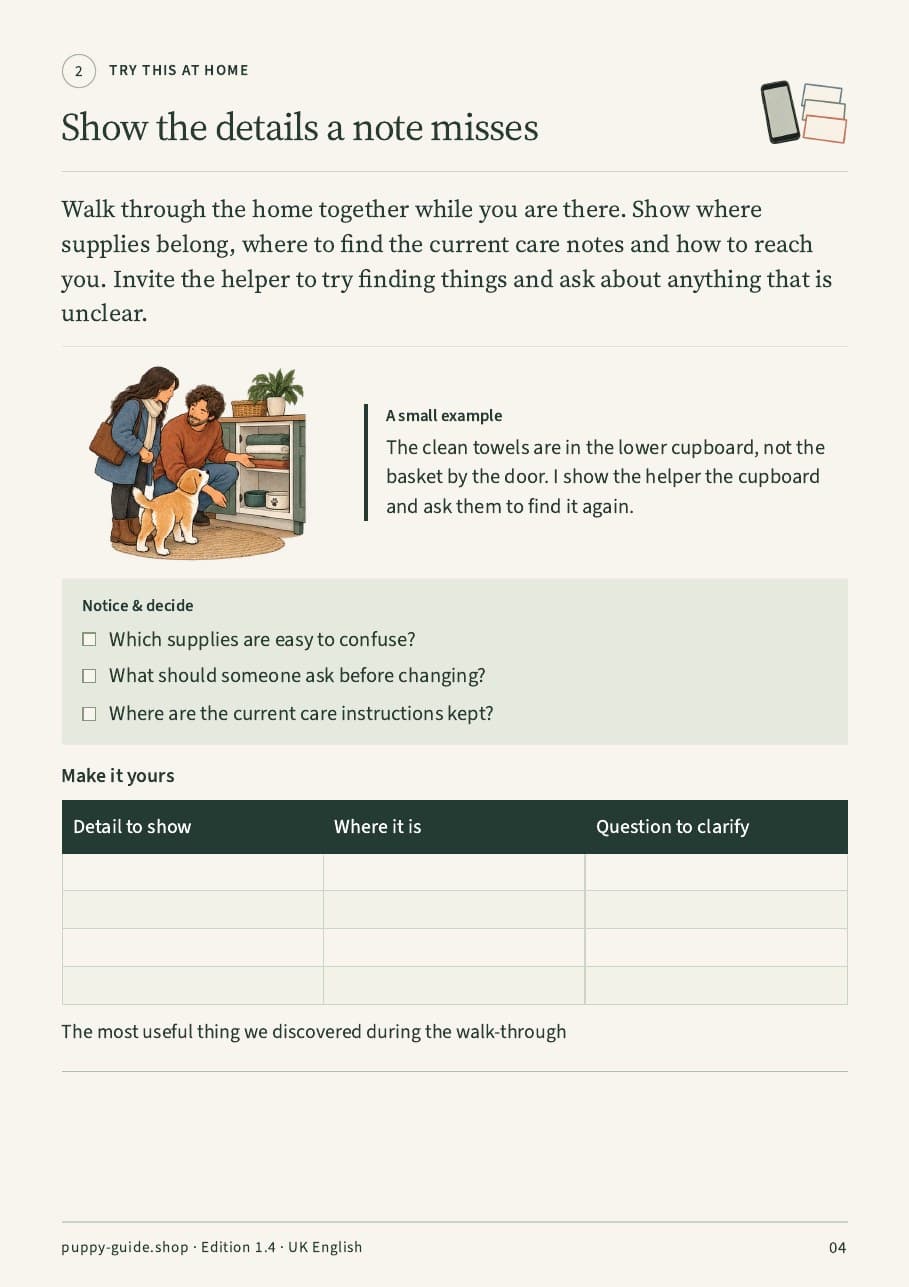
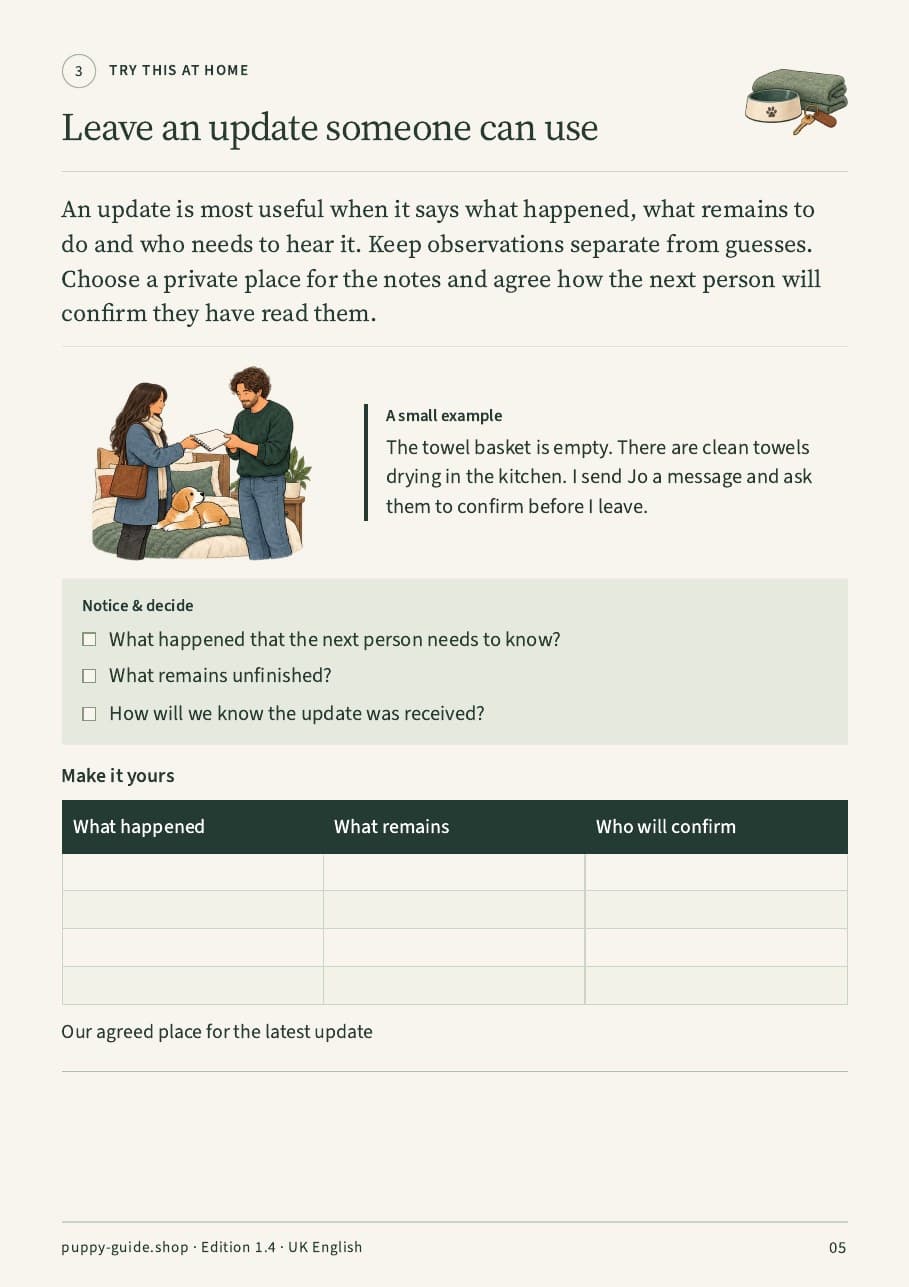
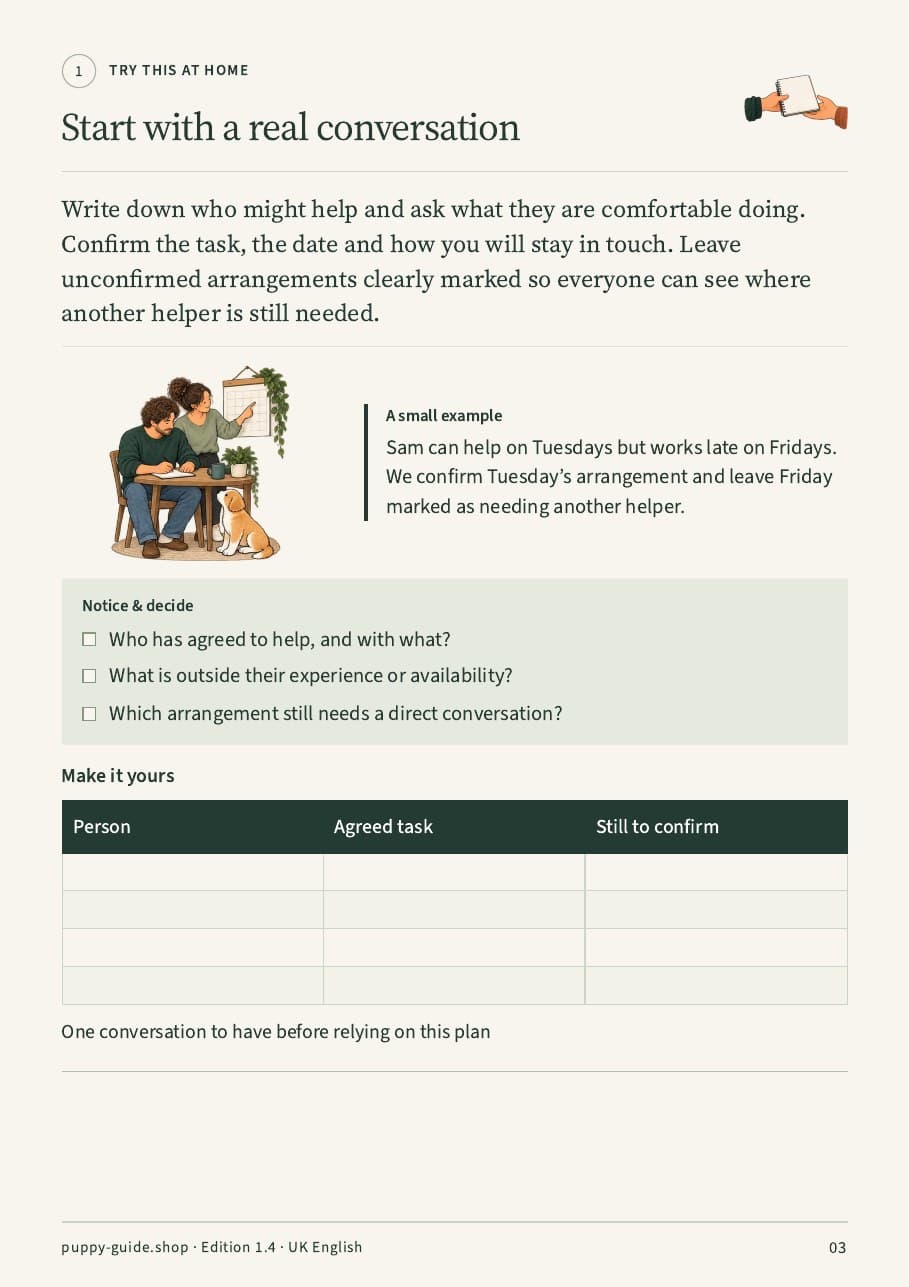
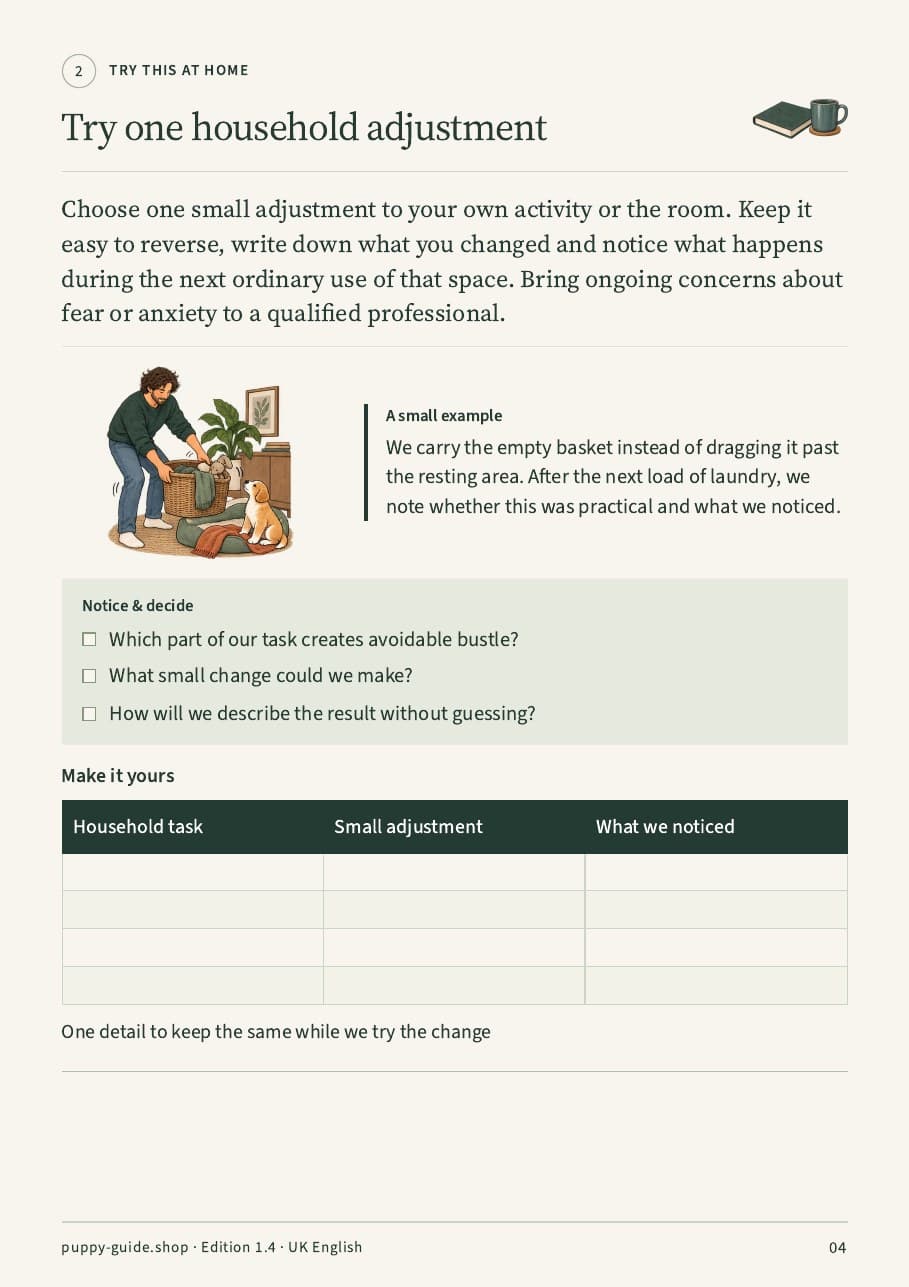

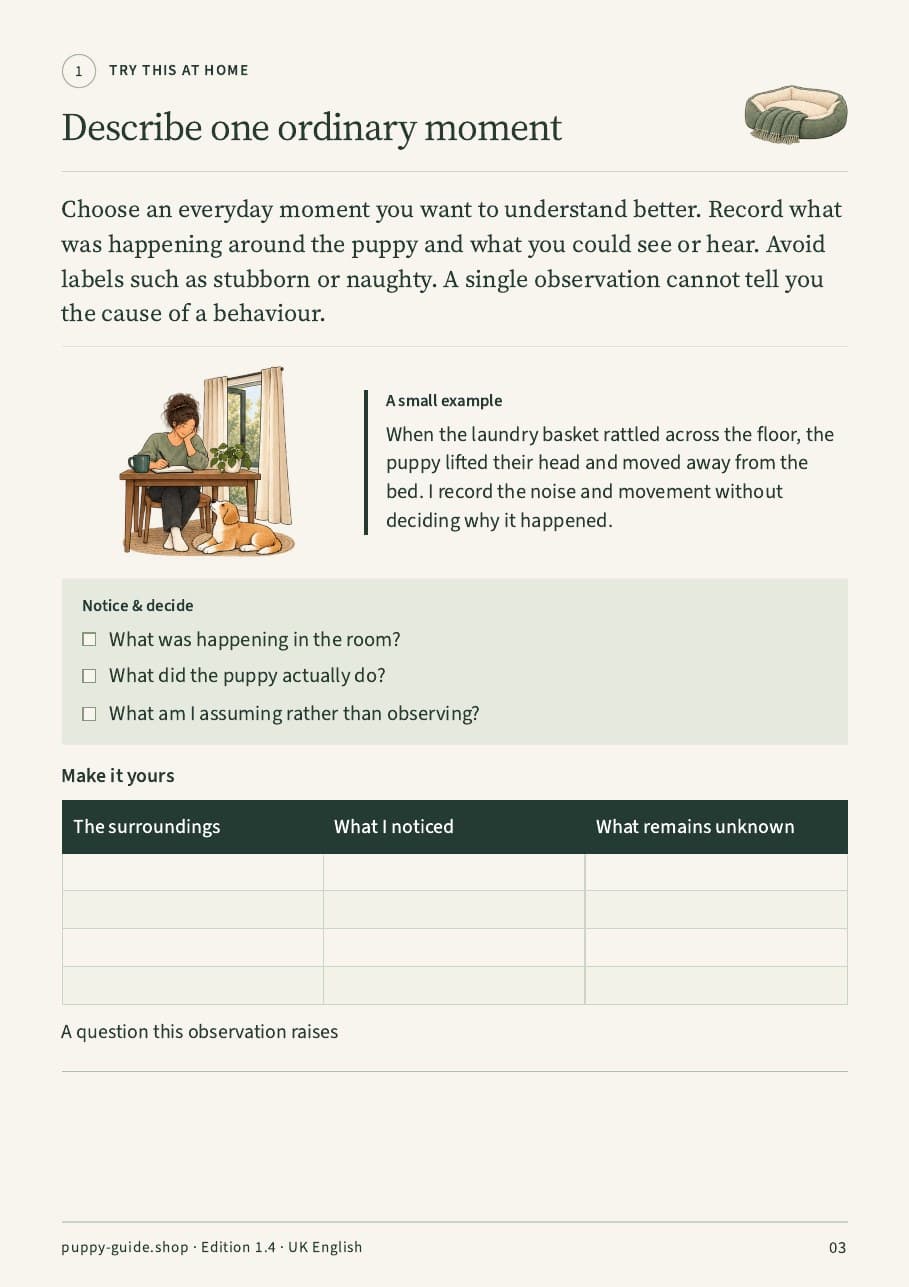

Free guide · 9 pages · PDF, A4
A Calmer Home with Your Puppy
Five observation activities for everyday household moments.
Read next
All guides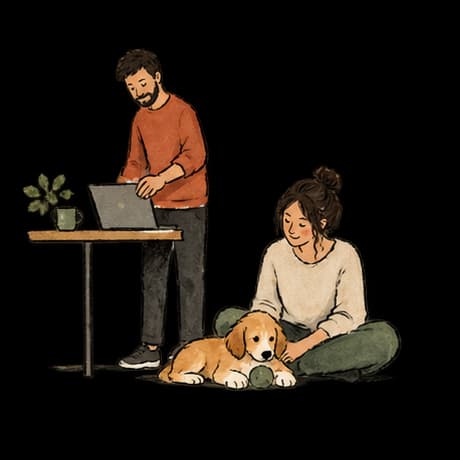
The working week · 5 min read
Working from home with a puppy
Make room for toilet breaks and naps, and find someone to help during calls you cannot pause.
The working week · 6 min read
Caring for your puppy while you work
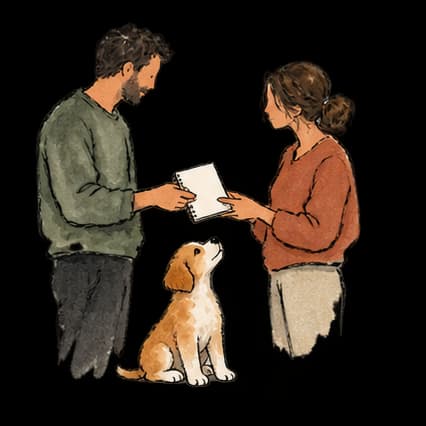
Find help for your workday, agree arrival times and prepare for a cancelled sitter or a late return.
The home · 5 min read
Your puppy’s first night at home
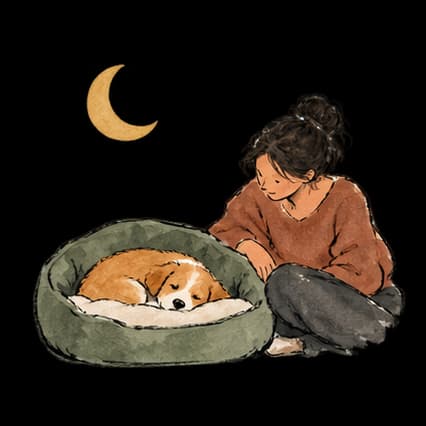
Help your puppy settle, prepare for nighttime toilet trips and share the care so you can rest too.