The working week · 6 min read
Caring for your puppy while you work
Find help for your workday, agree arrival times and prepare for a cancelled sitter or a late return.
Published by puppy-guide.shop · Updated 28 September 2026

Your puppy needs toilet breaks, rest, food and company while you work. Start by finding someone who can help when you cannot be there.
This guide helps you talk to sitters and family, share the daily jobs and plan for late days. You can work through it one day at a time.
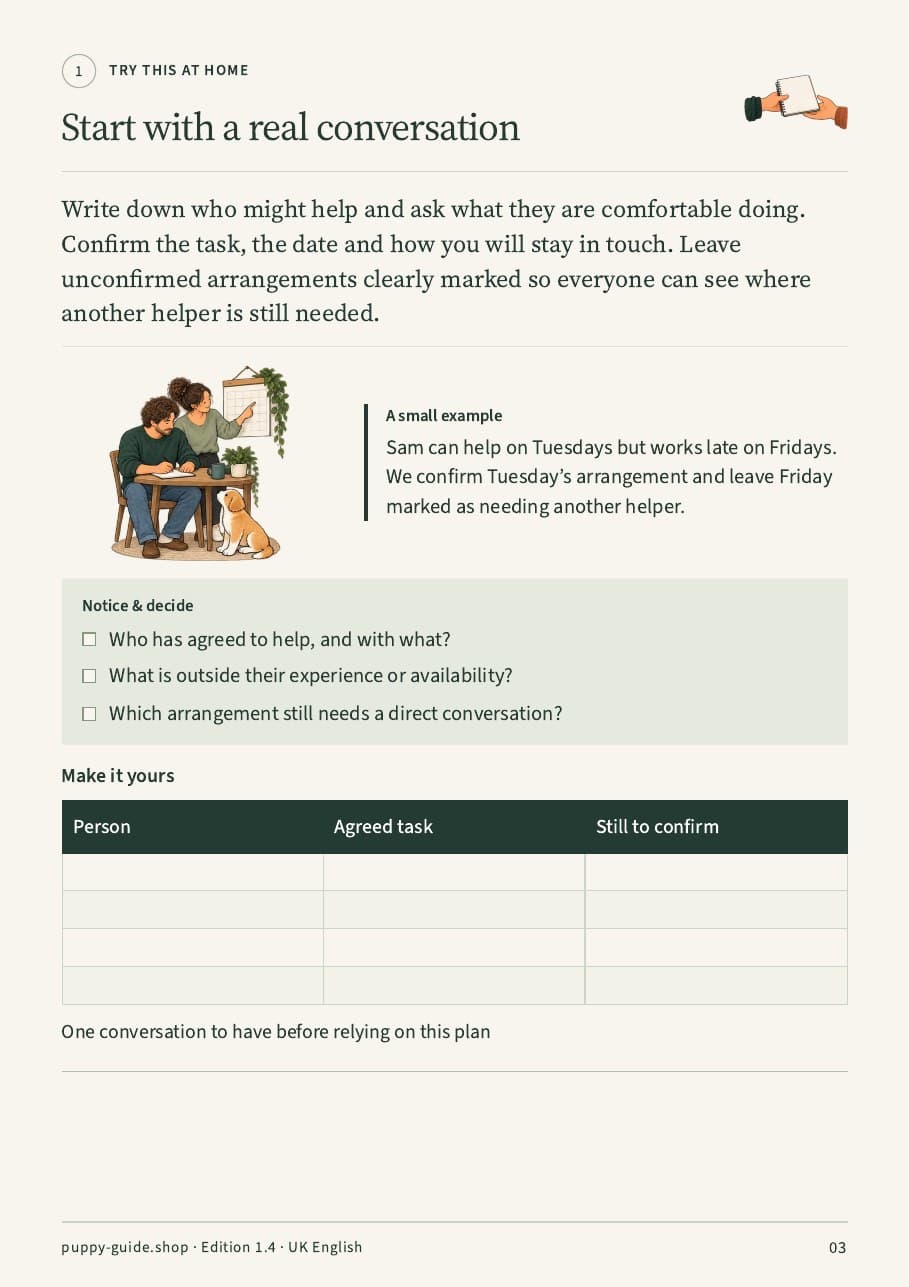
Start by asking who can help
Look at the help available around your work: time off, flexible hours, a partner, family, a sitter or suitable daycare. Match each arrangement to the care your puppy needs. A short walk or drop-in may cover only part of the day.
Count your whole absence, door to door: the commute, the late meeting, the errand on the way home. If you work from home some days, count the meetings when you cannot respond as unavailable time too. Toilet needs, comfort with separation, rest, food and social contact are different needs; a lunchtime visit that covers one does not prove the others are covered.

Check who is there through the day
Write down when you leave home and when you return. Ask each helper when they can arrive and how long they can stay. Check what happens between one person leaving and the next arriving.
A midday walk gives your puppy a break, but it does not provide company for the whole workday. If you use daycare, ask about quiet rest, supervision and whether it suits your puppy. Discuss health questions with your vet.
Ask family or neighbours directly rather than assuming they will be home. If there is a time nobody can help, change the work or care arrangement before the day begins.
Who is with your puppy while you work?
Agree who will help before your workday begins.


Before you start work, make sure someone has agreed to help whenever your puppy needs care.
Help while you work

Look at your workday
Include travel and calls when you cannot stop. Ask who can care for your puppy at those times.
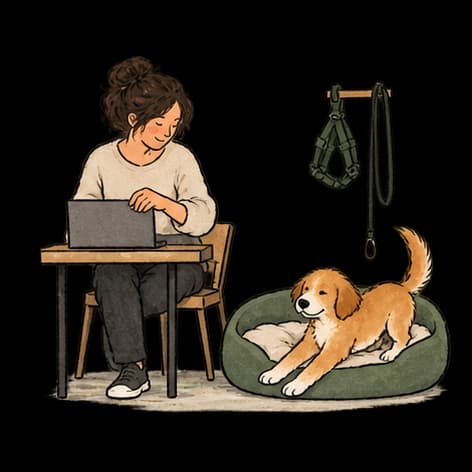
Be there when they wake
Decide who can take your puppy outside after a nap, even if you are still working.
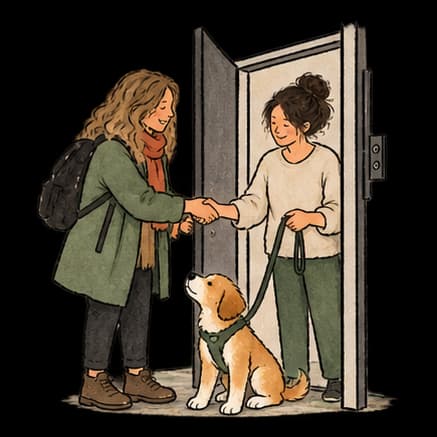
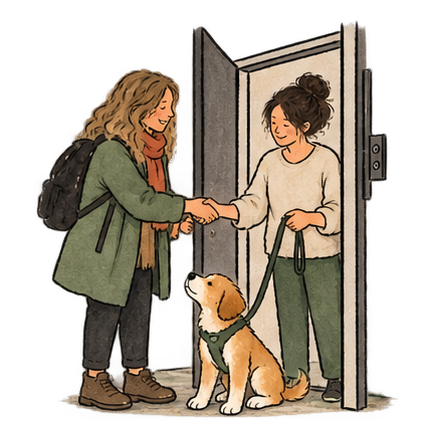
Agree when your helper arrives
Check the arrival time and try the keys. Stay until the next person has arrived.
Try the routine while you are home
Arrange time off or another capable caregiver before arrival. Use the settling-in period to observe your puppy’s needs and rehearse the handover while you can still help.
- 01
Before arrival
Confirm time off, the helper’s hours and access to your home. Meet the backup person and check the spare keys. Write down the routine supplied by the previous caregiver.
- 02
Early days
Observe with someone available all day. Record meals, toilet opportunities, rest and settling. This is where you learn what the puppy actually needs, rather than what a schedule says.
- 03
Rehearse the handover
Let the helper follow your routine while you remain available. Note missing instructions, then check whether the planned care hours meet your puppy’s needs.
- 04
Review and book
Compare the care needed with the hours you can actually provide. Book next week's care, resolve every gap, and change your commitments where nobody can cover.
Morning, daytime and evening
Morning: time for a toilet opportunity, the agreed meal, gentle interaction and a handover that includes what actually happened, including an unsuccessful trip. Supplies prepared the night before. Rushing out after a frantic burst of play does not make the handover clearer.
During the day: the responsible person follows the observed routine, protects rest and records changes. A camera can tell you about behaviour; someone still needs to be able to respond. Agree who can stop a meeting, return home or arrange help.
Evening: reconnect calmly, offer appropriate care and read the handover note. Do not try to compensate for the whole day with an overwhelming outing. Prepare tomorrow's care and supplies.
Ask what the care includes
A reassuring profile is less useful than a clear answer to a difficult situation: what happens if the puppy will not settle, if another dog is unsuitable, if the sitter is delayed. Ask every provider the same questions, arrange a meeting while you stay nearby and confirm access, transport, emergency contacts, costs and cancellation terms in writing.
Our guide on choosing a sitter, walker or daycare goes through the questions and the trial visit in detail.
Care that fits the real day

Get help during calls
Ask someone to help during calls you cannot pause. Tell them if the meeting runs late.
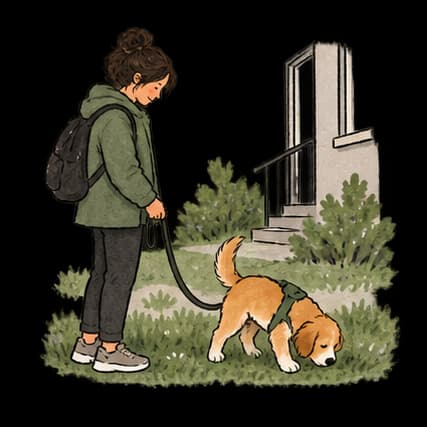
Allow time for the whole trip
Leave time to get ready, go outside and return calmly. A toilet break includes the journey too.

Ask about daily care
Ask where your puppy will rest and who watches them. Meet before the first booking.
Plan for a cancelled sitter or a late day
Ask one or two people whether they could help if your sitter cancels or you run late. Check they can get into your home and know where the supplies are.
Agree who calls whom when plans change. If nobody suitable can stay with your puppy, you will need to change your work plans. Ask paid helpers about extra charges before you rely on a longer visit.
Rehearse, confirm and hand over
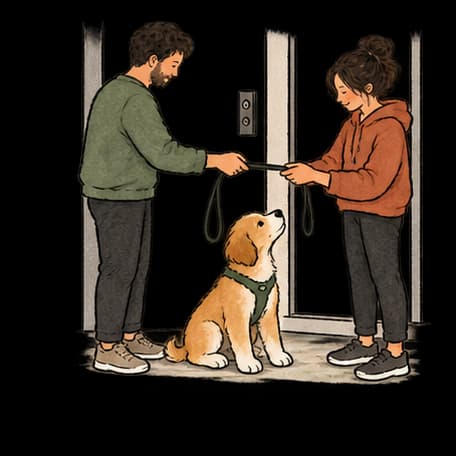
Try the routine together
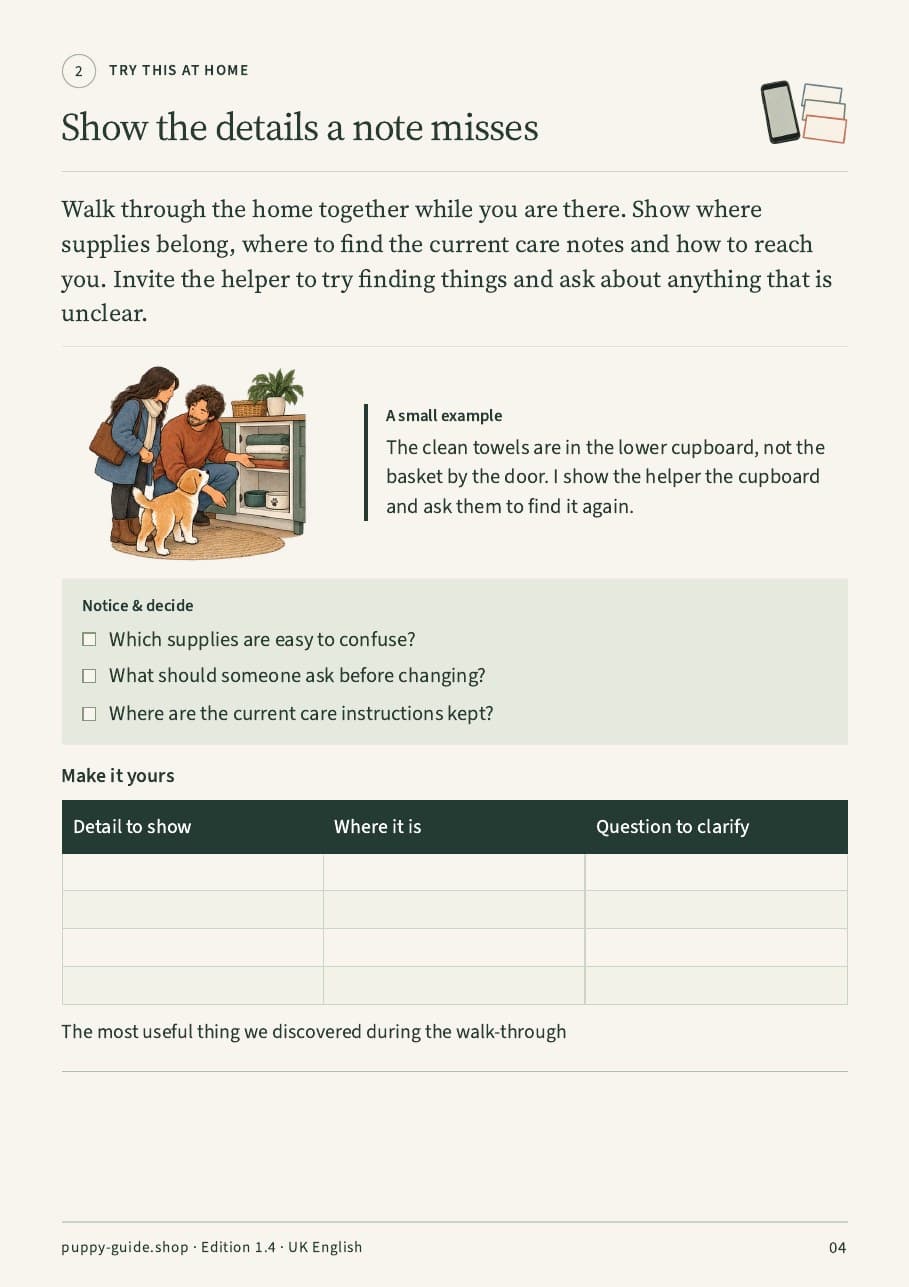
Show the keys, supplies and way outside while you are there to help. Invite questions.

Have someone to call
Ask who can help if your sitter cancels. Change your work plans if nobody suitable can stay.

Leave a useful note
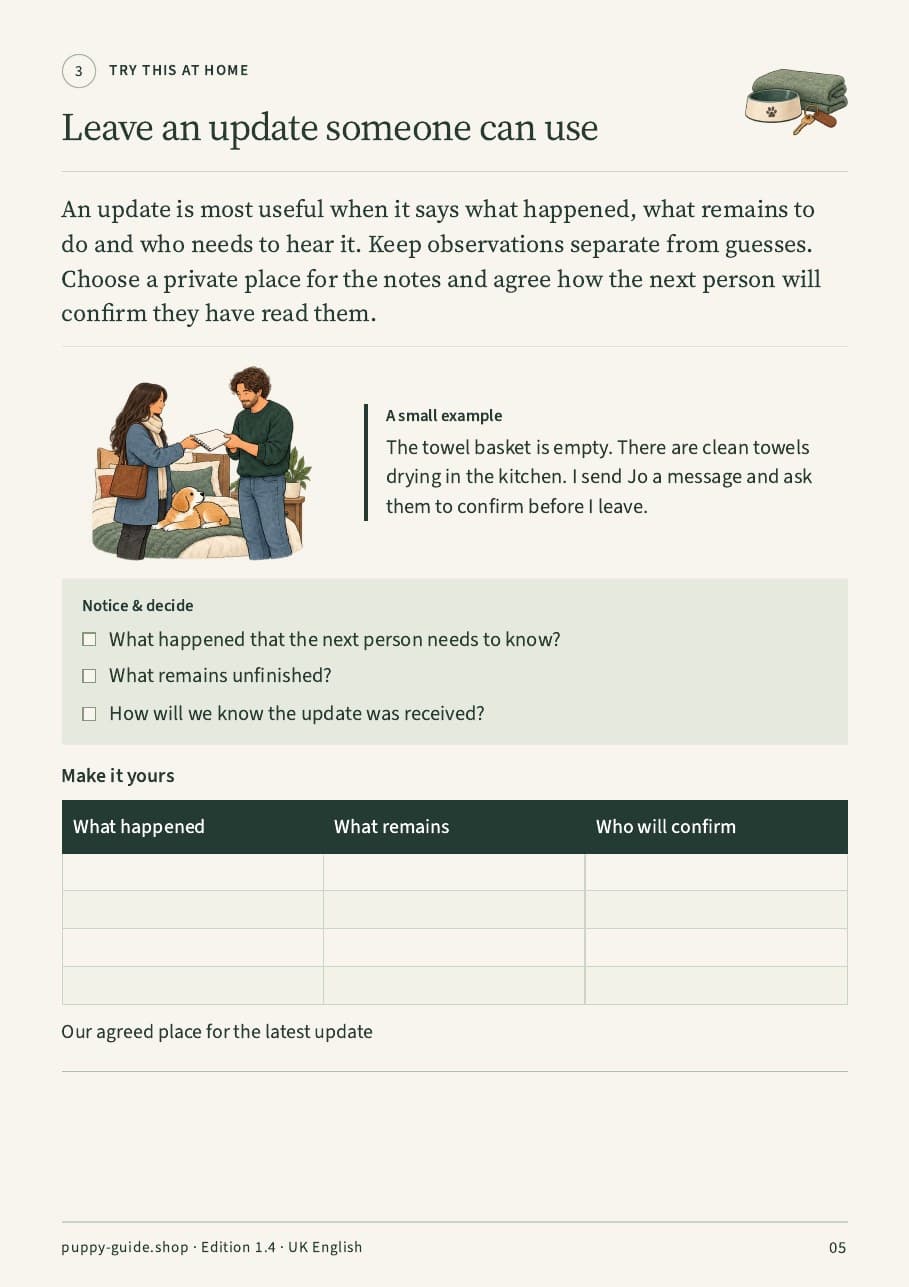
Tell the next person about food, sleep and the last toilet trip, including a trip when nothing happened.
What to take with you
- Ask who can look after your puppy while you work and travel.
- Agree arrival and leaving times so one person stays until the next is there.
- Try the everyday care together before relying on a sitter visit.
- Plan for cancellations and late days, including any extra cost.
Common questions
Is a lunchtime walker enough for a puppy while I work?
A walker provides one toilet opportunity and a short outing. It does not provide company, supervision or protected rest for the rest of the day. For a young puppy, continuous care is often the sensible starting plan, adjusted as you observe.
Can I use daycare for a young puppy?
Assess it with your vet and ask specifically about age and vaccination policies, group size, protected naps, handling methods and illness procedures. Daycare is one option, not a guaranteed fit and not a synonym for socialisation.
What if I live alone and work full time?
Arrange suitable care for the hours you cannot respond, including travel, and confirm a backup. Plan time for settling in and trying the handover before you rely on the workday arrangement.
A free guide for your next step

Read next
All guides
The working week · 6 min read
Finding a sitter or daycare for your puppy
Questions to ask, things to look for at a first meeting and simple notes to leave with your sitter.

The working week · 5 min read
Working from home with a puppy
Make room for toilet breaks and naps, and find someone to help during calls you cannot pause.
Alone time · 6 min read
Helping your puppy feel comfortable when you move away
Try small movements, watch how your puppy feels and learn when to stop or make things easier.