The working week · 6 min read
Finding a sitter or daycare for your puppy
Questions to ask, things to look for at a first meeting and simple notes to leave with your sitter.
Published by puppy-guide.shop · Updated 28 September 2026

You want to know your puppy will be comfortable and cared for. Ask who will be with them, where they can rest and what happens if they need help.
Meet before the first booking, show the everyday routine and give your puppy time to get to know the person. This guide helps you prepare that conversation.
What kind of help do you need?
Choose the arrangement that meets your puppy’s needs for the hours you require. Ask what each service includes and arrange any additional care.
| Option | Typically covers | Ask specifically about |
|---|---|---|
| Dog walker, drop-in visits | Toilet opportunities, a short outing, a quick check | Duration, group walks, how a young puppy is handled on the street, what happens if the puppy will not go |
| Sitter at your home | Continuous supervision, quiet naps, the routine, handover notes | Experience with very young puppies, what they do all day, phone use, visitors, their own backup |
| Sitter at their home | Company and supervision in a different environment | Other animals present, the space, how the puppy rests, transport to and from |
| Daycare | Supervised hours with other dogs and staff | Age and vaccination policies, group size and matching, protected naps, handling methods, illness procedures |
| Family, friends, neighbours | Whatever is confirmed with times | Their real availability, whether they will follow your notes, their own limits |
The questions to ask everyone
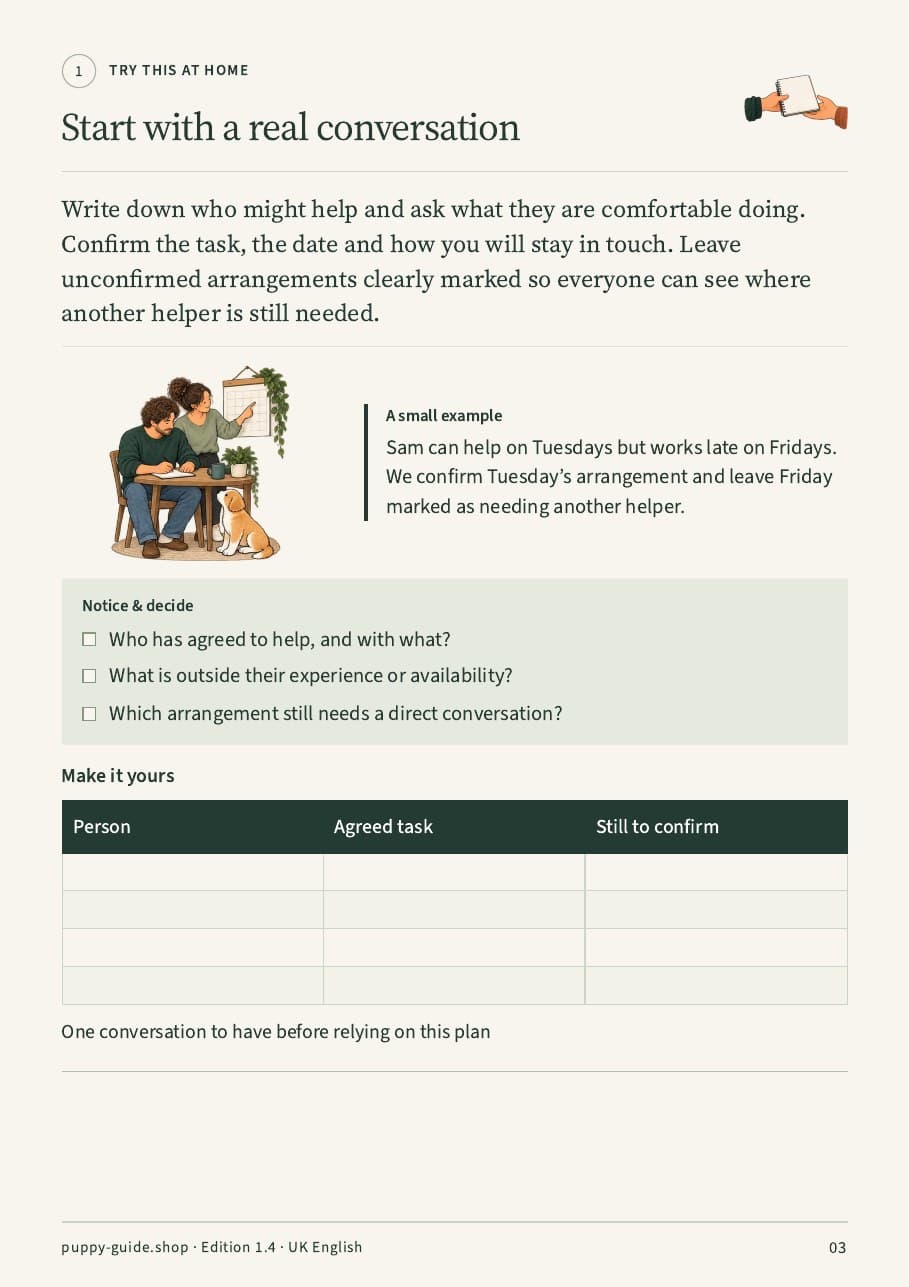
Ask the same list of every provider, describe your puppy's current needs honestly, and write down the answers. The comparison is what makes the decision.
- How much experience do you have with puppies this young?
- What do you do when a puppy will not settle?
- Who is physically supervising, and when?
- How do toilet opportunities and undisturbed rest happen?
- Which handling methods do you use? Reward-based only?
- What signs make you stop an activity and contact me?
- What are your illness, vaccination and group policies?
- What happens if you cannot provide the booked care?
- What are your cancellation terms, and are you insured?
Picture the care discussion
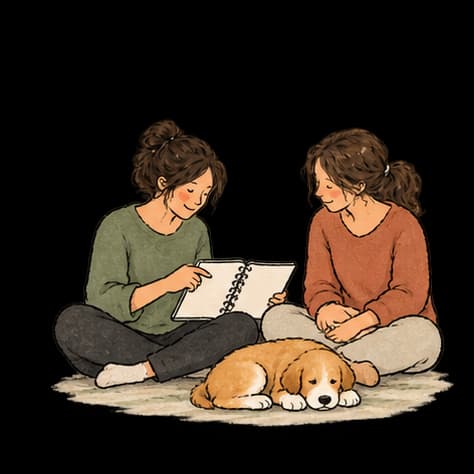
Talk about the day
Ask who stays with your puppy, where they rest and what happens if they need help.

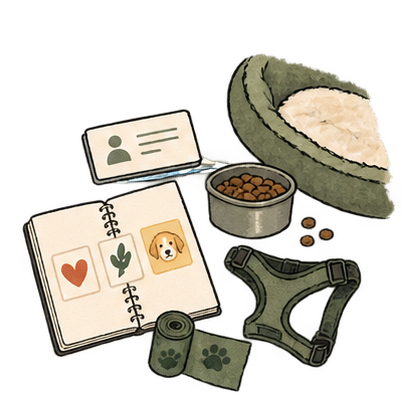
Leave notes with the supplies
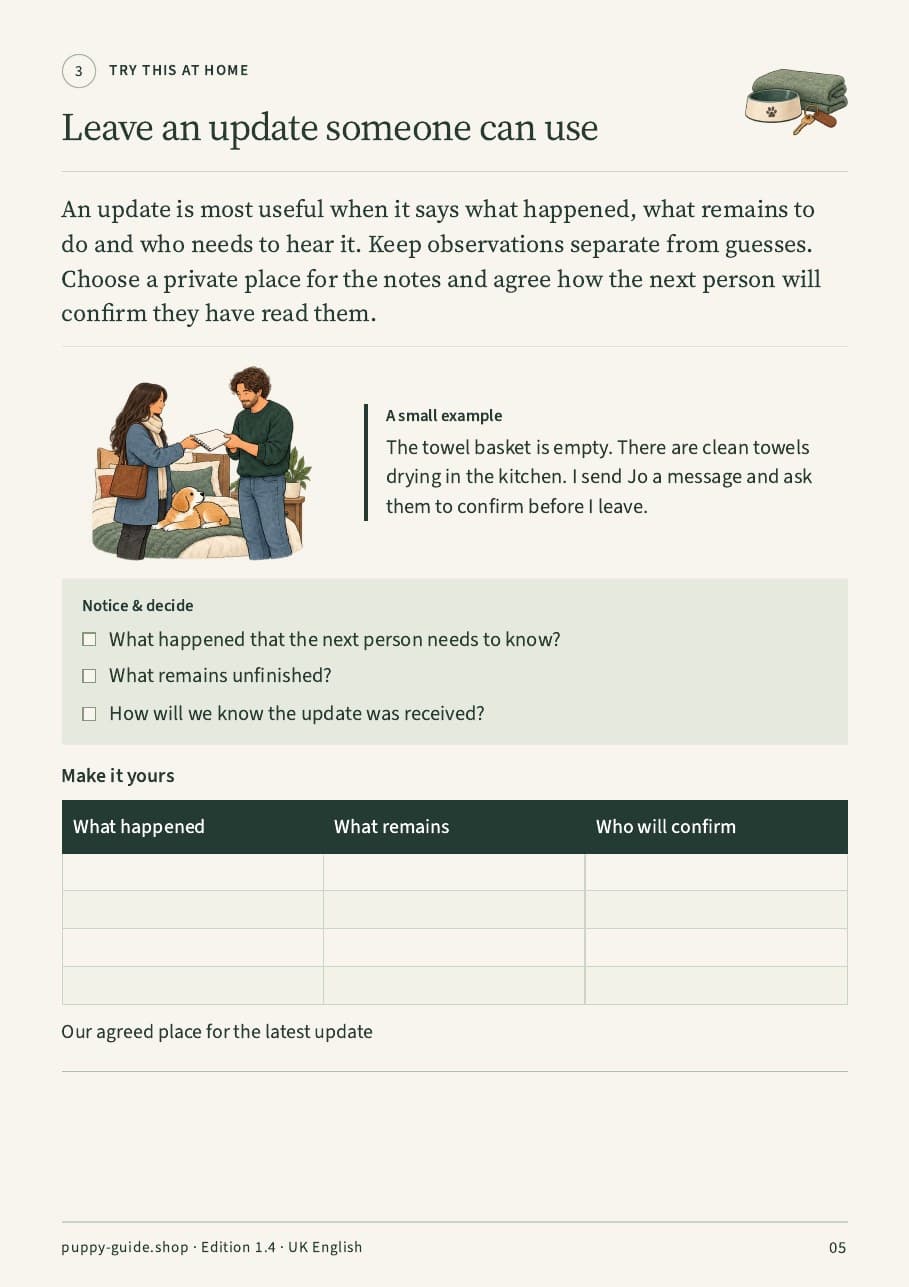
Put the latest care instructions and useful contacts in one easy-to-find place.

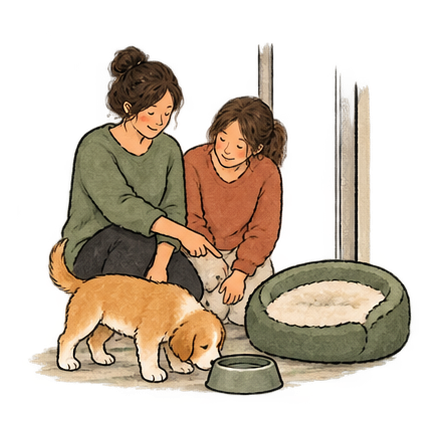
Show where things are
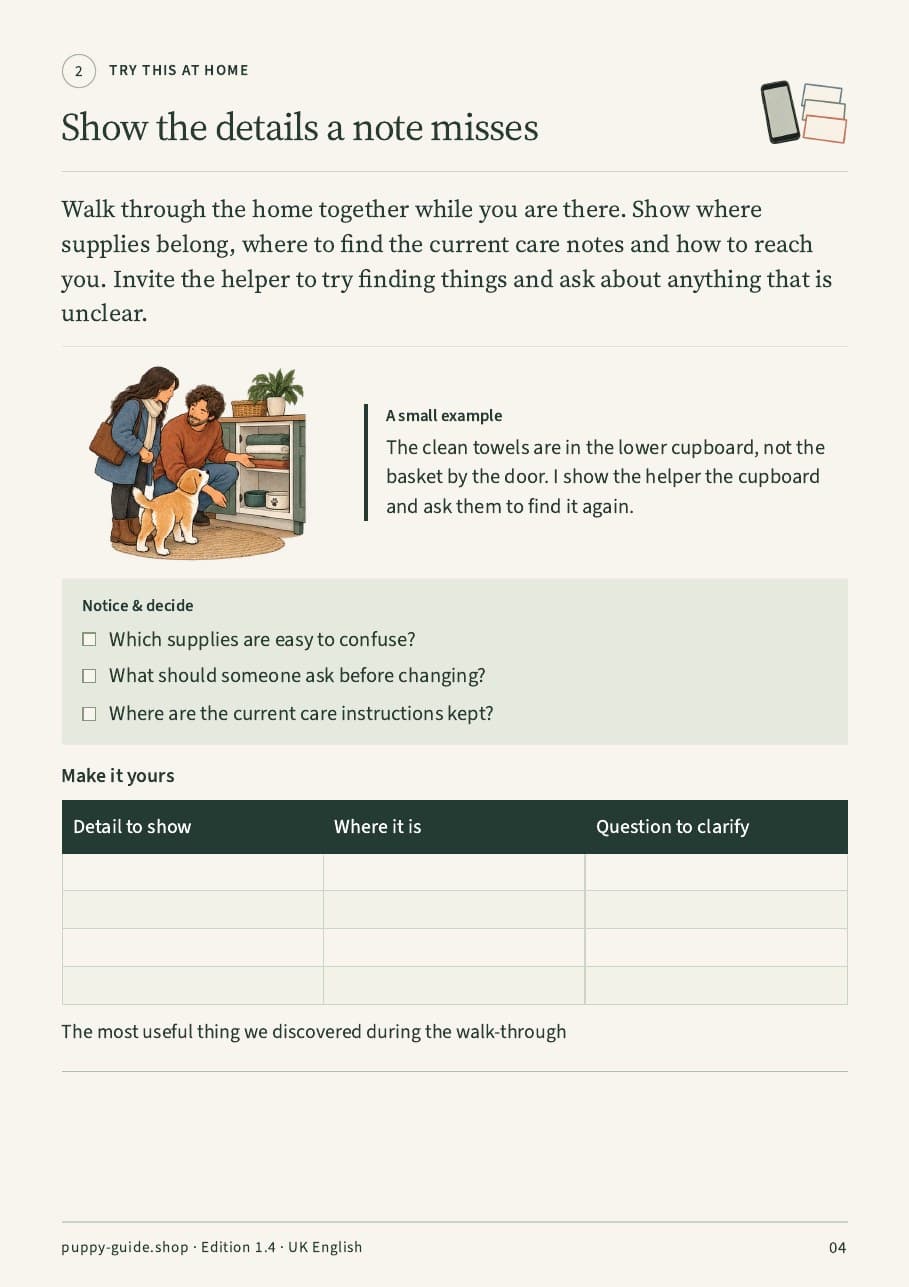
Point out the water, bed and way outside. Check that your sitter can find the supplies.

Meet before the first visit
Arrange a first meeting while you are there. Give your puppy room to approach or move away. Watch whether the sitter is gentle and responds when the puppy seems unsure.
Show the bed, water, supplies and way outside. Try the keys together. Let the sitter help with an everyday task while you stay available, and invite questions. You do not need to leave a worried puppy to test the arrangement.
Afterwards, talk about what went well and what needs changing. Book only when you are comfortable with the care and the arrangement suits your puppy.
Help your sitter feel ready
Go through the everyday care together before you leave.

Before you go, give your sitter time to ask questions and check they have what they need.
Try things together
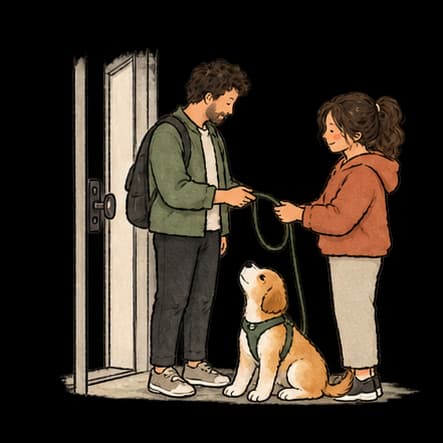
Try it while you are there
Let the sitter help while you stay nearby. Give them time to ask questions and meet your puppy.

Stay until the next person arrives
Agree when each helper comes and goes. Check who can stay if someone is late.
Allow time for the whole trip
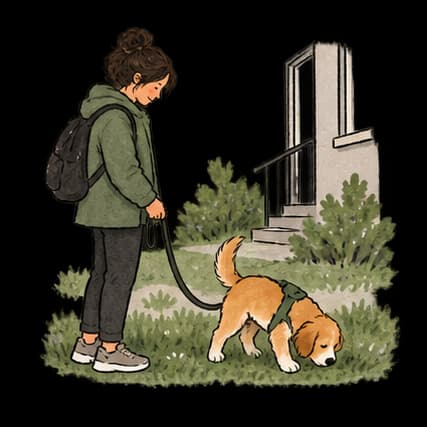
Leave time to get ready, go outside and return calmly. A toilet break includes the journey too.
Leave the useful details in writing
Confirm access arrangements, transport, emergency contacts, permission to contact your vet, costs, cancellation terms and what happens if they are delayed. Ask your vet in advance how authorization and payment work if a caregiver brings your puppy in. Keep the puppy profile and the handover sheet with the supplies so the caregiver has the routine in front of them.
Hand over keys and access codes privately to the people who need them. Keep codes separate from care sheets that may be copied or carried outside the home.
Daycare, honestly
Ask about age and vaccination requirements. Find out how dogs are grouped and where your puppy can nap quietly. Ask how staff handle the dogs and what they do if a puppy is unwell or overwhelmed. Discuss whether this setting suits your puppy with your vet.
Some puppies are more comfortable with quiet care at home. Use the introduction and the caregiver’s observations to assess how your puppy responds, and review the arrangement if they remain worried.
Agree updates and a backup

Send a short update
Say what your puppy did, what comes next and whether help is needed. Use the agreed message or folder.

Have someone to call
Ask who can help if your sitter cancels. Change your work plans if nobody suitable can stay.

Talk when you get home
Read the notes together, collect belongings and choose one thing that would help next time.
What to take with you
- Ask who will be there, what they do and where your puppy can rest.
- Meet while you are present and give your puppy time to get comfortable.
- Leave clear care notes and agree who to call if something changes.
- Discuss health and daycare questions with your vet.
Common questions
How do I check a dog walker's references?
Ask for two current clients and call them with specific questions: reliability, how the walker handled a difficult day, whether they communicate when something changes. Then weigh the trial visit at least as heavily as the references.
Should the sitter follow my routine exactly?
Share clear food and veterinary instructions, handling preferences and the situations that need a call. Everyday timing can adapt to your puppy’s needs. Mark any instructions that require exact timing and ask the sitter to clarify uncertainties before the visit.
What if my puppy is shy with the new person?
Give it room and time in the first meeting, and watch how the caregiver responds to hesitation. A puppy that warms up over a calm visit is fine. A puppy that hides for the whole meeting, or a caregiver who pushes the contact, is information for your decision.
A free guide for your next step

Read next
All guides
The working week · 6 min read
Caring for your puppy while you work
Find help for your workday, agree arrival times and prepare for a cancelled sitter or a late return.

The working week · 5 min read
Working from home with a puppy
Make room for toilet breaks and naps, and find someone to help during calls you cannot pause.

Records and care · 6 min read
Simple notes for your puppy’s first year
Keep contacts, vet advice, appointments and helpful memories together without filling in every box.