Records and care · 6 min read
Simple notes for your puppy’s first year
Keep contacts, vet advice, appointments and helpful memories together without filling in every box.
Published by puppy-guide.shop · Updated 28 September 2026

A few useful notes can save you searching through messages before a vet visit or a sitter arrives. Keep important contacts, current care instructions and the next appointment in one easy-to-find place.
You can leave pages blank. Use the planner for what helps you and add a little at a time.
Use only the pages that help
Keep your vet’s instructions and the notes your helpers need. Ask the practice about treatments, food and appointments instead of guessing from a planner. Keep the original instructions too.
A few accurate notes are enough. You can leave boxes blank and start “month one” whenever you begin using the planner.
The profile page
Keep your puppy’s name, arrival date and key contacts on one page. Add the current feeding advice, known sensitivities and any handling needs. Note where the microchip details and original records are kept.
Keep identification numbers and access details in a private copy. The helper's copy says where to find them.
Help everyone use the same care notes
When the care instructions change, keep the update easy to find.


Try this today: check that everyone helping you can find the same up-to-date notes.
Picture one current record
Keep the important details together
Put contacts and puppy details in one folder. Show helpers where to find what they need.
Date your care notes
Keep one up-to-date sheet. Mark old copies so nobody follows them by mistake.

Tell your helpers what changed
Show the next person the latest notes and explain any changes before they take over.
Appointments and agreed actions
Record what the practice actually said: date, reason, the agreed action and the follow-up. If a dose, interval or recommendation is unclear, ask again before you leave rather than reconstructing it at home. Bring observations, not a diagnosis: when it started, what you saw and what changed in appetite, drinking, toileting or behaviour.
Start a question list before the appointment and add to it as things come up. Bring it with your observations and current records.
Turn the visit into next steps

Bring your questions to the vet
Write down what you noticed and what you want to ask. Let your vet advise on treatment.
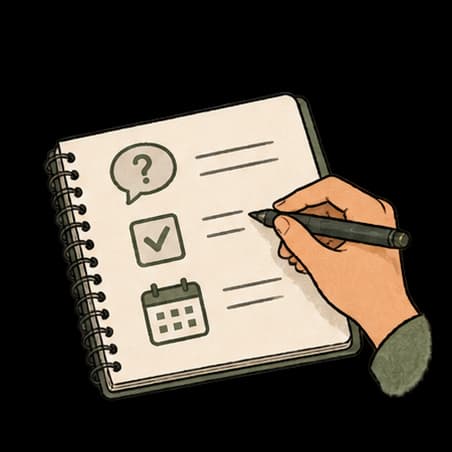
Write down the advice
Keep the vet’s instructions. Ask about anything unclear and agree who will follow them.

Remember the next appointment
Put the agreed date in your calendar. Keep the practice’s phone number with your notes.
Costs from real bills
Use actual bills and quotes in your currency, and keep a contingency for the disrupted days. The categories below are a starting list, not a budget.
| Category | Examples | Worth noting |
|---|---|---|
| Veterinary care | Visits, preventive care as agreed, unexpected treatment | Ask the practice about payment and authorization when a caregiver brings the puppy |
| Food and supplies | Food, harness sizes as the puppy grows, replacements | Note sizes and brands so a second person can buy the same |
| Care around work | Sitter, walker, daycare, backup | Actual quotes, times booked, cancellation terms |
| Building and home | Cleaning products, a washable rug, deposits or fees | Check the lease and house rules once |
| Contingency | Delayed sitter, emergency visit, travel changes | A separate amount you do not touch for the routine |
A few notes at the end of the month
Think about what went well with sleep, toilet trips and daily care. Write down anything that has changed or that you want to ask your vet about.
Choose one thing that would make next month easier and ask who can help. Add a favourite memory if you like. These pages are for your family, so there is no need to fill every line or reach a milestone.
Travel and the longer handover
Before a trip, check the destination and transport requirements with the relevant provider. Ask your vet about documents and care advice. Leave your sitter the usual food, rest and toilet routine, emergency contacts and a plan for delays.
Keep what you will use again
At the end of the year, keep the records you will need: professional instructions, official documents, helpful routines and the observations that explain your dog's preferences. Review what changed in your household as well as in your dog: does the work schedule still fit the care plan, are emergency contacts current, does the equipment still fit? Then choose one priority for the next few months. The aim is a usable history, not a perfect notebook.
Keep what helps next time

Keep track of spending
Note what you paid and what is still planned. Check the next care booking before you pay.
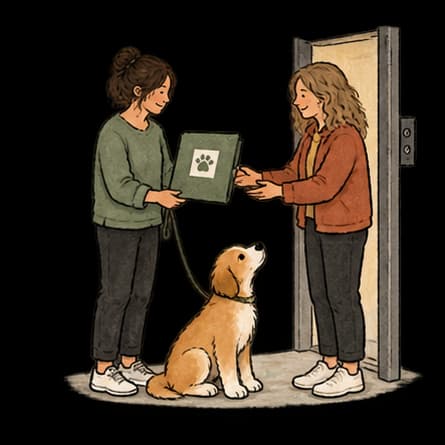
Help your sitter get ready
Show the usual routine and share the latest notes. Meet before the trip to try things together.

Keep the notes that help
Save your favourite memories and the current care details. You do not need to copy every old note.
What to take with you
- Keep the vet’s original advice and ask about anything unclear.
- Put the latest care notes where helpers can find them.
- Write down appointments and bills while you remember them.
- At the end of each month, choose one thing that would help. Blank pages are fine.
Common questions
Does the organiser include a vaccination schedule?
No, on purpose. Vaccination and preventive care plans are decided with your vet for your puppy and your region. The organiser gives you the space to record the plan you agree, and the follow-up dates the practice gives you.
Should I keep a daily diary for the whole first year?
Use daily notes while they answer a useful question or help caregivers share information. You can reduce them when they are no longer needed. Keep current care instructions updated whenever something changes and use the monthly review for planning.
How do I organise the paperwork for a second caregiver?
Share the current care sheet and contacts, plus any documents needed for that particular stay or trip. Keep originals secure and tell the caregiver where to find additional records if needed.
A free guide for your next step
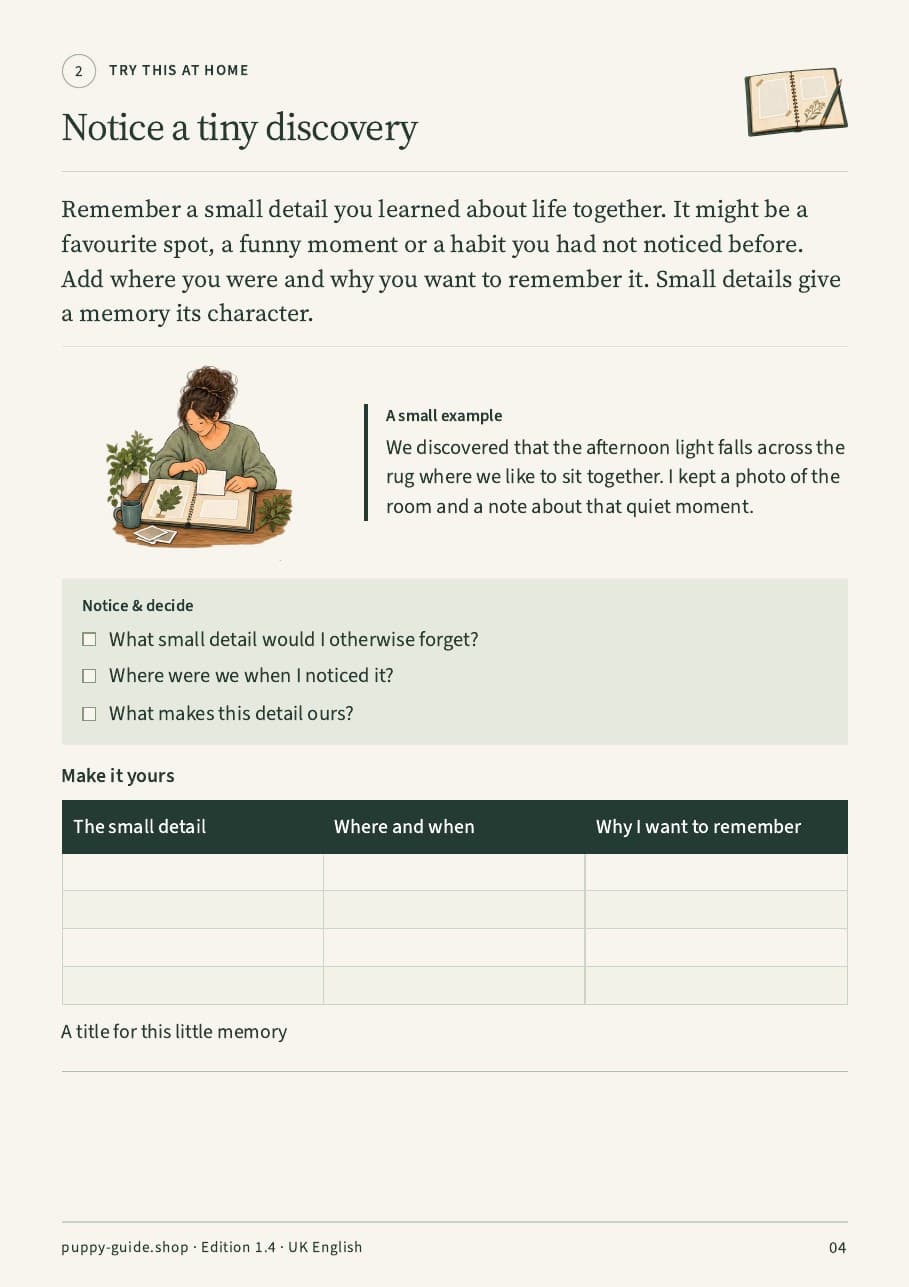
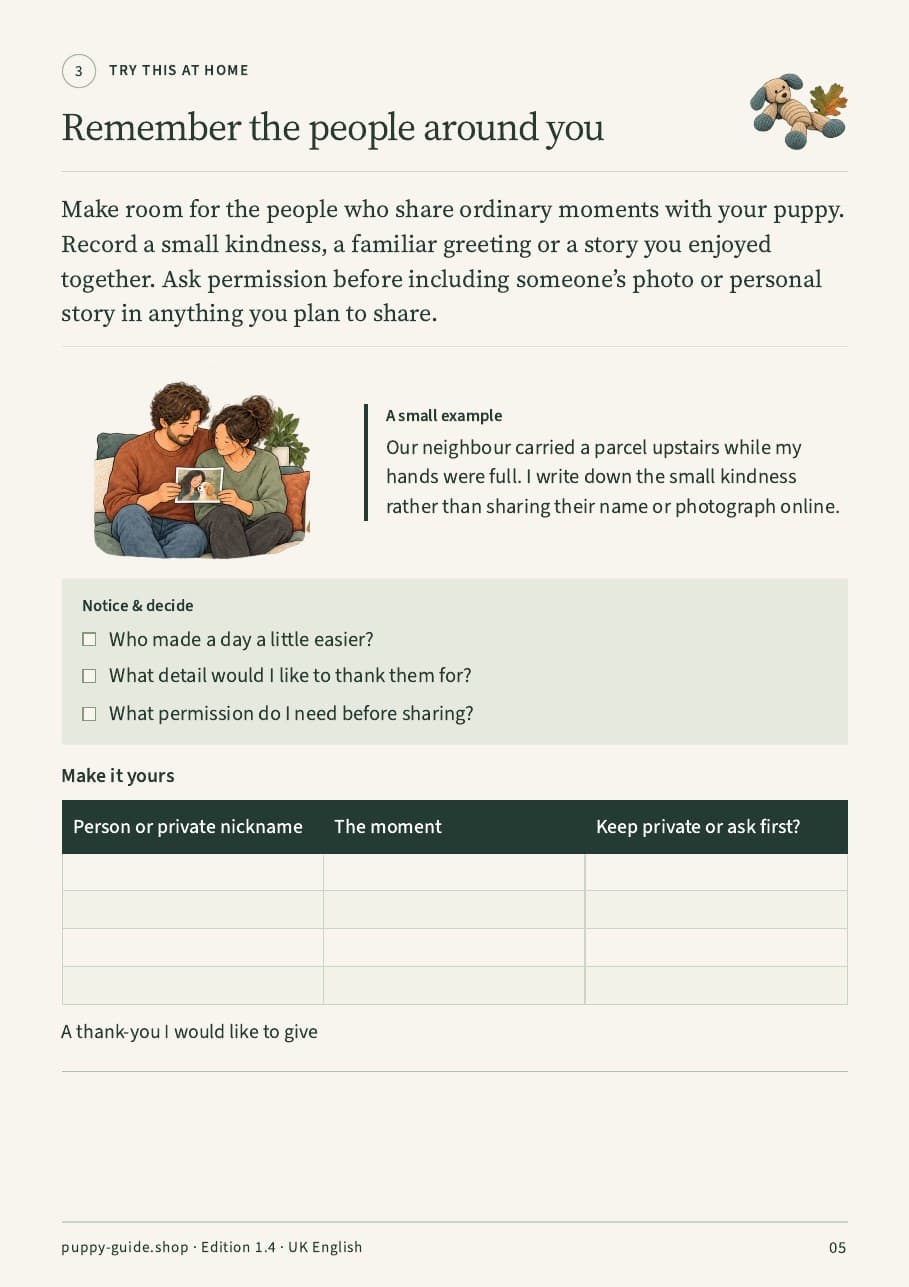
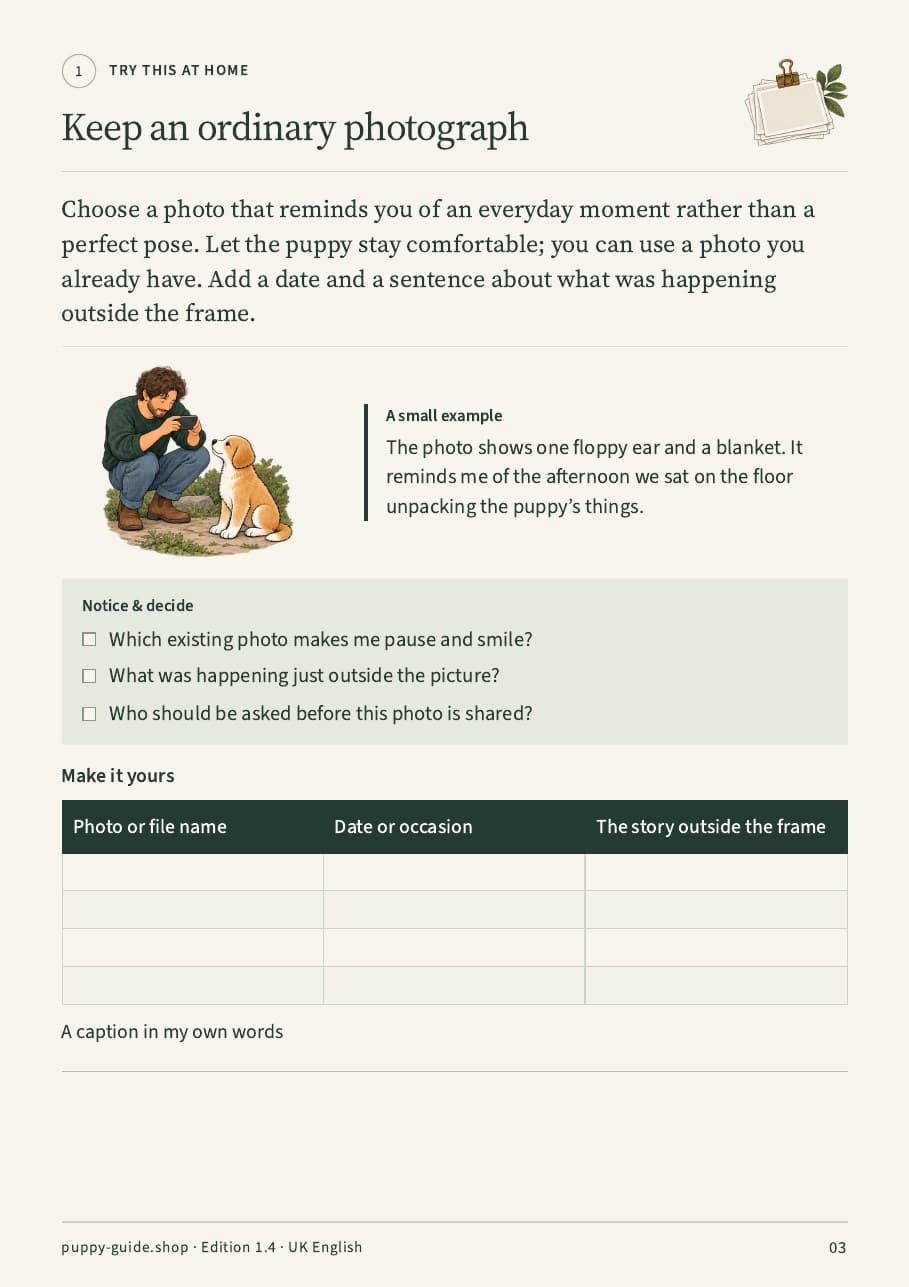

Free guide · 9 pages · PDF, A4
Little Puppy Moments
Five ways to keep the details you might otherwise forget.
Read next
All guides
The working week · 6 min read
Finding a sitter or daycare for your puppy
Questions to ask, things to look for at a first meeting and simple notes to leave with your sitter.

The home · 5 min read
Your puppy’s first night at home
Help your puppy settle, prepare for nighttime toilet trips and share the care so you can rest too.

The home · 6 min read
Getting your flat ready for a puppy
A quiet bed, fresh water and a safe space to play. Set up the basics without buying more than you need.