The route outside · 7 min read
Helping your puppy learn where to go to the toilet
Simple help with toilet breaks, rewards and accidents when you live in an apartment.
Published by puppy-guide.shop · Updated September 28, 2026
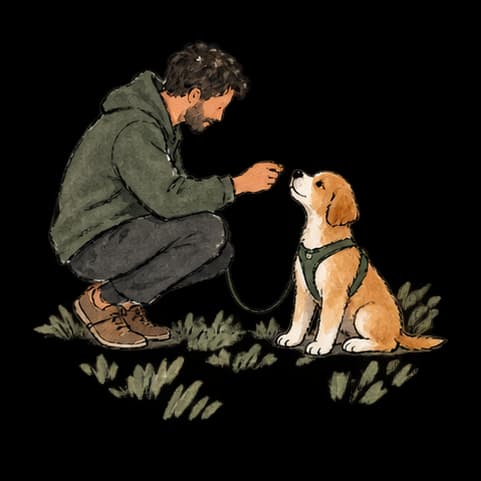
When you live upstairs, getting outside takes a little preparation. Keep your things ready and offer frequent toilet trips, especially after sleep, meals and play.
Your puppy is still learning. Reward them at the toilet spot and clean accidents calmly. This guide helps you make the next trip easier.
Offer a break after sleep, food and play
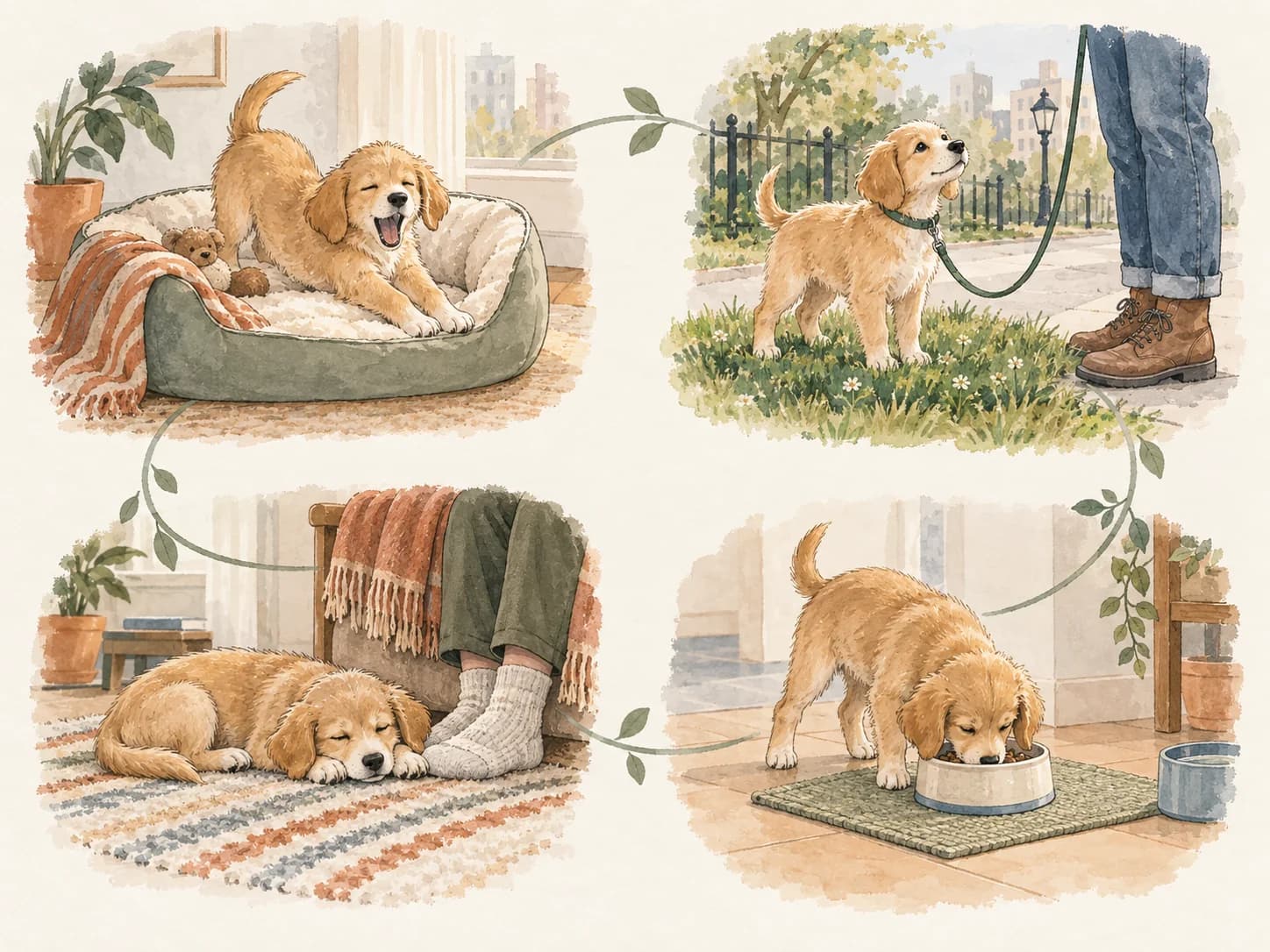
A puppy's need to go follows what it just did. Think in a repeating sequence and offer an opportunity at each turn. Do not wait for a reliable signal from a new puppy; there usually is none yet.
- 01
Wake
After every sleep, including short naps. Be ready to move before the puppy is fully awake and exploring.
- 02
Toilet opportunity
Out to the chosen spot, calmly, with a reward ready. If nothing happens, back to supervision and another opportunity soon.
- 03
Food or play
Eating and active play both bring the next need closer. Watch closely during and after, and plan the next opportunity rather than the next activity.
- 04
Rest
Protect quiet and stay available. Rest is part of the cycle, not the gap between the useful parts.
Choose the spot with your vet
Pick one toilet location and keep it as consistent as practical. Before you use a shared patch or a public dog area, ask your vet which places suit your puppy's vaccination status and the local infection risk. An easy-to-reach public lawn is not automatically suitable for a young puppy, and a quieter corner by the building may be the better choice for a few weeks.
Keep outings for the toilet calm. Play, greetings and exploring can happen separately; a puppy that arrives at the spot already excited often does not go, and the trip back upstairs is when the accident happens.
Reward your puppy right there
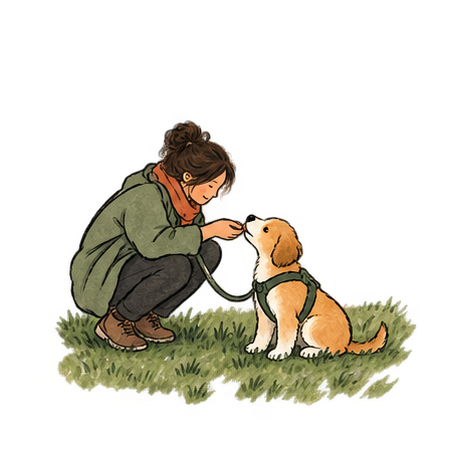
Reward your puppy promptly after they finish at the chosen toilet spot. Carry suitable small rewards so you can give one there. Waiting until you are back indoors makes it harder to connect the reward with toileting.
Combine rewards with frequent toilet opportunities, supervision and calm cleanup. Use your notes to adjust the routine and ask for help if difficulties continue.
After a toilet trip
What you do next depends on what happened outside.
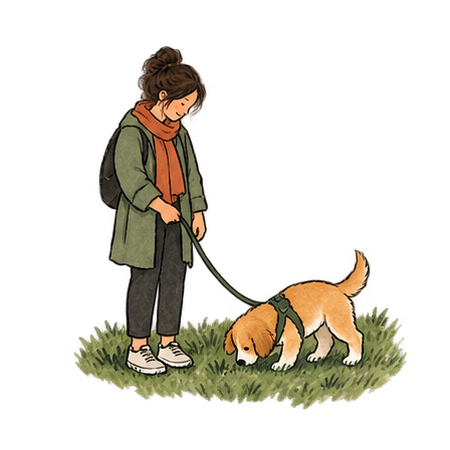
Tell the next person whether your puppy went, so they know to keep watching.
If your puppy keeps trying to pee but cannot, call your vet right away.
Picture the toilet trip
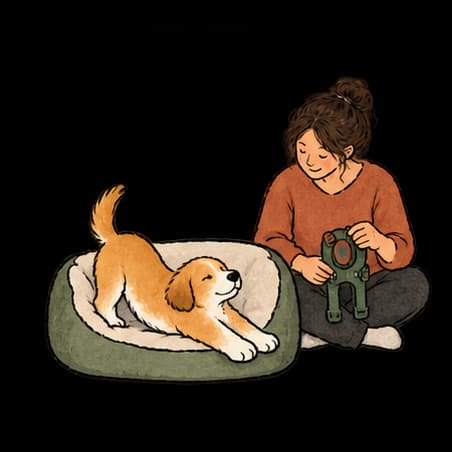
Be ready after a nap
Have your walking things ready so you can offer a toilet trip when your puppy wakes.
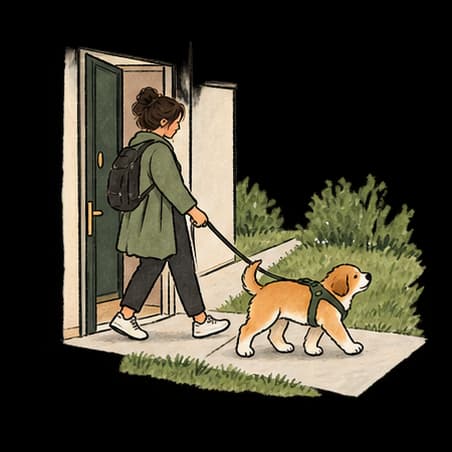
Use a suitable toilet spot
Ask your vet which outdoor places suit your puppy. Use the familiar spot when you go out.
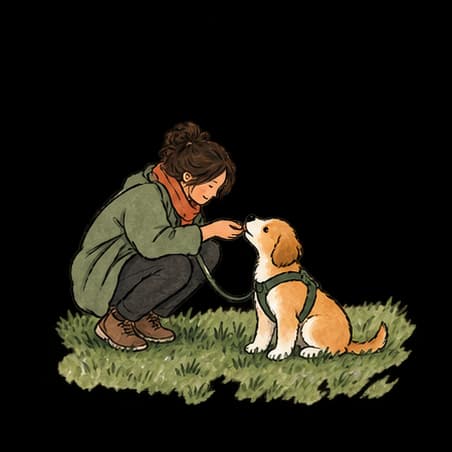
Reward just after they finish
Have a reward ready and give it at the spot just after your puppy pees or poops.
The route is part of the routine
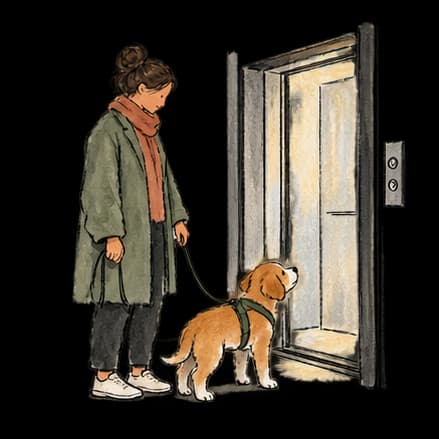
Walk the way outside when your puppy does not urgently need to go. Notice what slows you down, such as missing keys or a busy elevator. Keep your walking things ready and prepare before the next nap ends when you can. Your puppy still needs a prompt toilet trip when they need to go.
In a high-rise, the route deserves its own plan, including what happens when the elevator is out of service. Our guide on the high-rise route goes through the stages, the other plans and elevator manners in detail.
Prepare the whole route
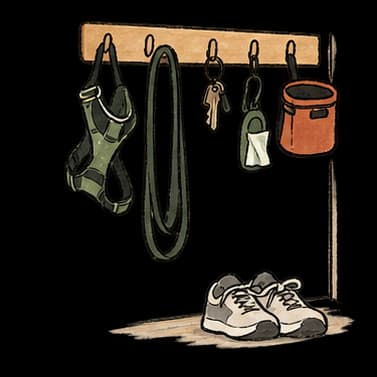
Keep things by the door
Put the harness, leash, keys, bags and rewards together, out of your puppy’s reach.
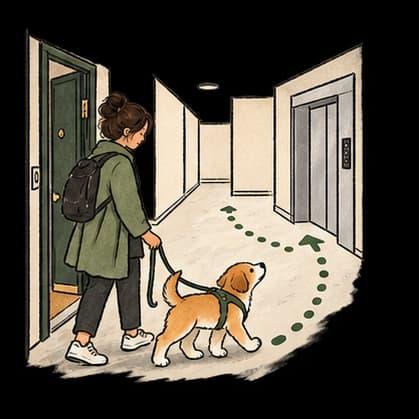
Check the way outside
Try doors and corners on the way to the elevator. Ask for help with anything difficult.
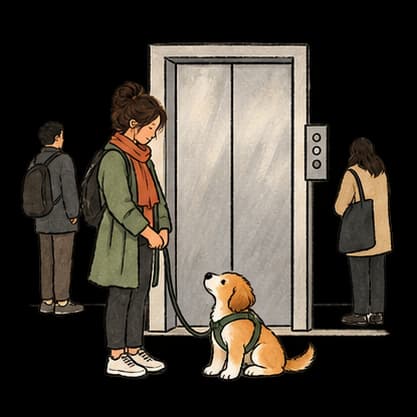
Allow for the elevator wait
Get ready early at busy times. Keep your puppy and leash away from closing elevator doors.
When an accident happens
Clean accidents calmly with a pet-safe product, following its instructions. Note what happened beforehand. Similar entries may suggest a practical change; they do not establish the cause.
| What you notice | Possible factor to check | One change to try |
|---|---|---|
| Puddle beside the door while you gather shoes | The route starts too late | Walking supplies and shoes ready before the puppy wakes |
| Accident soon after a play session | Play brings the next need forward | Offer an opportunity during and right after active play |
| Accident during a call or while cooking | Supervision dropped in an active period | Arrange a helper or pause the task to supervise. |
| Went outside, came back, went again indoors | The outing was too exciting or too short | Offer a quiet trip; supervise afterward and offer again if needed. |
| Sudden change, straining, small frequent puddles | Possibly a health problem | Call the vet; straining without urine is urgent |
A temporary indoor station, if you need one
Some homes cannot manage frequent trips outside for a while: a long route, a caregiver who cannot use stairs, a puppy not yet cleared for the shared lawn. A temporary indoor toilet station is a practical choice in that case, not a failure. Put it away from bed, food and water, choose materials the puppy cannot chew and swallow, supervise the introduction, reward use of the station and clean promptly.
Teach it deliberately and plan the transition back outside while the station is still in use: keep frequent successful opportunities and change one part of the setup at a time. Never leave a tray in a shared hallway, and treat a balcony only as a supervised option if it is secure, permitted and suitable.
What would help next time?
Keep successful trips and accidents in the same log so the context stays visible. A week with more entries may simply be a week you recorded better. Compare situations, after naps, during play, before the handler was ready, in the hallway, on a new surface, and choose one change for the next few days.
Use the diary for as long as the notes help you. Review what makes trips easier and adjust when your puppy’s needs change. A dry night does not tell you how long they can wait during the day.
A little help for next time
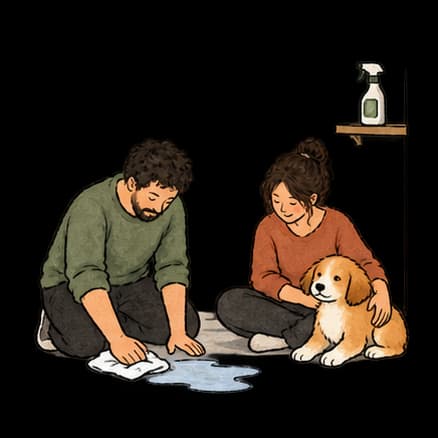
Clean up calmly
Keep your puppy safe while you clean. Think about what would help you get outside sooner next time.
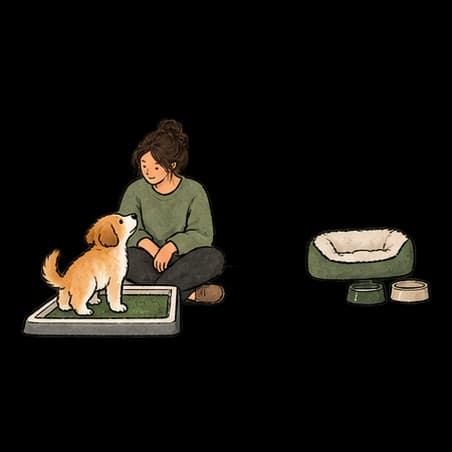
Keep indoor toileting separate
If you need a temporary indoor spot, keep it away from the bed and bowls. Agree who cleans it.
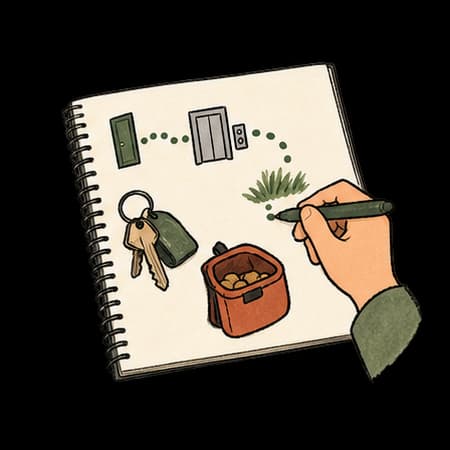
Make the next trip easier
Write a short note about what held you up. Choose one thing that would help next time.
What to take with you
- Offer frequent toilet breaks, especially after sleep, food and play.
- Use a spot your vet says is suitable and reward your puppy just after they finish.
- Keep your walking things ready so you can leave promptly.
- Clean accidents calmly. Keep water available and call your vet if your puppy cannot pee.
Common questions
How long can my puppy hold it?
There is no single interval that suits every puppy. Offer frequent opportunities around waking, meals and play, and whenever you see signs of needing to go. Record what happens and discuss concerns with your vet.
Should I use puppy pads in an apartment?
Only as a deliberately taught temporary station when frequent trips outside are not yet possible, placed away from bed and bowls and cleaned promptly. Plan the transition outside while it is in use.
My puppy goes outside and then again indoors. Why?
They may have been distracted or may still need to go. Keep the trip quiet, allow time at the familiar spot and reward after they finish. Supervise after returning and offer another opportunity if needed. Ask your vet about repeated problems, pain or sudden changes.
A free guide for your next step
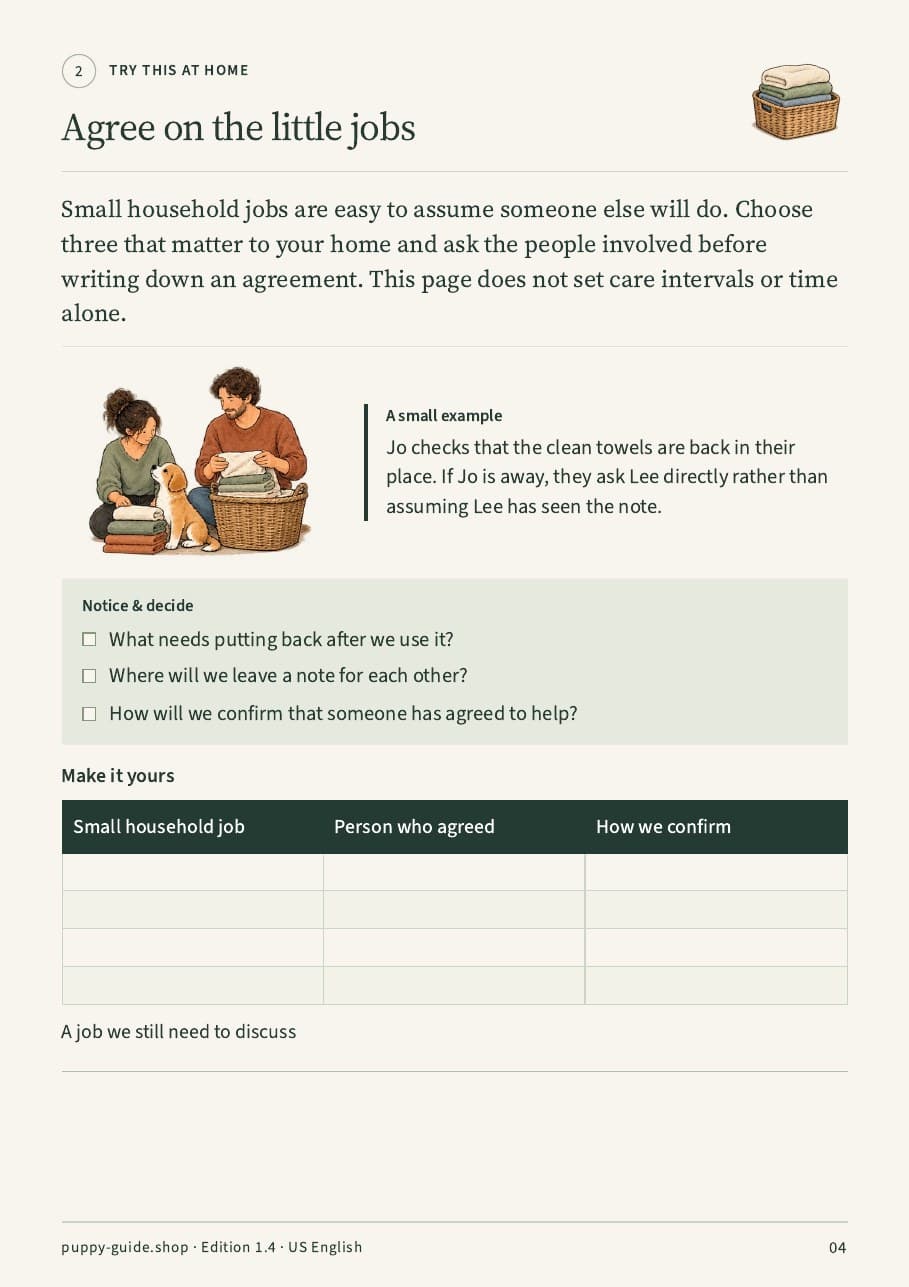
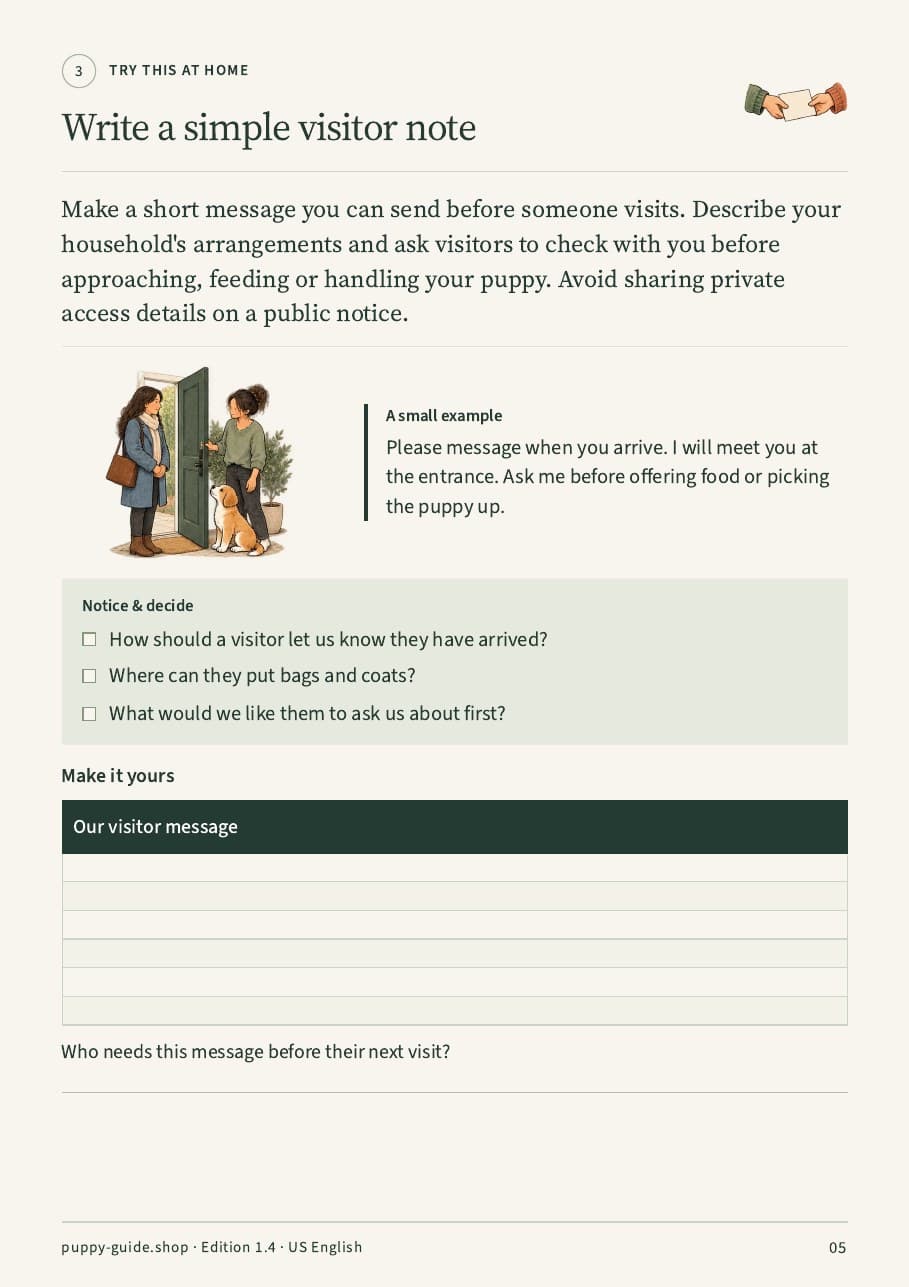
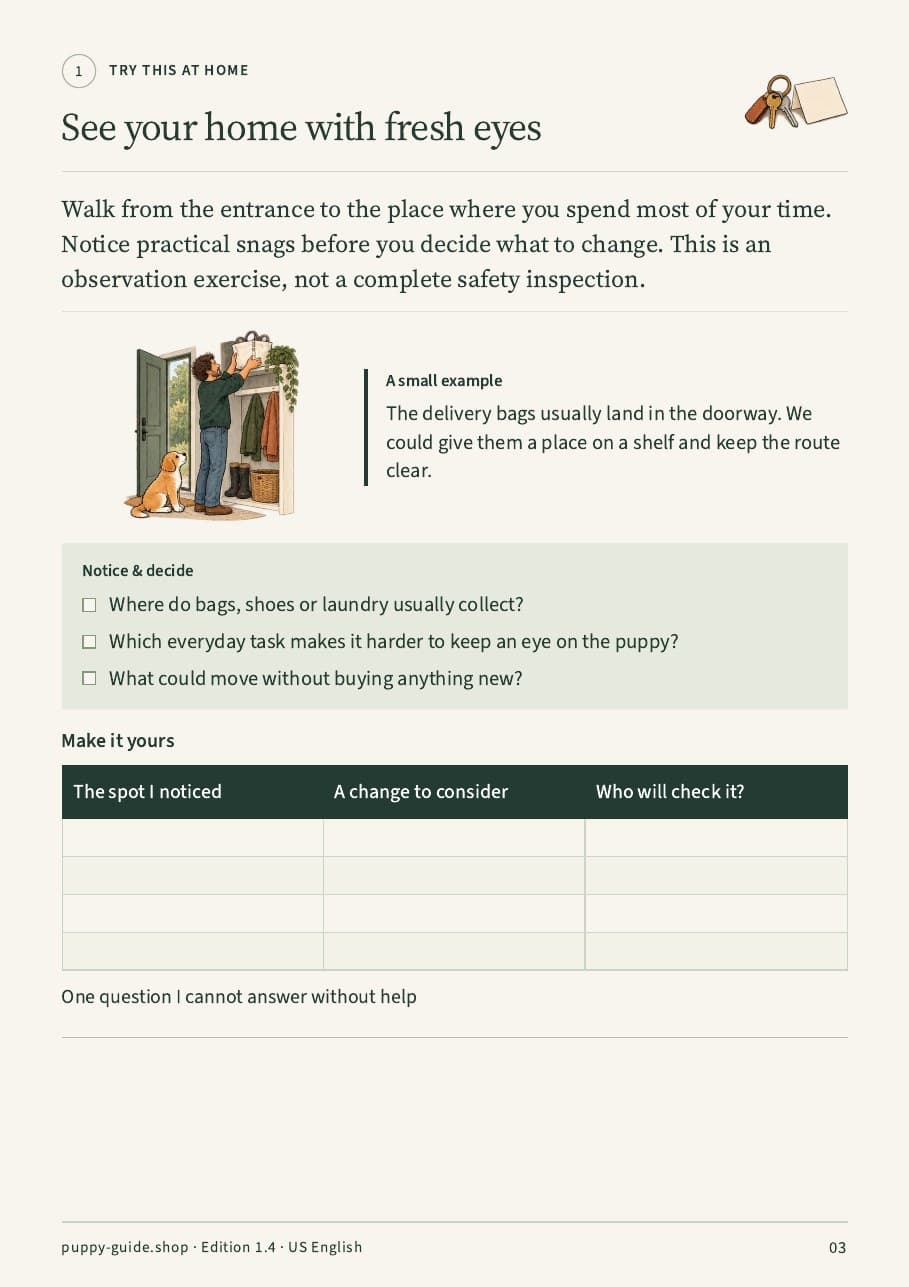
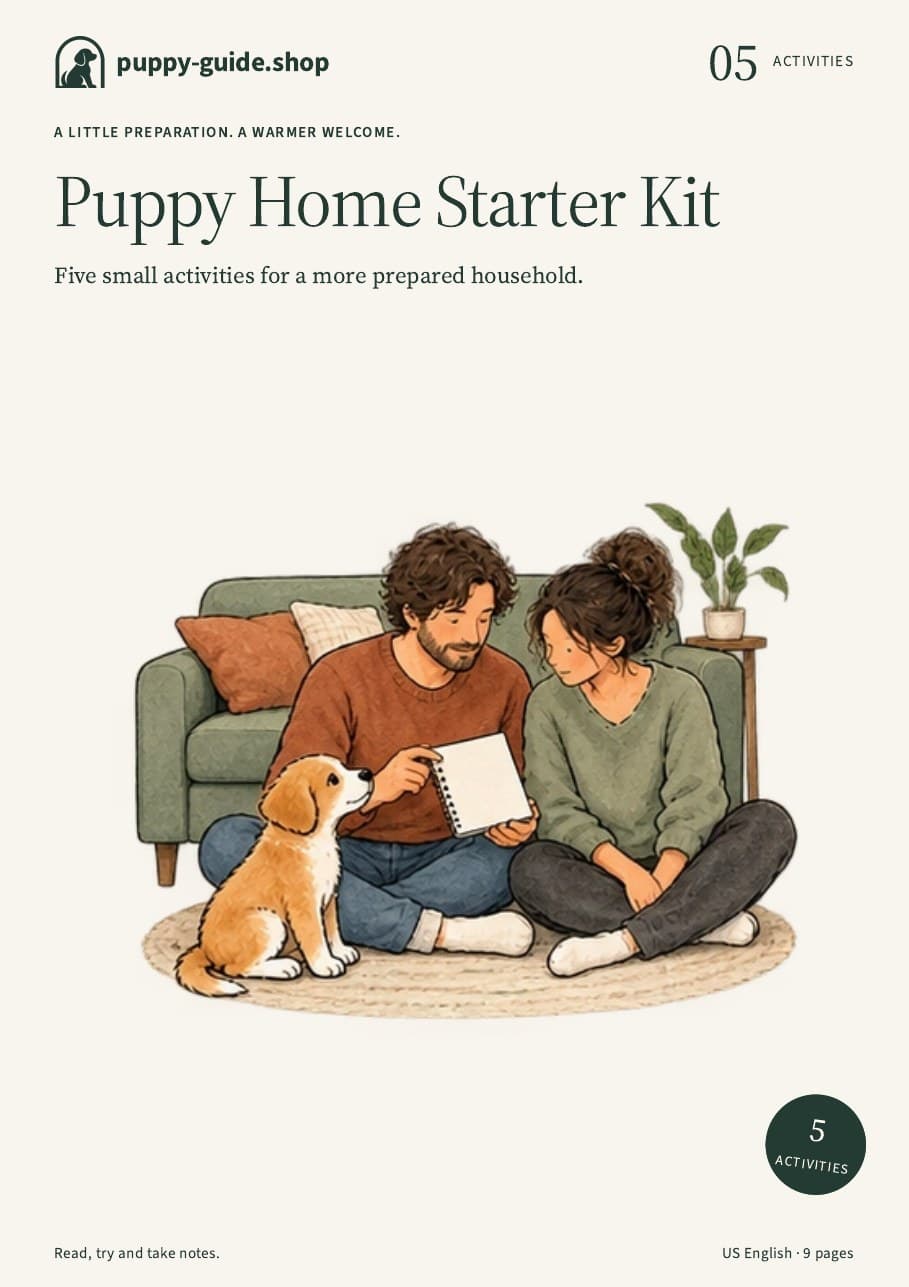
Free guide · 9 pages · PDF, A4
Puppy Home Starter Kit
Five small activities for a more prepared household.
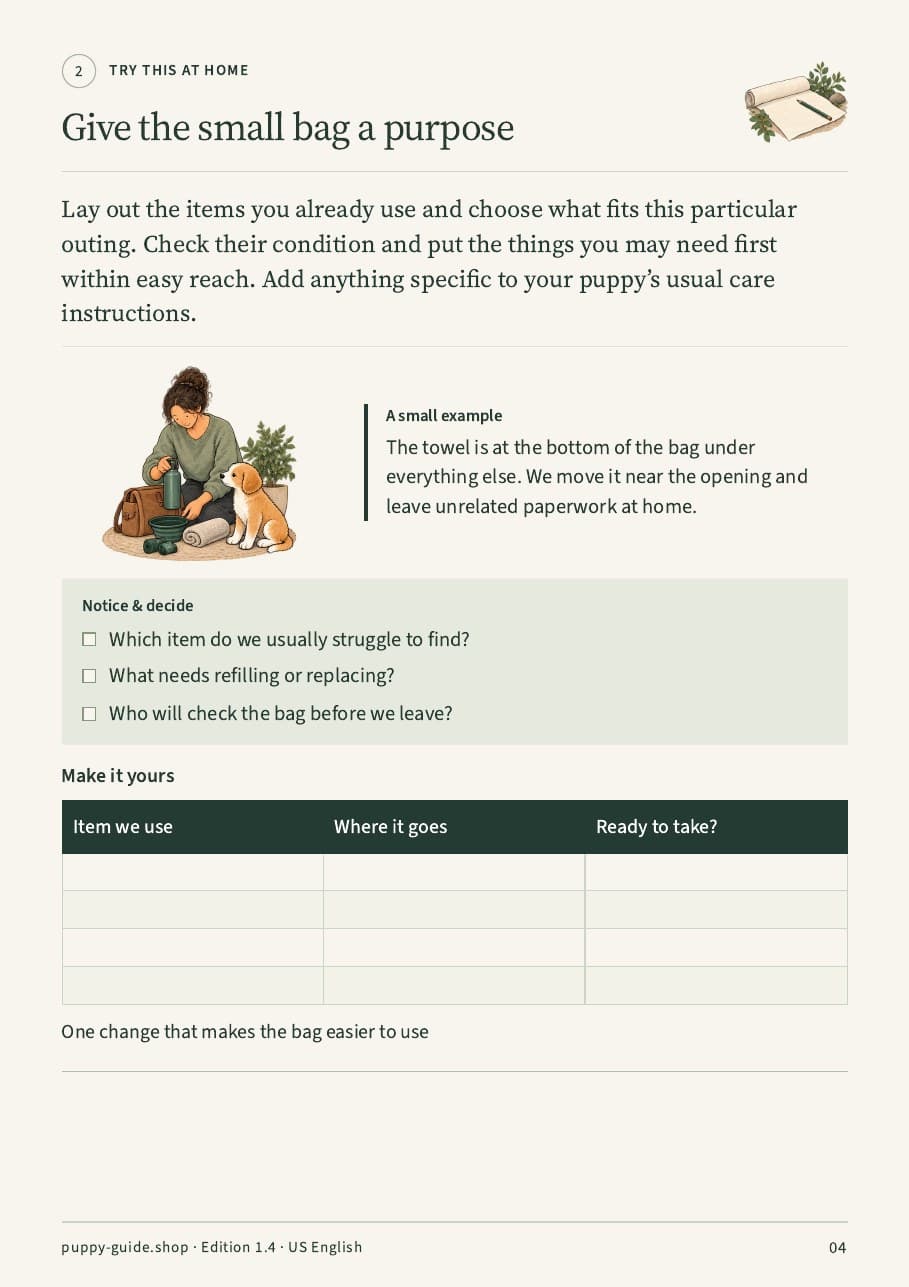
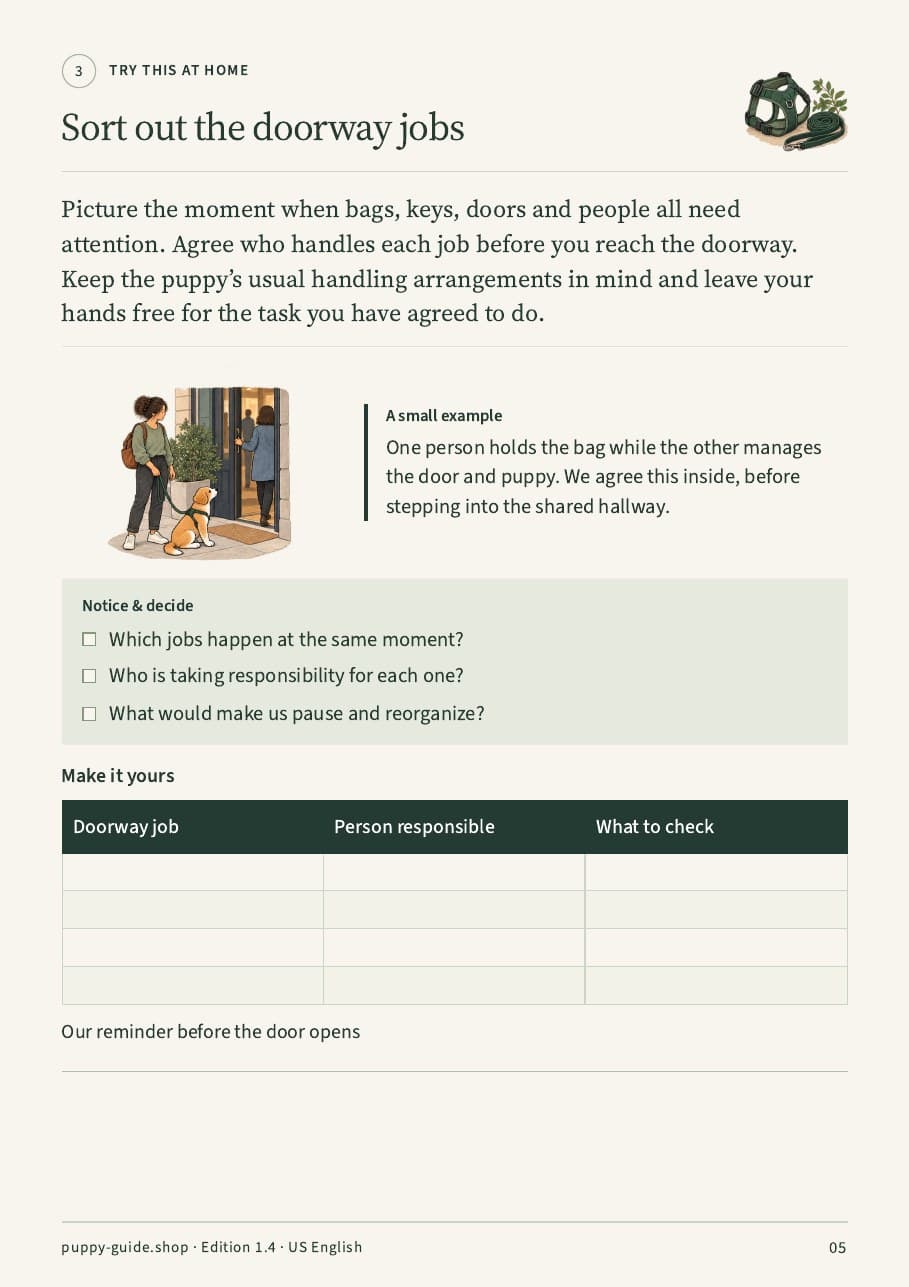
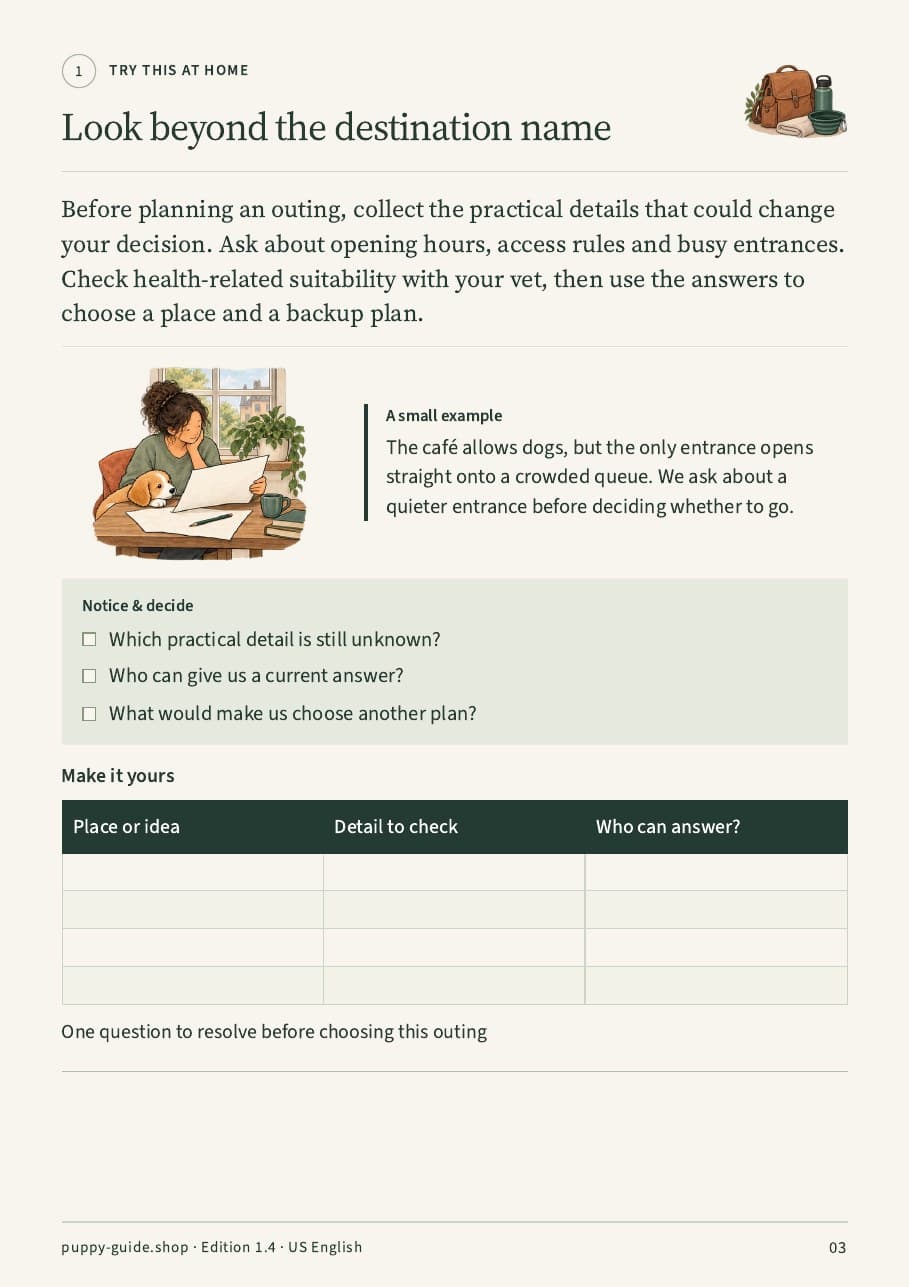
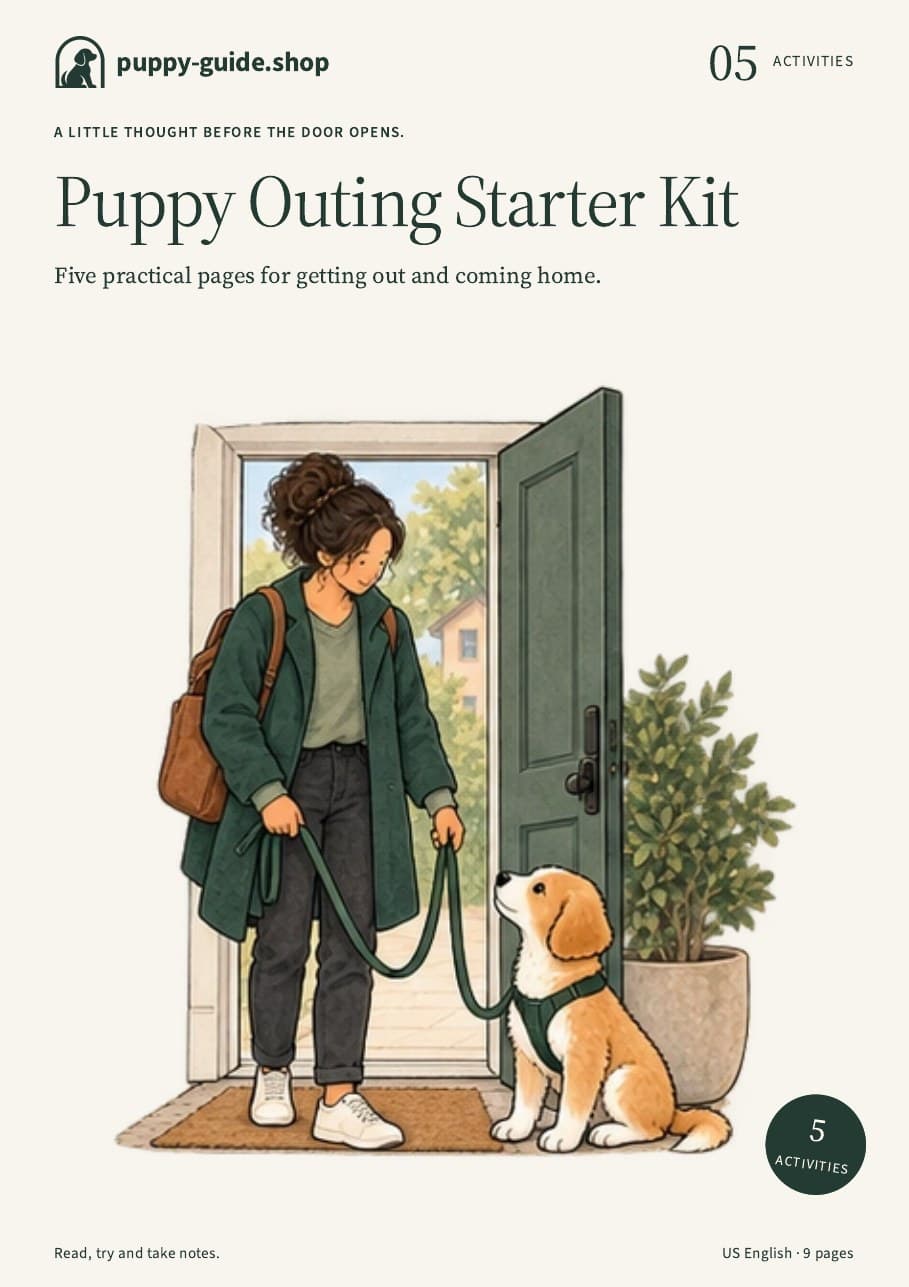
Free guide · 9 pages · PDF, A4
Puppy Outing Starter Kit
Five practical pages for getting out and coming home.


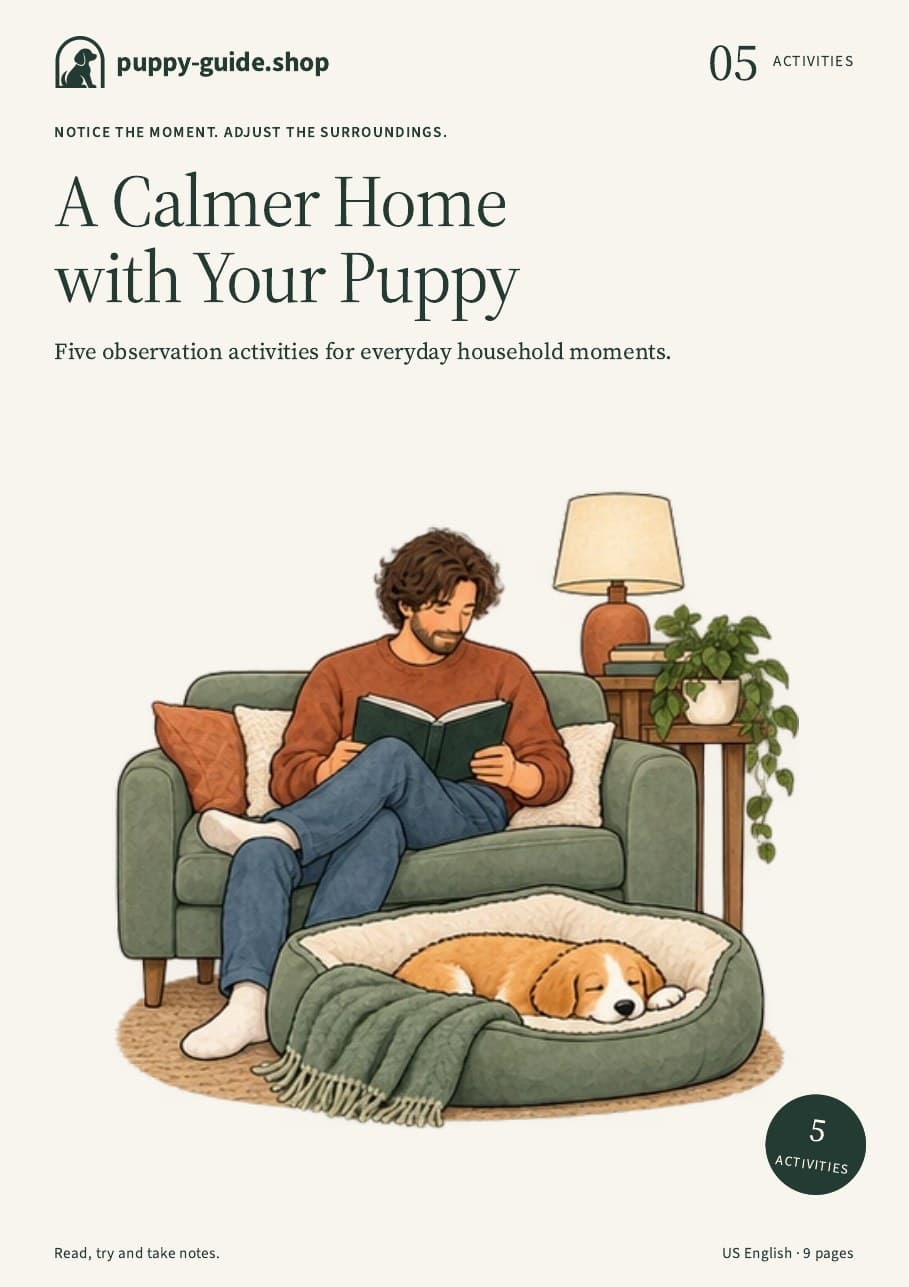
Free guide · 9 pages · PDF, A4
A Calmer Home with Your Puppy
Five observation activities for everyday household moments.
Read next
All guides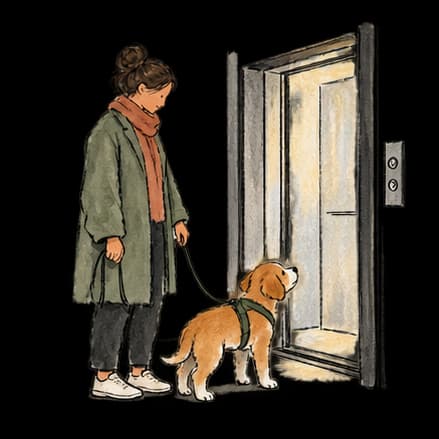
The route outside · 5 min read
Making toilet trips easier when you live upstairs
Get ready by the door, use the elevator safely and prepare for days when it is out of service.
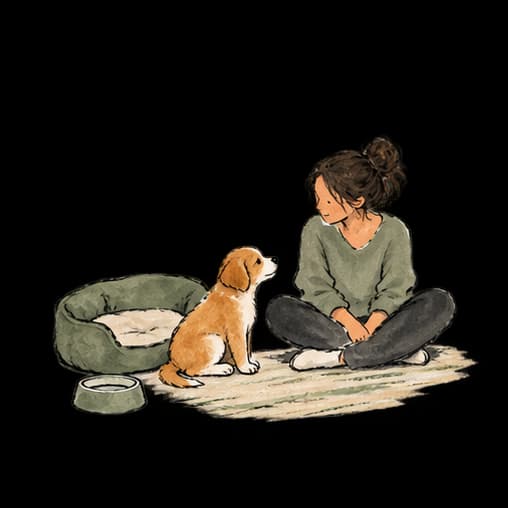
The home · 6 min read
Getting your apartment ready for a puppy
A quiet bed, fresh water and a safe space to play. Set up the basics without buying more than you need.
The home · 5 min read
Living with a puppy and your neighbors
Help your puppy rest, make shared spaces easier to use and keep in touch with your neighbors.