The home · 5 min read
Living with a puppy and your neighbors
Help your puppy rest, make shared spaces easier to use and keep in touch with your neighbors.
Published by puppy-guide.shop · Updated September 28, 2026
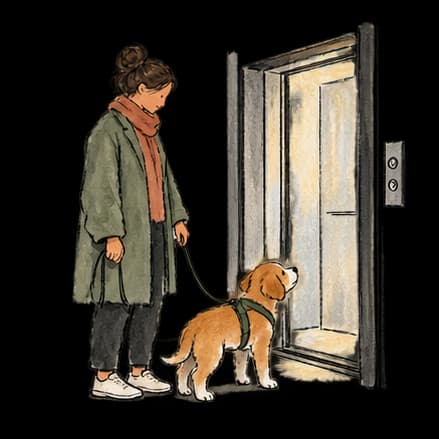
A puppy brings new sounds to a shared building. A quiet resting place, a little care in the hallway and a friendly word with neighbors can help.
Start with one thing you can change today. This guide has practical ideas for noise, trips outside and talking to the people next door.
Talk to your neighbors
Read the house rules and ask management about dogs in shared areas, cleaning and elevator maintenance. Keep the useful details with your notes.
Let nearby neighbors know your puppy has arrived. A friendly introduction and a way to contact you can make it easier to discuss noise. Listen to concerns and explain what you are trying, without promising that your puppy will never bark.
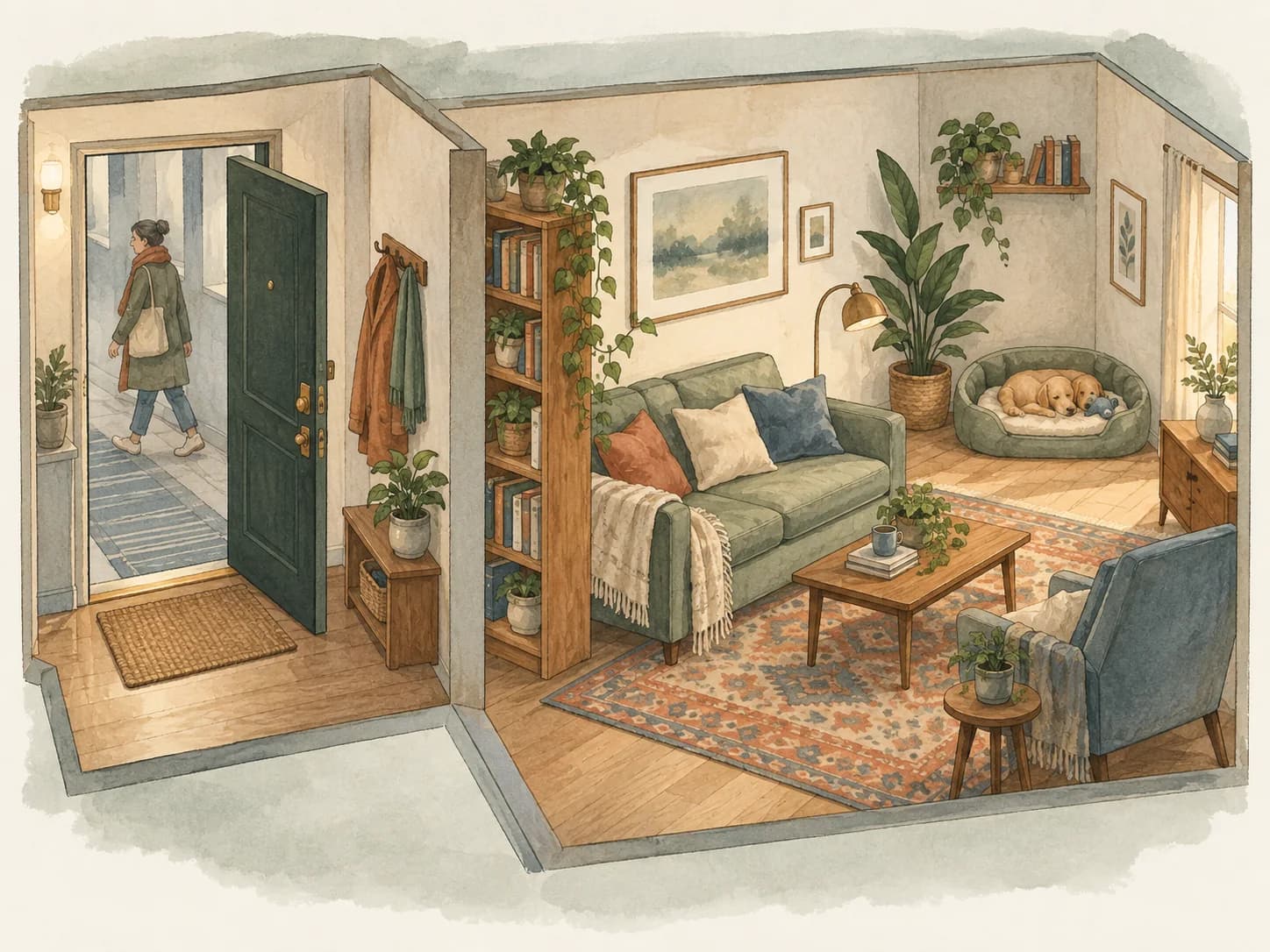
Give your puppy space from noisy doors
Move the bed to a quieter place where your puppy can still see you. If they watch through a gap by the door, block that view safely. Give them space from sounds that worry them.
Treat the sounds as experiences to record, not problems to fix in one go. Elevator hum, a neighbor's keys, the recycling bins, a delivery: note the sound, the distance and the puppy's response, and reward a comfortable response rather than startling the puppy for barking at an alarming one.
A comfortable place to call home
Start with the things your puppy uses every day.
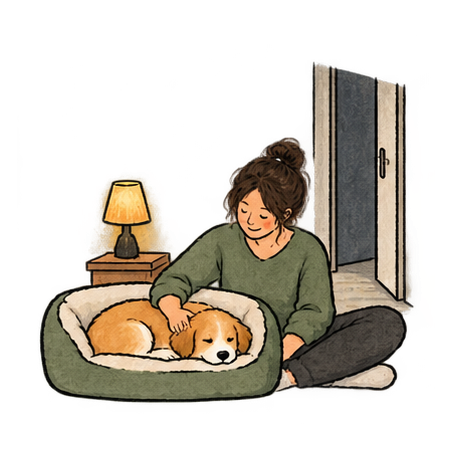
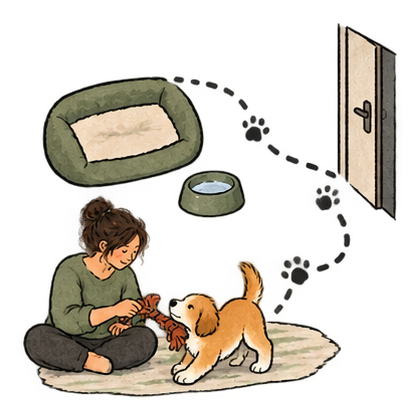
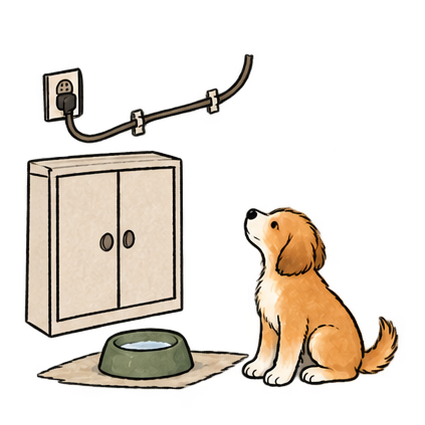
Try this today: walk from the bed to the door and move anything in the way.
Picture space and quiet
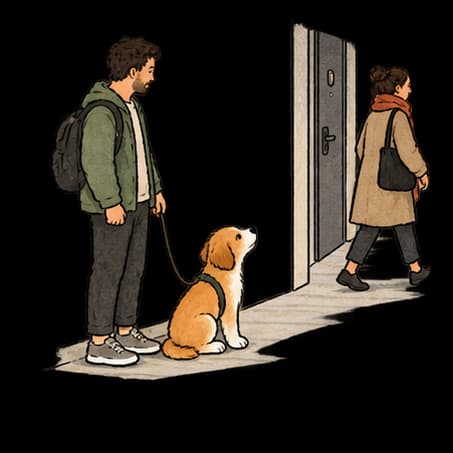
Move away from noisy doors
Try a quieter place for the bed. Give your puppy more space from hallway sounds that worry them.
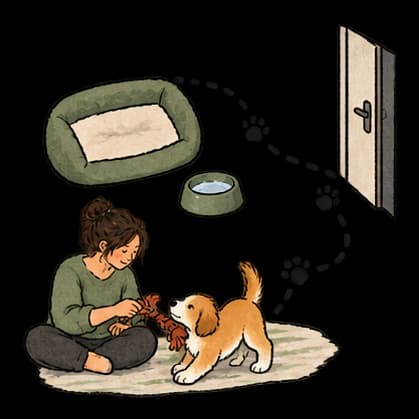
A place for everyday things
Keep the bed quiet, water easy to reach and the path to the door clear. Stay nearby during play.
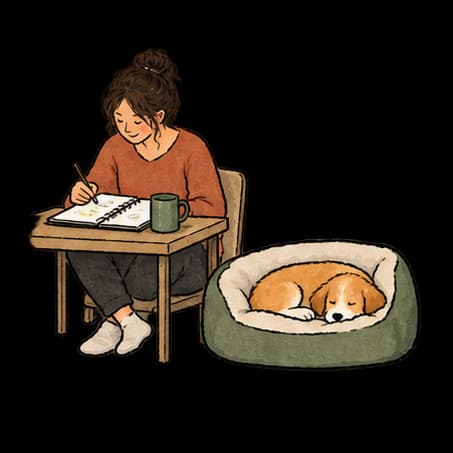
Let sleeping puppies rest
Keep naps quiet. At the end of the day, choose one small thing that could help tomorrow.
What happened before the barking?
Notice what your puppy heard or saw before barking. Was someone at the door? Did the elevator arrive? Was your puppy alone near the hallway? A short note can help you remember.
Try a quieter resting place farther from the door and stay nearby. Give your puppy more space from sounds that worry them. If they remain very worried or things get worse, ask your vet or a qualified trainer for help.
The short note for the neighbors
Three or four sentences on a card at the door or in the mailbox. Kind, specific, with a way to reach you.
- A puppy has arrived, and its name
- The first weeks may be noisier; you are working on rest and routine
- How to reach you if something bothers them, before it becomes a complaint
- A thank you, and an offer: come and meet the puppy when it suits
Share a practical plan
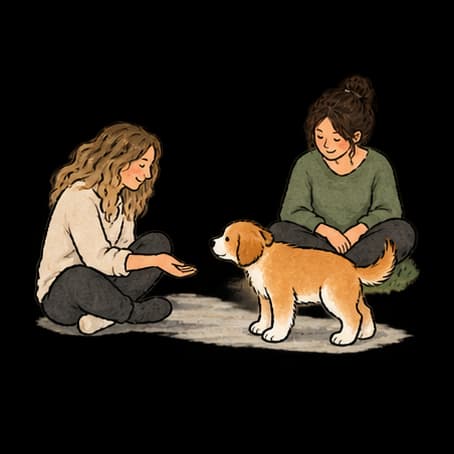
Let your puppy say hello
Ask visitors to stay calm and let your puppy approach. They do not have to be petted.

Leave a useful note
Tell the next person about food, sleep and the last toilet trip, including a trip when nothing happened.
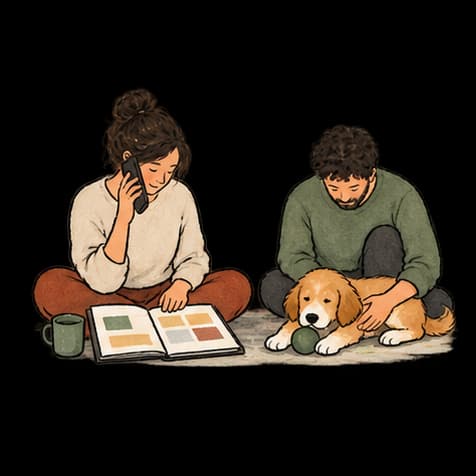
Have someone to call
Ask who can help if your sitter cancels. Change your work plans if nobody suitable can stay.
Shared spaces stay shared
Keep hallways and exits clear of trays, bowls and walking supplies. Clean accidents under the building’s arrangements and tell management if more cleaning is needed. At the elevator, keep your puppy and leash clear of the doors and let people exit first. Wait for another ride if anyone needs more space.
Use a balcony only if it is secure, permitted and suitable, with supervision. If it holds a temporary toilet area, prevent waste or cleaning water from reaching neighboring balconies and arrange hygienic disposal.
Move through shared spaces
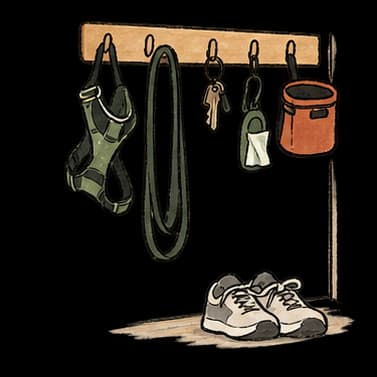
Keep things by the door
Put the harness, leash, keys, bags and rewards together, out of your puppy’s reach.
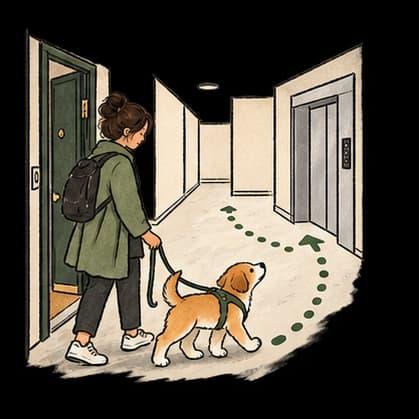
Check the way outside
Try doors and corners on the way to the elevator. Ask for help with anything difficult.
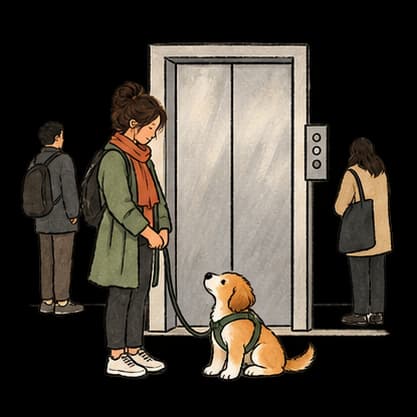
Allow for the elevator wait
Get ready early at busy times. Keep your puppy and leash away from closing elevator doors.
What to take with you
- Read the house rules and save the building manager’s contact details.
- Introduce your puppy to neighbors with a friendly note and a way to reach you.
- Choose a resting place away from busy doors and hallway noise.
- Keep shared spaces clear and clean, and ask for help if your puppy stays worried.
Common questions
My neighbor has already complained about barking. What now?
Thank them for telling you and ask when the barking happens. Explain the changes you are trying, such as a quieter resting place or more suitable care, and agree how to stay in touch. Get qualified help if your puppy remains worried or the barking continues.
Can I leave the door open so the puppy gets used to hallway sounds?
Not as a method. Sounds should arrive at a distance the puppy can manage, and an open door invites the corridor in at full volume. Let the puppy hear the building from its bed, with a visual gap closed, and record how it copes.
Is a puppy allowed in the elevator?
Check your building’s rules. If dogs may use the elevator, wait clear of the doors, keep the leash close and let people exit before entering.
A free guide for your next step
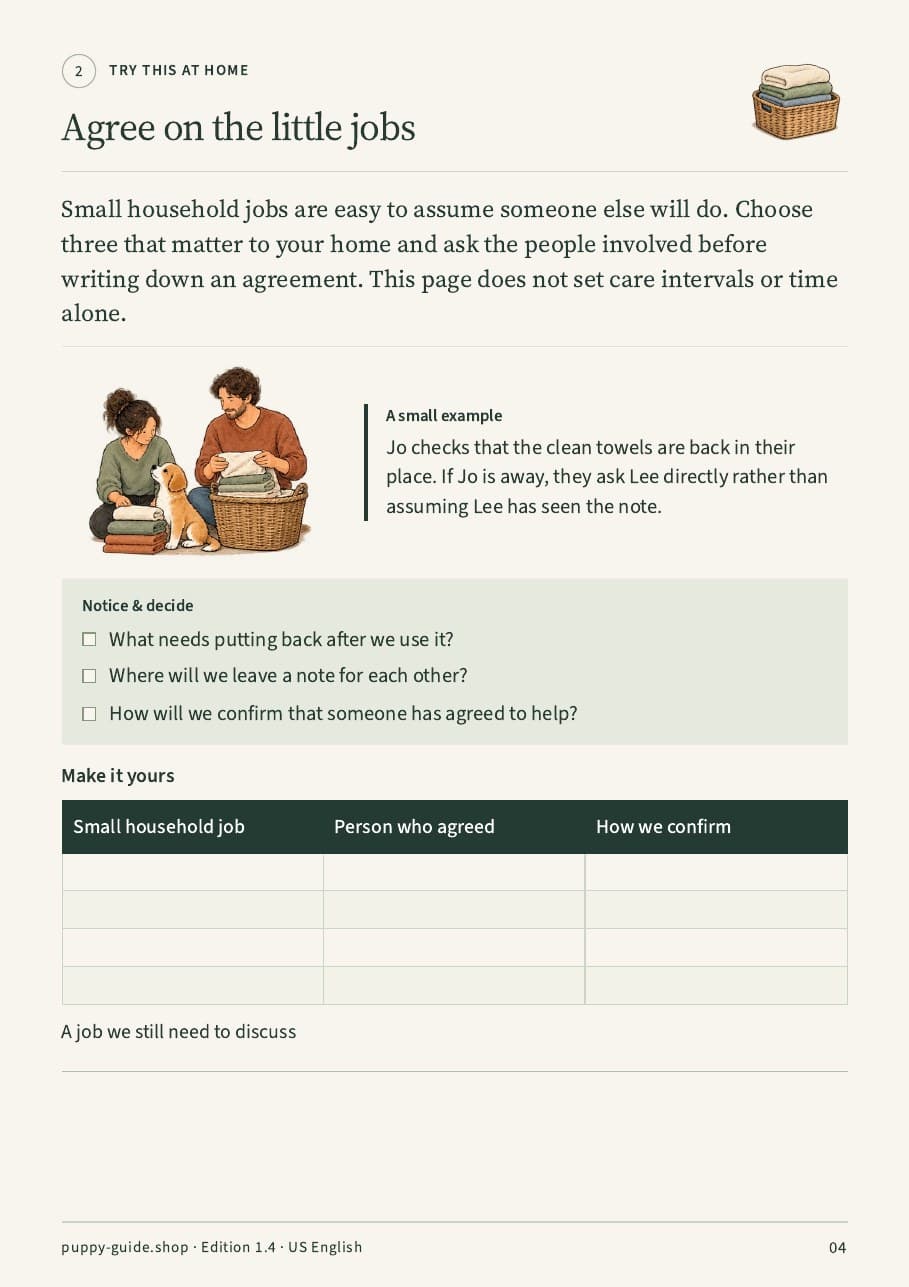
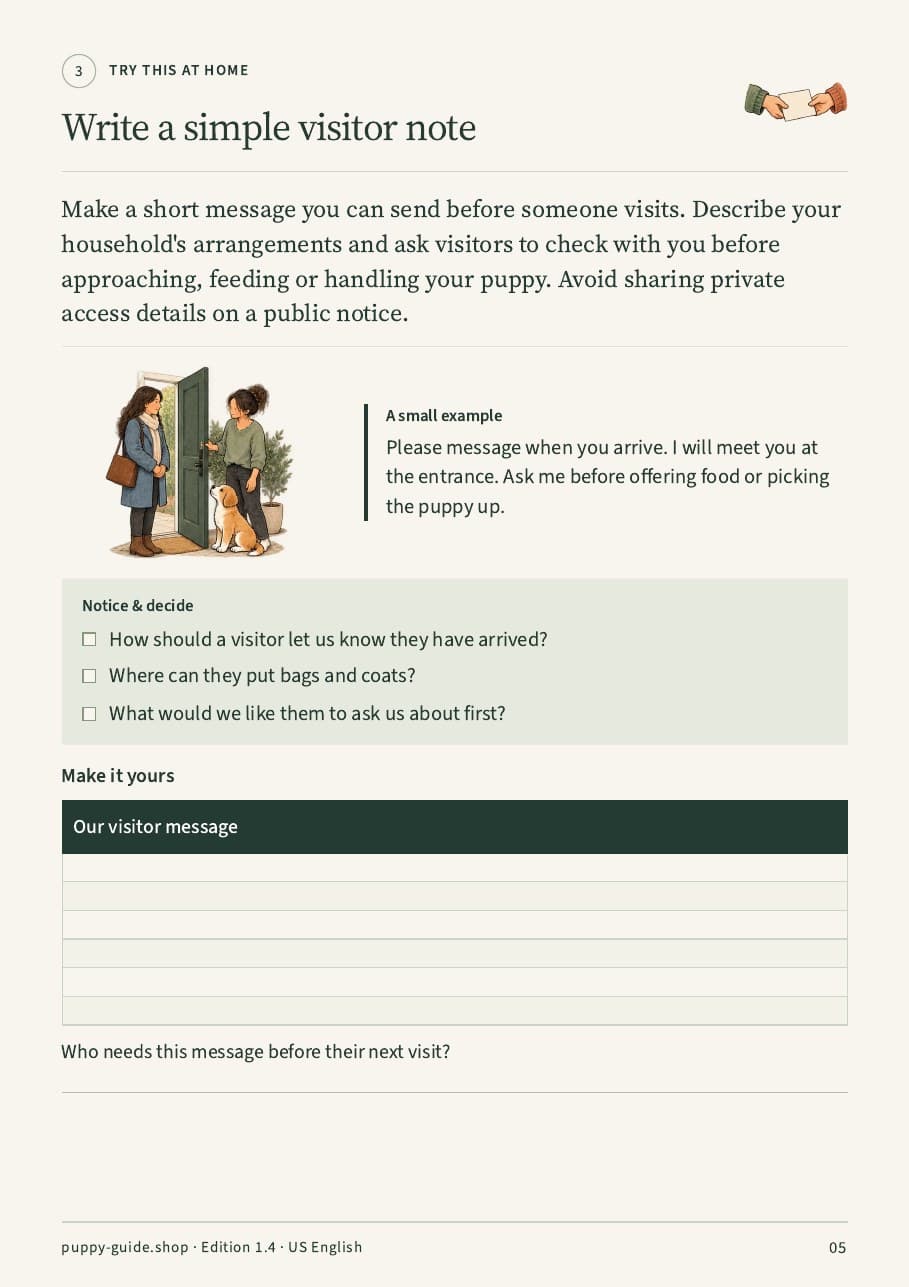
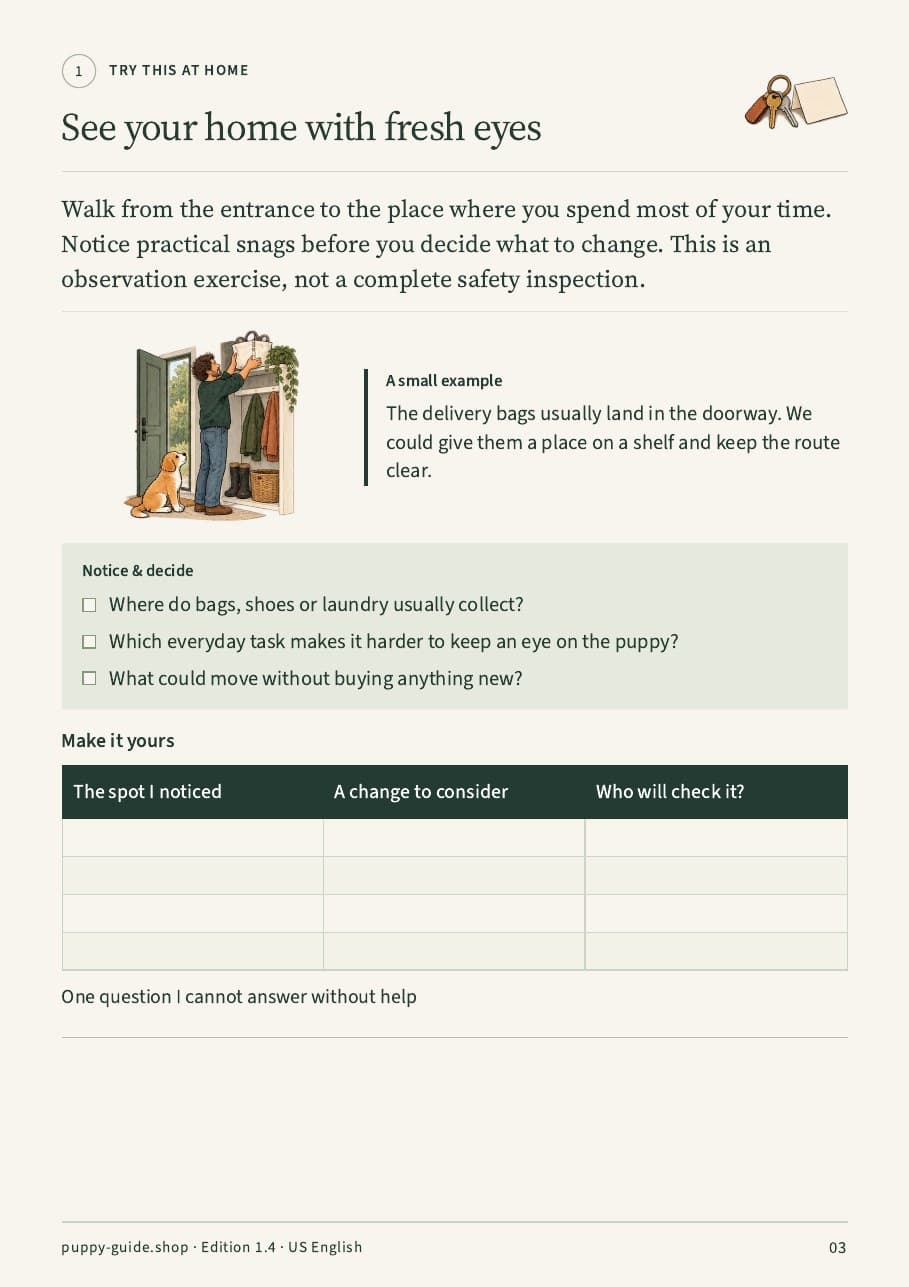

Free guide · 9 pages · PDF, A4
Puppy Home Starter Kit
Five small activities for a more prepared household.
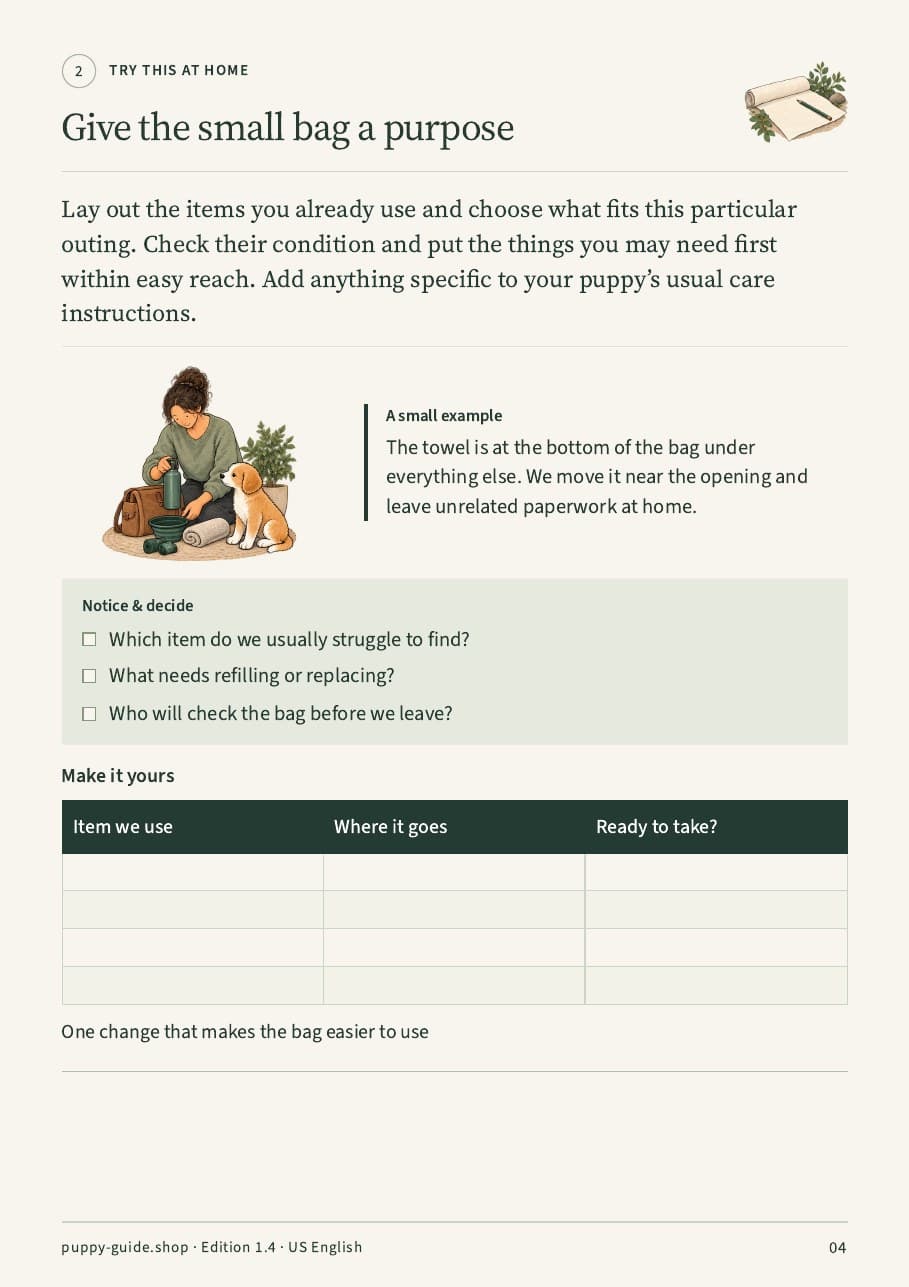
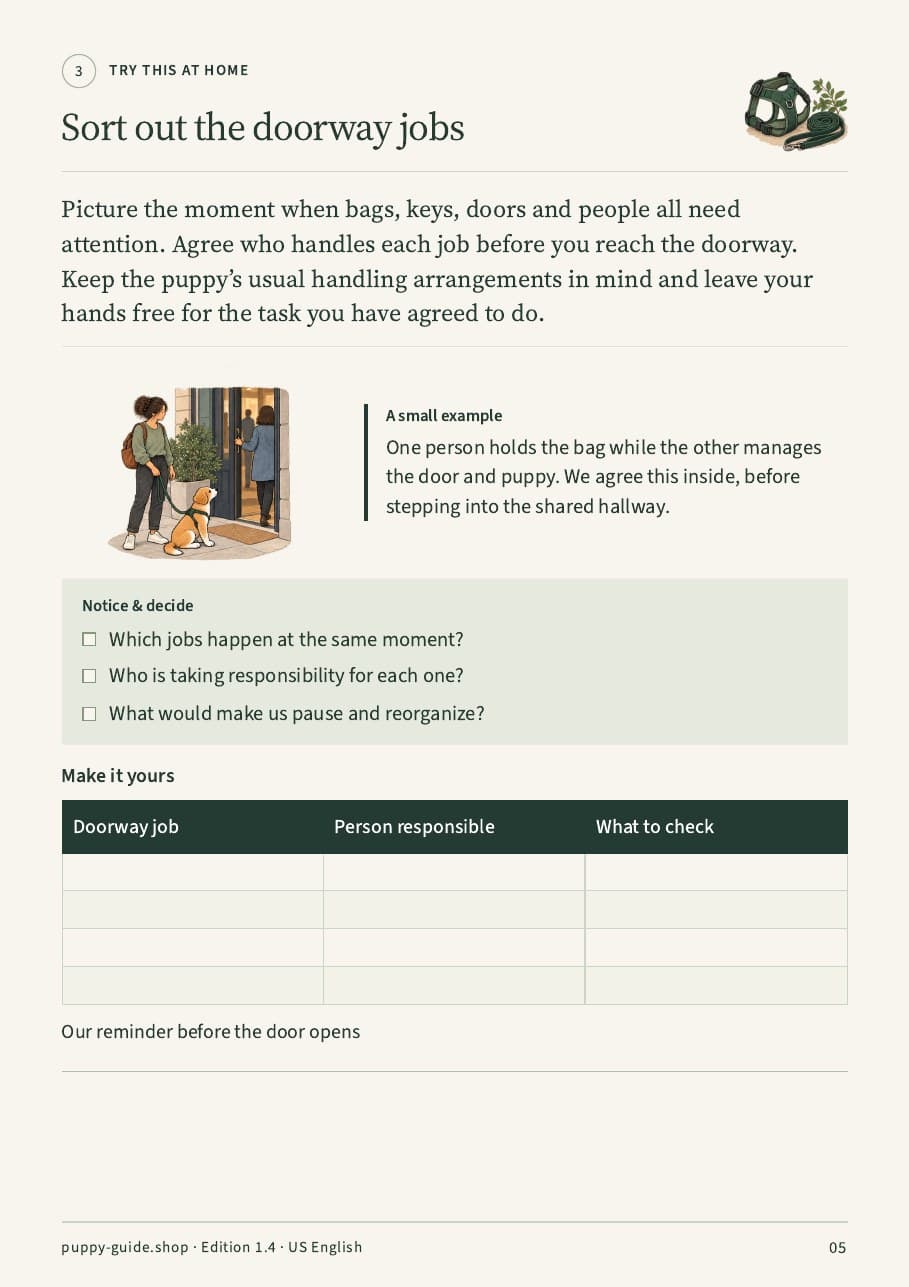
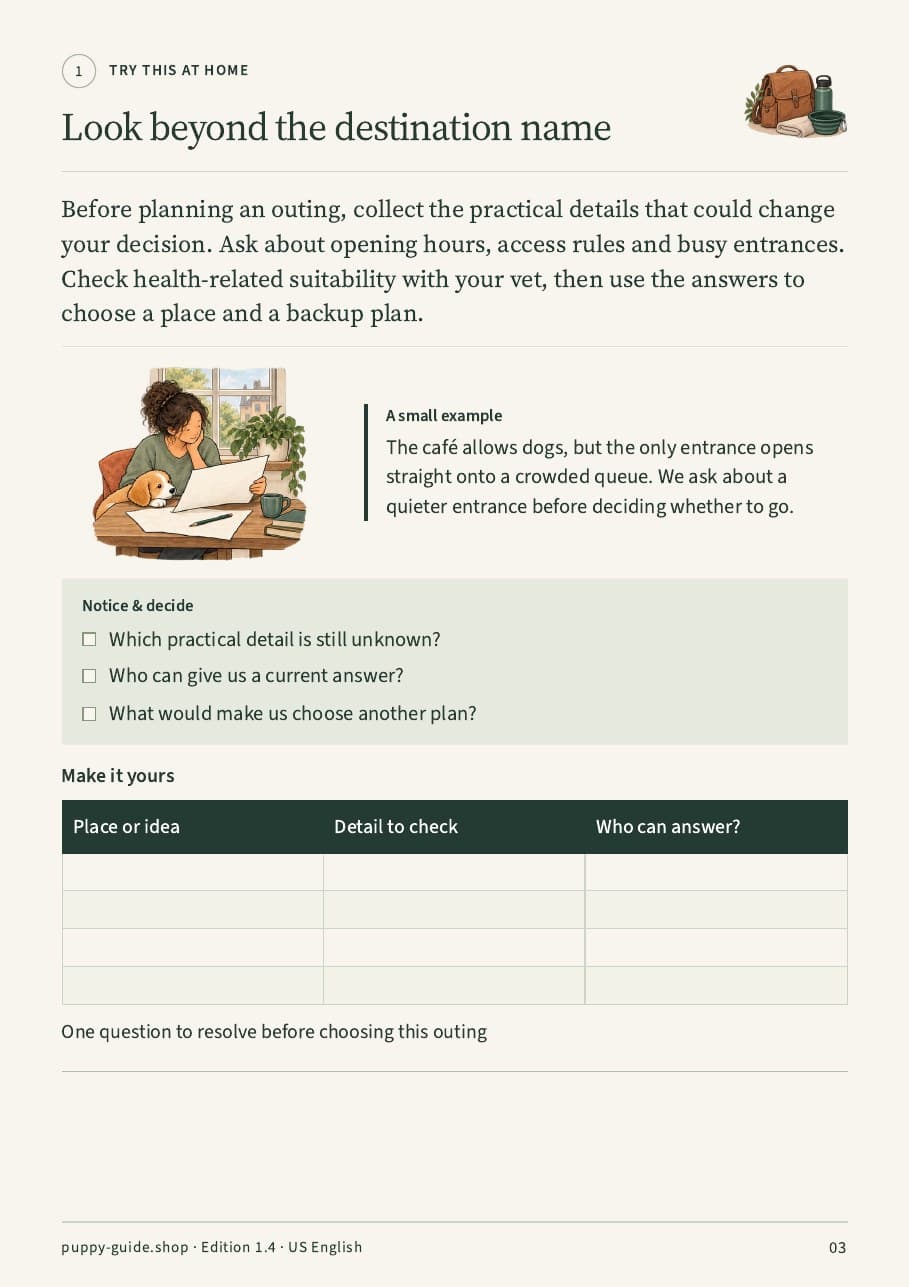
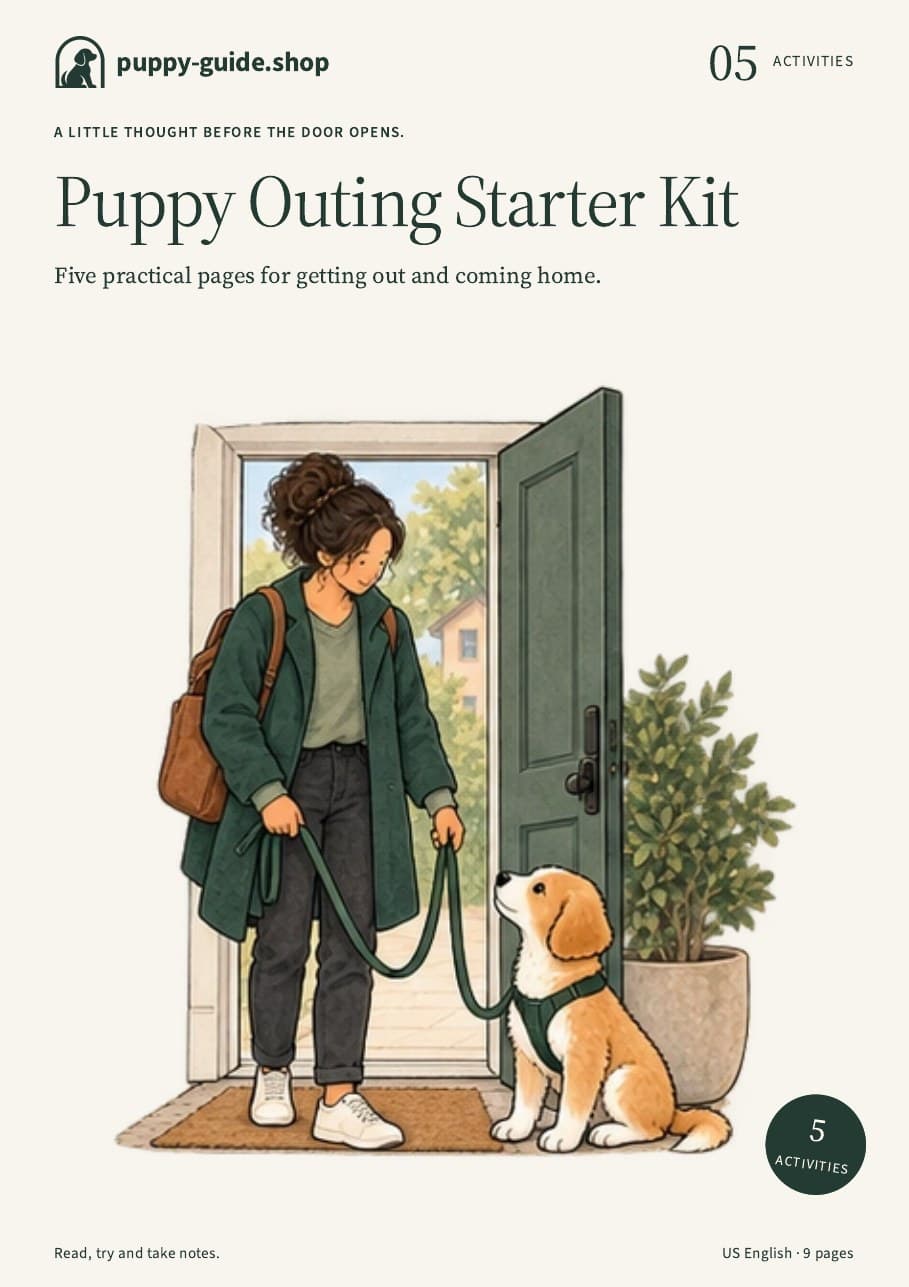
Free guide · 9 pages · PDF, A4
Puppy Outing Starter Kit
Five practical pages for getting out and coming home.



Free guide · 9 pages · PDF, A4
A Calmer Home with Your Puppy
Five observation activities for everyday household moments.
Read next
All guides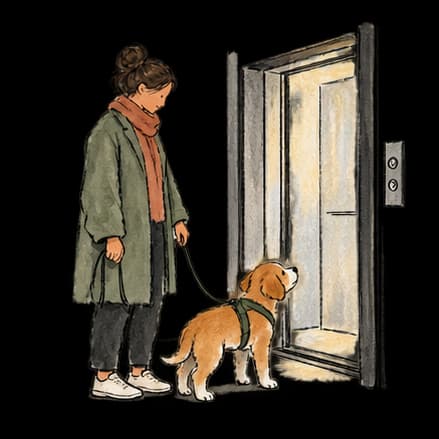
The route outside · 5 min read
Making toilet trips easier when you live upstairs
Get ready by the door, use the elevator safely and prepare for days when it is out of service.
The home · 6 min read
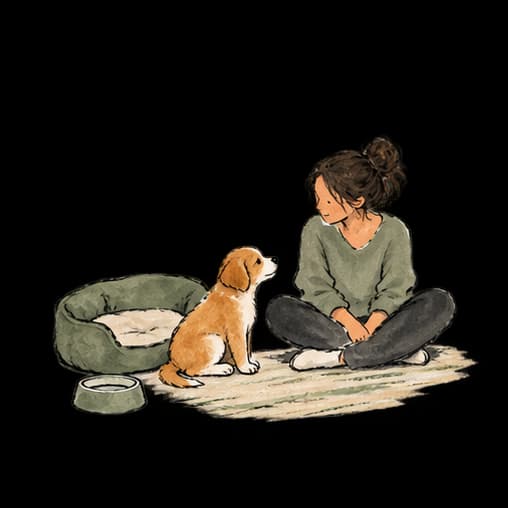
Getting your apartment ready for a puppy
A quiet bed, fresh water and a safe space to play. Set up the basics without buying more than you need.
The route outside · 7 min read
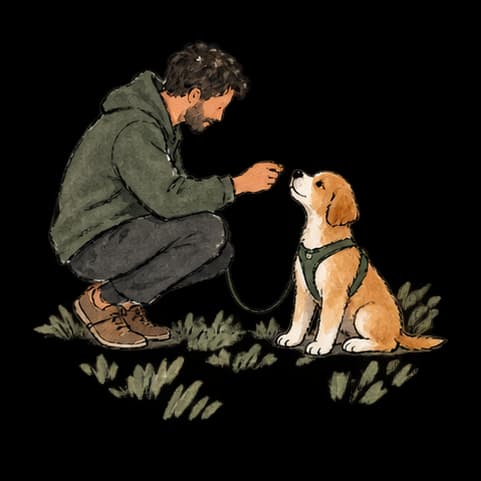
Helping your puppy learn where to go to the toilet
Simple help with toilet breaks, rewards and accidents when you live in an apartment.